


Ergonomic Lifting Equipment for Healthcare & Pharmaceutical Logistics
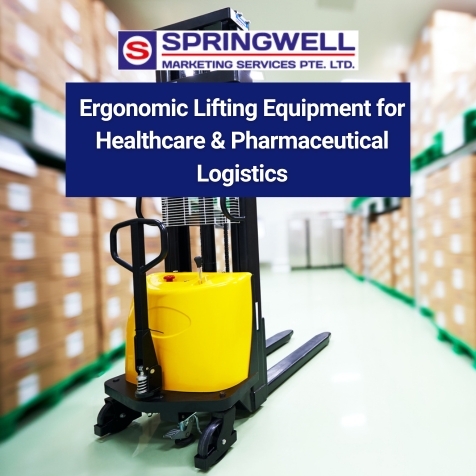
In the healthcare and pharmaceutical sectors, logistics operations demand the highest levels of safety, hygiene, and precision. From handling sensitive medical supplies to transporting heavy cartons of pharmaceuticals, staff are frequently required to lift, move, and position loads throughout the day. Without proper equipment, these repetitive tasks can lead to musculoskeletal injuries, reduced productivity, and compromised safety standards.
This is where ergonomic lifting equipment plays an essential role. Designed to reduce physical strain and streamline workflow processes, ergonomic lifting solutions help healthcare and pharmaceutical facilities maintain efficiency while protecting their workforce.
At Springwell, we offer a range of lifting technologies that meet the demanding needs of these highly regulated environments.
Why Ergonomics Matters in Healthcare & Pharmaceutical Logistics
Healthcare and pharmaceutical logistics involve a combination of sensitive materials, strict handling protocols, and fast-paced operational demands. Employees often manage:
- Heavy medical supplies
- Bulk pharmaceutical cartons
- Diagnostic equipment
- Sterile products requiring careful handling
- Temperature-sensitive or fragile items
Without ergonomic support, workers may be exposed to risks such as:
- Lower-back injuries
- Repetitive strain injuries (RSIs)
- Shoulder or wrist strain
- Fatigue leading to operational errors
Ergonomic lifting equipment ensures tasks are performed safely, minimising physical load while meeting stringent industry standards.
Common Challenges in Medical & Pharmaceutical Handling
1. Heavy Load Handling
Medical supplies and pharmaceutical shipments often arrive in bulk. Manually lifting cartons, containers, or medical devices not only slows down operations but poses high injury risks.
2. Maintaining Sterility
Manual handling increases the chance of contaminating sterile or sensitive items. Ergonomic lifting tools help maintain hygiene compliance by reducing direct contact.
3. Space Constraints
Hospitals, clinics, and pharmaceutical warehouses often operate in tight spaces. Compact, manoeuvrable lifting equipment ensures safe handling without disrupting workflow.
4. Fast Turnaround Requirements
Pharmaceutical products such as vaccines, medications, and medical consumables need to move quickly. Ergonomic lifting solutions speed up loading, unloading, and replenishment processes.
Types of Ergonomic Lifting Equipment Suitable for Healthcare & Pharmaceutical Logistics
Below are equipment types commonly used across hospitals, pharmaceutical warehouses, manufacturing plants, and medical supply chains — all of which Springwell supplies or supports.
1. Electric Lifters & Stackers
Electric lifters provide controlled, stable lifting for items such as:
- Medication cartons
- Diagnostic devices
- Medical consumables
- Heavy packaging materials
Key benefits:
- Reduces manual lifting
- Smooth, controlled lifting height adjustments
- Compact design ideal for hospitals and cleanroom areas
- Minimises contamination risk by reducing physical contact
These are especially useful in pharmacy distribution centres and medical supply stores.
2. Vacuum Lifting Systems
Vacuum lifters are widely used in pharmaceutical manufacturing for safely handling:
- Cartons
- Drums
- Sacks of raw materials
- Sterile packs
- Sealed containers
Advantages include:
- Touch-free lifting to maintain sterility
- Reduced strain during repetitive lifting
- Increased speed when picking and placing items
- Suitable for clean-room environments
Vacuum lifting is particularly beneficial in processes involving powdered ingredients, liquid formulations, or batch packaging.
3. Mobile Scissor Lift Tables
Mobile lift tables provide safe lifting and height-adjustment for heavy loads, ideal for:
- Transferring medical equipment
- Loading materials onto shelves
- Handling bulk medications
- Positioning items for inspection or packing
Benefits:
- Adjustable height settings reduce bending and overreaching
- Stable platforms for heavy or bulky loads
- Easy mobility for flexible workflows
- Hygienic stainless-steel options for medical environments
4. Drum Handling Equipment
Pharmaceutical manufacturers often handle liquid and chemical components stored in drums or barrels.
Drum handlers make it safe to:
- Lift
- Tilt
- Rotate
- Transport
Why they’re essential:
- Prevent spills and contamination
- Reduce employee exposure to chemicals
- Minimise the risk of workplace injuries
5. Pallet Trucks & High-Lift Pallet Movers
For pharmaceutical logistics centres or hospital supply bays, pallet trucks help transport bulk shipments efficiently.
Ergonomic advantages:
- Reduce physical strain during heavy pallet movement
- Suitable for cold rooms or temperature-controlled storage
- Electric models offer greater ease for high-frequency use
How Ergonomic Lifting Equipment Improves Healthcare & Pharmaceutical Operations
1. Protects Staff from Injury
Musculoskeletal injuries are a major cause of downtime. Ergonomic lifting solutions significantly reduce heavy lifting and repetitive strain.
2. Enhances Productivity
Automated or assisted lifting speeds up workflows, especially in fast-moving pharmaceutical supply chains.
3. Improves Accuracy & Material Handling Quality
Stable, controlled lifting helps protect fragile pharmaceuticals, sterile items, and medical devices.
4. Strengthens Safety & Compliance
Proper lifting equipment supports workplace safety standards and enhances adherence to hygiene protocols.
5. Reduces Cross-Contamination Risks
Minimising manual contact is crucial in sterile and clean-room operations.
Choosing the Right Lifting Equipment for Your Facility
When selecting ergonomic lifting tools, consider:
- Load weight and frequency
- Type of materials handled (sterile, fragile, chemical)
- Available floor space
- Workflow layout
- Cleanroom or hygiene requirements
- Staff training needs
Springwell provides a range of solutions tailored to the healthcare and pharmaceutical sectors, ensuring that your chosen equipment aligns with operational, safety, and regulatory needs.
Takeaway
Ergonomic lifting equipment is no longer optional in healthcare and pharmaceutical logistics — it is essential for maintaining safety, efficiency, and compliance. By reducing physical strain, improving accuracy, and protecting sensitive materials, ergonomic lifting solutions and material handling equipment help create a healthier and more productive workplace.
Whether you’re managing a hospital supply chain, pharmaceutical warehouse, manufacturing plant, or clean room facility, Springwell’s ergonomic lifting systems and material handling equipment can transform the way your operations handle, move, and transport goods with confidence and precision.
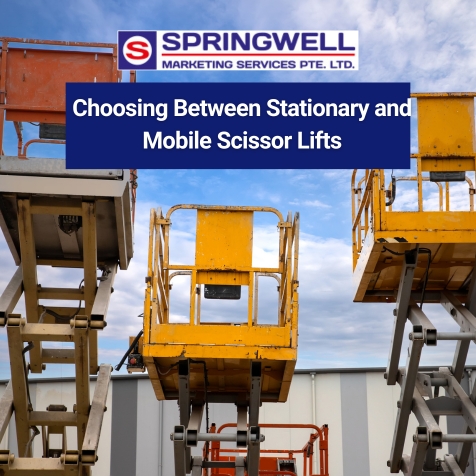
When it comes to lifting heavy loads or working safely at height, scissor lifts are one of the most versatile tools in material handling and industrial operations.
From warehouse facilities and production lines to logistics and maintenance work, scissor lifts make it easier to lift goods, equipment, or personnel with minimal effort and maximum stability.
But not all scissor lifts are the same. The two most common types — stationary scissor lifts and mobile scissor lifts — are designed for different applications. Understanding their differences can help you choose the right one for your workflow, efficiency, and budget.
What Is a Scissor Lift?
A scissor lift is a platform that raises vertically through linked, folding supports arranged in a crisscross “X” pattern — resembling the movement of a pair of scissors.
These lifts are powered either hydraulically, electrically, or pneumatically, and are used to safely raise goods or people to a desired height. Depending on the model, they can handle anywhere from a few hundred kilograms to several tonnes.
In material handling, scissor lifts are invaluable for:
- Loading and unloading pallets
- Lifting goods to mezzanine levels or conveyors
- Supporting assembly or maintenance tasks
- Improving ergonomics by adjusting working heights
The Two Main Types: Stationary vs Mobile
While both serve the same core purpose — vertical lifting — stationary and mobile scissor lifts differ significantly in mobility, capacity, and intended use.
Here’s a closer look at what sets them apart.
Stationary Scissor Lifts
Overview
A stationary scissor lift (also known as a hydraulic lift table) is fixed in one location, usually bolted or built into the floor. It’s ideal for handling heavy loads in repetitive operations where the lifting point doesn’t change.
Key Features
- High load capacity – typically ranges from 1,000 kg to over 10,000 kg.
- Stable lifting platform – provides excellent support for heavy, uneven, or large goods.
- Customisable size and stroke height – can be designed for specific applications or heights.
- Electric or hydraulic operation – ensures smooth, controlled lifting.
Common Applications
- Production lines and assembly stations
- Loading bays and goods lifts between floors
- Integration with conveyors or packaging systems
- Ergonomic workstations to reduce bending and lifting strain
Advantages
- Extremely stable and durable
- Handles very heavy loads safely
- Low maintenance with long service life
- Can be customised for platform size, height, and capacity
Limitations
- Fixed in place – not suitable for multi-location use
- Requires installation and sometimes pit mounting
- Less flexible for operations with changing layouts
If your operation involves repetitive lifting in a fixed spot, such as loading pallets or supporting conveyor lines, a stationary scissor lift is likely the better investment.
Mobile Scissor Lifts
Overview
A mobile scissor lift is mounted on wheels or casters, allowing operators to move it between different areas. These lifts are designed for flexibility, quick deployment, and light to medium load handling.
Key Features
- Portable design with push or power-assisted movement
- Load capacity typically between 300 kg and 1,500 kg
- Manually operated or battery-powered lift mechanisms
- Lockable wheels for stability during operation
Common Applications
- Maintenance or repair work at variable heights
- Order picking and light goods transfer
- Stock shelving and warehousing
- Facility cleaning, signage, or light installation tasks
Advantages
- Highly mobile — can be used in multiple areas
- Easy to operate and reposition
- Ideal for maintenance or light lifting tasks
- No permanent installation needed
Limitations
- Lower load capacity compared to stationary models
- Can be less stable on uneven floors
- Requires manual effort (for non-powered versions)
- Not suited for very heavy or high-frequency lifting
A mobile scissor lift is best suited for teams that need flexibility — especially in environments where work zones change frequently, such as maintenance departments, retail warehouses, or facilities management.
How to Decide Which Type You Need
When choosing between a stationary and mobile scissor lift, consider the following factors:
1. Load Weight
If you regularly lift heavy materials or pallets exceeding 1,500 kg, a stationary lift offers the strength and durability you need. For lighter loads and manual handling tasks, a mobile lift is sufficient.
2. Frequency of Use
High-frequency, repetitive lifting (such as production lines or loading docks) benefits from a stationary lift’s stability and power. In contrast, occasional lifting across multiple work areas calls for a mobile lift.
3. Mobility and Layout
If your workspace layout is fixed, go with a stationary model. But if you operate across various zones or need to move the lift often, mobility becomes essential.
4. Height Requirement
Stationary lifts can be built to reach greater heights and handle heavier goods. Mobile lifts usually offer limited lift height for safety and balance reasons.
5. Space and Installation
Stationary lifts require dedicated floor space or even pit installation. Mobile models can be easily stored or repositioned when not in use.
6. Budget and Long-Term Value
Stationary lifts may require a higher upfront investment, but often deliver better long-term efficiency and durability. Mobile lifts cost less initially and provide more flexibility, but may need more frequent maintenance.
Safety Considerations
Both types of scissor lifts should always be operated according to manufacturer guidelines. Key safety practices include:
- Never exceeding rated load capacity
- Ensuring the platform is on a stable, level surface
- Performing regular maintenance and hydraulic checks
- Using wheel locks on mobile lifts before operation
- Providing proper operator training
Springwell’s scissor lifts are designed with built-in safety features, including overload protection valves, emergency stop buttons, and anti-skid platforms for maximum operator safety.
The Springwell Advantage
At Springwell, we supply a comprehensive range of stationary and mobile scissor lifts for industrial, warehouse, and commercial applications in Singapore.
Our equipment is engineered for durability, smooth hydraulic performance, and compliance with international safety standards. Whether you need a fixed scissor lift for production lines or a mobile model for facility maintenance, our team can help you choose the best solution for your operations.
We also provide custom configurations — from platform dimensions to lift heights and capacities — ensuring every lift fits your specific workflow.
Final Thoughts
Both stationary and mobile scissor lifts have their strengths. The right choice depends on your load requirements, space, and operational needs.
- If you prioritise strength, stability, and heavy-duty performance, go with a stationary scissor lift.
- If you value mobility, flexibility, and light-duty versatility, a mobile scissor lift is the smarter pick.
Not sure which model fits your needs? Contact Springwell today, and we’ll help you find the ideal scissor lift or other material handling equipments in Singapore for your safety, productivity, and budget requirements.
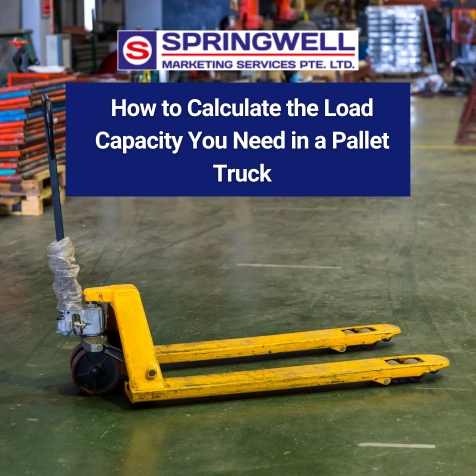
When choosing a pallet truck (also known as a pallet jack), one of the most important — yet often overlooked — factors is load capacity. Selecting a model with the right load rating not only ensures safety and efficiency but also helps prolong the lifespan of your equipment.
Whether you operate a warehouse, logistics centre, or retail storeroom, understanding how to calculate the correct pallet truck load capacity can prevent costly breakdowns, accidents, and product damage.
Here’s a clear guide to help you get it right.
What “Load Capacity” Means in a Pallet Truck
Load capacity refers to the maximum weight a pallet truck can safely lift and transport. It’s usually measured in kilograms (kg) or tonnes (T).
For example, a standard hand pallet truck might have a rated capacity of 2,500 kg (2.5T) — meaning it can safely handle loads up to that weight under ideal conditions.
However, real-world use isn’t always ideal. Factors like uneven weight distribution, pallet size, and load centre can affect how much weight the truck can actually handle safely.
Why Choosing the Right Capacity Matters
Selecting a pallet truck with insufficient capacity can lead to:
- Equipment strain or failure, especially in hydraulic or wheel components
- Load instability, which increases the risk of tipping or dropping goods
- Workplace accidents, endangering operators and nearby staff
- Higher maintenance costs from premature wear
On the other hand, over-specifying (choosing a truck with much higher capacity than needed) may increase cost unnecessarily and reduce manoeuvrability due to heavier build.
The goal is to match the pallet truck’s capacity to your operational load range — with a small safety buffer built in.
Step-by-Step: How to Calculate the Load Capacity You Need
To find the right capacity, you’ll need to assess three key factors:
- Weight of your typical load
- Load centre distance
- Type of pallet and load distribution
Let’s break each one down.
1. Determine the Average and Maximum Load Weight
Start by identifying the heaviest pallet or load you handle on a regular basis. This should include:
- The total weight of goods
- The weight of the pallet itself (usually 20–30 kg for wooden pallets)
For instance, if your heaviest load is 1,800 kg and you use standard pallets, you should consider a 2,000–2,500 kg capacity pallet truck for safe operation.
Tip: Always plan for your maximum expected load, not just your average. It’s better to have a small safety margin than to risk overloading.
2. Understand Load Centre Distance
The load centre is the horizontal distance between the load’s centre of gravity and the front face of the forks.
For standard 1,200 mm pallets, the load centre is typically 600 mm (half the pallet length).
If your load extends beyond the standard size or is unevenly distributed, the effective load centre shifts forward — which reduces the truck’s safe lifting capacity.
In other words:
The farther the load’s centre of gravity is from the forks, the less stable and effective the lifting capacity becomes.
For long or irregular loads, always consult your pallet truck’s load chart (available from the manufacturer or supplier) to confirm the safe working capacity.
3. Evaluate Pallet Type and Load Distribution
Not all pallets are equal. Some are block pallets, others stringer pallets, and they vary in structural strength. Additionally, your goods might be evenly spread or concentrated on one side.
Uneven or fragile loads can create point pressure on the forks, potentially damaging the pallet or reducing stability.
A pallet truck rated for 2,500 kg assumes the load is evenly distributed. If loads are top-heavy, unstable, or off-centre, you may need to downgrade the effective capacity by 10–20% or choose a heavy-duty model with reinforced forks.
Example: Calculating a Safe Load Capacity
Let’s say your warehouse handles pallets of building materials that weigh 2,200 kg each.
- Each pallet measures 1,200 mm x 1,000 mm
- Load centre = 600 mm
- Load is evenly distributed
In this case, a 2,500 kg hand pallet truck would be ideal. It provides a safety buffer of about 300 kg, preventing strain on hydraulic seals and wheels.
If your loads occasionally reach 2,700 kg or are unevenly stacked, consider upgrading to a 3,000 kg capacity model for extra durability.
Other Factors That Affect Load Capacity
Fork Length
Longer forks can support larger pallets but may slightly reduce manoeuvrability in tight aisles. Always ensure the forks fully support the pallet base.
Floor Conditions
Rough or uneven floors increase rolling resistance and strain. If your facility has such conditions, a heavy-duty or powered pallet truck may perform better.
Operator Technique
Improper lifting angles or sudden turns can shift weight unexpectedly. Operator training is just as crucial as choosing the right truck.
Type of Pallet Truck
- Manual Pallet Truck – Ideal for short-distance, moderate loads (up to 2.5–3.0T).
- Electric Pallet Truck – Handles heavier or more frequent loads with minimal effort.
- High-Lift or Weighing Pallet Truck – Offers ergonomic lifting or built-in weight measurement.
How to Maintain Optimal Performance
Even the best pallet truck can lose performance if not maintained properly. To ensure long-term reliability:
- Inspect wheels and bearings regularly for wear.
- Keep hydraulic oil at recommended levels.
- Avoid exceeding rated load capacity.
- Store the truck indoors, away from moisture.
Regular maintenance not only extends lifespan but also ensures continued safety and compliance.
Choosing the Right Pallet Truck for Your Business
At Springwell, we understand that every warehouse and logistics operation has unique load-handling needs. Our wide range of manual, semi-electric, and fully electric pallet trucks are built to meet Singapore’s demanding industrial standards.
Whether you require a light-duty pallet jack for retail use or a heavy-duty model for manufacturing and logistics, our team can help you calculate the precise load capacity and specifications suited to your workflow.
Takeaway
Calculating the correct pallet truck load capacity isn’t just a matter of numbers — it’s a key part of safe and efficient material handling. By understanding your load weight, centre of gravity, and distribution, you can make smarter equipment choices that protect your staff, goods, and investment.
If you’re unsure which model fits your operation, Springwell’s experts are here to help.
Contact Springwell for the right pallet truck in Singapore — built for safety, performance, and lasting reliability.
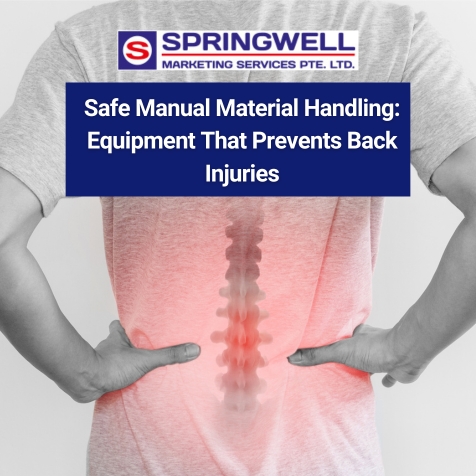
Back injuries remain one of the most common workplace hazards across industries — from warehouses and factories to retail stores and logistics hubs. Many of these injuries occur during manual material handling tasks, such as lifting, pushing, pulling, or carrying heavy loads.
While proper training and posture help reduce risks, the most effective prevention strategy lies in using the right material handling equipment.
Today, we will explore how to minimise back strain, the science behind common workplace injuries, and the essential tools every facility should consider for a safer, more ergonomic workflow.
The Hidden Cost of Back Injuries at Work
According to global occupational safety data, musculoskeletal disorders (MSDs) — especially those involving the lower back — account for a significant portion of workplace injuries. In Singapore, the Workplace Safety and Health (WSH) reports show that manual handling remains a leading cause of minor and major injuries in logistics and manufacturing sectors.
The impact goes beyond physical pain:
- Reduced productivity: Injured workers require longer recovery time, affecting shift efficiency.
- Higher absenteeism and compensation costs: Employers face higher insurance premiums and lost output.
- Long-term strain: Even mild, repeated lifting can lead to chronic back conditions.
Addressing these issues starts with rethinking how materials are moved — not just who moves them.
Understanding the Risk Factors
Back injuries typically occur when a worker’s body is placed under excessive strain due to poor technique or repetitive effort.
Common risk factors include:
- Lifting loads that are too heavy or bulky.
- Twisting while carrying an object.
- Reaching too far or repeatedly bending.
- Inadequate rest or fatigue, reducing core stability.
The goal of safe material handling is not to remove manual work entirely, but to support it using ergonomic equipment designed to share or reduce the load.
How Equipment Reduces Back Strain
Material handling aids act as mechanical extensions of the human body. They reduce direct lifting and awkward posture by:
- Minimising bending and reaching through height-adjustable platforms.
- Transferring load stress from muscles to mechanical components.
- Improving stability with balanced lifting and lowering mechanisms.
- Enabling one-person operation, reducing coordination strain and fatigue.
Incorporating these tools allows employees to move heavy or repetitive loads safely and consistently, even in tight spaces.
Essential Equipment for Preventing Back Injuries
1. Pallet Jacks (Hand Pallet Trucks)
Ideal for: Warehouses, retail stockrooms, logistics facilities.
Pallet jacks are one of the simplest, yet most effective tools for preventing lifting injuries. By allowing workers to lift and move palletised goods without bending or carrying, they remove the need for direct manual strain.
Modern pallet jacks come in both manual and electric versions, offering height control and easy manoeuvrability — especially important in confined areas or long aisles.
2. Lift Tables and Scissor Lifts
Ideal for: Assembly lines, packaging zones, maintenance workshops.
Lift tables raise or lower loads to comfortable working heights. This reduces repetitive bending and allows employees to maintain neutral postures when handling parts or products.
Scissor lifts can be manual-hydraulic or electric, depending on load requirements. They’re especially valuable when items must be transferred between different heights or workstations.
3. Work Positioners
Ideal for: Light manufacturing, electronics assembly, printing facilities.
Work positioners are smaller, more mobile lifting aids that enable fine height adjustments for compact loads.
By positioning items at waist level, workers avoid stooping or overreaching. Many models feature rotating or tilting platforms, further enhancing ergonomic handling.
4. Stackers and Semi-Electric Stackers
Ideal for: Warehouses, distribution centres, and logistics hubs.
Manual or semi-electric stackers allow operators to lift heavy pallets or boxes vertically without strain. Unlike forklifts, they are compact, quiet, and easy to operate in small spaces, making them suitable for indoor use.
By reducing direct lifting and pushing effort, stackers protect the spine from compression-related injuries — one of the leading causes of long-term back pain.
5. Platform Trolleys and Service Carts
Ideal for: Retail, hospitality, healthcare, and general facility use.
Trolleys and carts reduce the need to manually carry items over long distances. When properly designed with ergonomic handles and swivel casters, they minimise pushing resistance and prevent twisting injuries.
Best practice tip: Choose trolleys with adjustable handle heights to fit different operators and keep the spine in alignment during movement.
6. Drum Lifters and Barrel Handling Equipment
Ideal for: Chemical plants, food production, and industrial warehouses.
Drums and barrels are among the most awkward loads to handle manually, due to their shape and weight distribution. Drum lifters allow safe clamping, tilting, and transporting without bending or rolling by hand — a major contributor to lower-back strain.
These tools improve safety while ensuring precise control during liquid transfers or storage.
7. Powered Material Lifts
Ideal for: Multi-level warehouses, mezzanine transfers, and maintenance applications.
Powered lifts reduce the need for workers to lift or carry items up stairs or platforms. They provide vertical movement for goods using electric motors or hydraulic systems, eliminating the repetitive strain associated with manual lifting.
This equipment is particularly valuable for reducing cumulative trauma from frequent vertical handling.
Implementing Safe Material Handling Practices
While equipment plays a central role, it must be complemented by sound workplace practices:
- Conduct risk assessments to identify manual handling hazards.
- Train employees on safe lifting techniques and proper equipment use.
- Plan workflows to reduce unnecessary lifting or carrying distances.
- Encourage early reporting of strain or discomfort to prevent chronic injuries.
- Maintain and inspect all handling equipment regularly to ensure reliability.
When both workers and employers share responsibility for safety, the risk of injury declines dramatically.
Aligning with WSH Regulations in Singapore
Under Singapore’s Workplace Safety and Health (Manual Handling) Guidelines, employers must assess lifting tasks and take reasonable measures to minimise risks. This includes mechanical aids when the load or frequency of lifting poses a potential hazard.
Investing in ergonomic tools and proper training not only meets compliance requirements but also promotes a culture of care — one that values worker health and long-term productivity.
Takeaway
Back injuries are not inevitable — they’re preventable. Through thoughtful workplace design and the right mix of lifting equipment, businesses can transform manual handling into a safe, efficient process.
Ergonomic tools like lift tables, stackers, and trolleys don’t just reduce injury risks; they improve workflow, morale, and performance. The safest workplaces are those that recognise human limits — and design systems to support them.
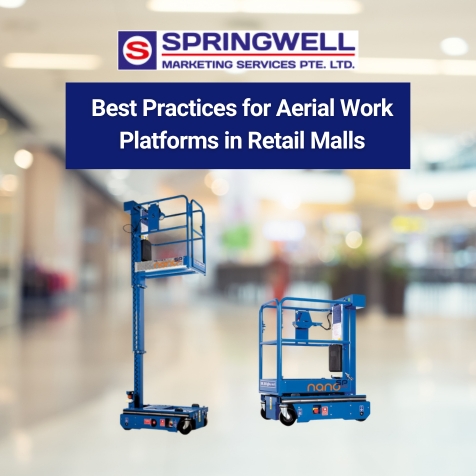
Retail malls are dynamic, high-traffic spaces that require frequent maintenance — from replacing light fixtures to cleaning atriums and updating signage. Because of their multi-level structures and constant public presence, these environments pose unique challenges when it comes to working safely at height.
Aerial Work Platforms (AWPs) such as scissor lifts, vertical mast lifts, and boom lifts provide an efficient way to reach overhead areas. Yet, their use in malls must follow strict safety and operational guidelines.
Understanding and implementing best practices not only ensures worker safety but also prevents disruptions to mall operations.
Understanding the Retail Mall Environment
Retail malls present distinct operating conditions compared to industrial sites. Key considerations include:
- High pedestrian activity: Shoppers, families, and staff move constantly throughout the premises, increasing the risk of accidents.
- Mixed flooring surfaces: Smooth tiles and slopes can affect stability and traction for equipment.
- Architectural constraints: Overhead lighting, decorative ceilings, and narrow walkways require precise manoeuvring.
- Limited working hours: Most maintenance must take place outside opening hours to minimise disturbance.
Recognising these constraints is essential before selecting and operating an aerial work platform in a mall.
1. Inspect Equipment Before Every Use
Regular inspection is the first line of defence against accidents. Before operating any AWP:
- Examine the platform and guardrails for cracks, dents, or corrosion.
- Check hydraulic and electrical systems for leaks or frayed cables.
- Ensure wheels, tyres, and stabilisers are free of debris and properly aligned.
- Test controls and emergency stops to verify proper function.
Documenting each inspection supports accountability and compliance with Singapore’s Workplace Safety and Health (WSH) guidelines. Preventive maintenance also extends the life of the equipment.
2. Train and Certify Operators
Operating an AWP requires both skill and awareness. Only trained personnel should handle this machinery. Proper training should cover:
- Load limits and safe weight distribution.
- Platform operation — including steering, elevation, and descent functions.
- Emergency procedures for mechanical or power failure.
- Hazard recognition, such as low ceilings or obstructions.
Regular refresher courses ensure operators remain competent, particularly when new equipment or models are introduced.
3. Use the Right Protective Gear
Personal Protective Equipment (PPE) remains essential even with modern safety features. Operators should wear:
- Full-body harnesses with secure lanyards, especially on boom lifts.
- Helmets and non-slip footwear to protect against impact or falls.
- High-visibility vests to make workers easily seen by nearby staff.
- Tool lanyards or holders to prevent falling objects from injuring bystanders below.
Each piece of equipment adds an extra layer of protection for both the operator and the public.
4. Conduct a Thorough Site Assessment
Every mall has unique floor plans, ceiling heights, and crowd patterns. A detailed site assessment helps identify potential risks before work begins:
- Evaluate floor strength and evenness to ensure stability.
- Measure overhead clearance for signage, lighting, or ductwork.
- Identify entrances, walkways, or escalators that may need temporary barricades.
- Check for obstructions such as planters, benches, or kiosks that could restrict manoeuvrability.
A site plan that accounts for these variables helps prevent both damage and disruption.
5. Operate Safely and Within Capacity
Aerial platforms have precise load and height limits that must never be exceeded. Operators should:
- Keep total load — including tools and materials — within the manufacturer’s rated capacity.
- Use slow, controlled movements, especially near ceilings or decorative elements.
- Deploy outriggers or stabilisers fully before lifting.
- Avoid leaning or climbing on guardrails to extend reach.
These practices reduce the risk of tip-overs, falls, and mechanical stress.
6. Schedule Work Strategically
Mall environments are busiest during daytime and weekends. To ensure safety and efficiency:
- Schedule maintenance during off-peak hours — early mornings or late nights.
- Coordinate with mall management to obtain necessary permits or safety clearances.
- Use temporary barriers and signage to redirect foot traffic safely.
- Limit noise and dust generation when possible, particularly near food or retail zones.
Well-timed operations protect the public while allowing maintenance teams to work efficiently.
7. Prepare for Emergencies
Even with planning, unexpected situations can occur. Every team should have a clear rescue plan in place. This includes:
- A designated ground crew trained to assist in emergencies.
- Clear communication protocols, such as radios or hand signals.
- A method for lowering the platform manually in case of power failure.
- Awareness of nearby first-aid resources or emergency exits.
Readiness ensures rapid response and reduces potential harm in the event of an incident.
8. Comply with Local Safety Regulations
Singapore’s Workplace Safety and Health (WSH) regulations set the legal framework for working at height. To comply:
- Use only equipment that meets international safety standards (e.g. ISO, EN).
- Maintain records of inspections and operator training.
- Follow permit-to-work procedures required by mall management or contractors.
- Conduct risk assessments before commencing any elevated work.
Compliance demonstrates professionalism and safeguards both personnel and property.
9. Communicate and Coordinate
Successful AWP operations rely on communication between all stakeholders — from mall management to maintenance crews. Establishing clear channels of communication helps:
- Align work schedules with mall operations.
- Ensure security and cleaning teams are informed.
- Prevent misunderstandings that could lead to unsafe situations.
Good coordination also builds trust between tenants, management, and contractors.
Takeaway
Using aerial work platforms in retail malls is not just about reaching high spaces — it’s about working safely and efficiently in public areas. Every precaution, from inspection to communication, contributes to a smoother operation.
By adhering to these best practices, mall operators and maintenance teams can protect workers, shoppers, and property alike.
When safety becomes a shared responsibility, mall environments stay not only functional but welcoming and secure for everyone.