


When to Repair vs. Replace Your Pallet Truck
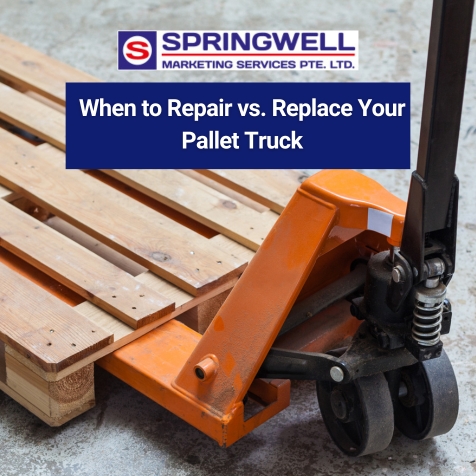
Pallet trucks are the backbone of many warehouses, retail outlets, and supermarkets in Singapore. Whether it’s moving bulk deliveries at a loading dock or replenishing shelves in a supermarket, pallet trucks keep goods flowing smoothly. But like any frequently used equipment, they eventually wear down.
This raises a critical question for businesses: when is it more cost-effective to repair your pallet truck, and when is it smarter to replace it entirely? Understanding this decision can save you money, improve safety, and prevent costly downtime.
Why Pallet Truck Maintenance Matters
A reliable pallet truck keeps operations efficient. If it breaks down, the consequences can be significant:
- Downtime: Goods pile up at the loading bay, slowing productivity.
- Safety risks: Faulty equipment increases the chance of workplace accidents.
- Rising costs: Delayed deliveries and constant repairs add up over time.
Regular inspections and prompt action — whether repairing or replacing — ensure your operations run smoothly and safely.
Signs Your Pallet Truck Needs Repair
Not all pallet truck issues require a replacement. In many cases, repairs are sufficient to restore performance. Look out for these signs:
- Hydraulic problems: Oil leaks or difficulty lifting loads.
- Noisy or stiff wheels: Worn-out wheels making it hard to manoeuvre.
- Slow lifting speed (for electric pallet trucks).
- Minor fork wear: Surface damage that doesn’t affect safety.
If the issues are minor and parts are readily available, repairing your pallet truck is often the most practical option.
When Repair Is the Best Option
Repairing makes sense if:
- Only replaceable components like seals, wheels, or handles are damaged.
- Your pallet truck is relatively new and still under warranty or service contract.
- Repair costs are much lower than replacement.
- The pallet truck is used for light-duty applications, not heavy or continuous loads.
In these cases, repairing ensures you extend the lifespan of your equipment without overspending.
Signs It’s Time to Replace Your Pallet Truck
Eventually, repairs stop being enough. Here are clear indicators that replacement is the smarter move:
- Frequent breakdowns despite multiple repairs.
- Structural damage to the forks or frame that compromises safety.
- Obsolete models where spare parts are hard to find.
- Excessive downtime affecting productivity.
- Repair costs that exceed 50% of the replacement cost.
If your pallet truck is becoming a recurring expense, investing in a new unit will save you money and frustration in the long run.
Benefits of Replacing a Pallet Truck
While it requires a larger upfront investment, replacing your pallet truck has long-term advantages:
- Improved safety with modern designs and ergonomic features.
- Higher efficiency thanks to smoother wheels, faster lifts, and better control.
- Lower energy consumption in electric pallet trucks.
- Reduced maintenance with newer models built for durability.
A new pallet truck can enhance productivity and worker morale by making daily tasks easier.
How to Decide: Repair or Replace?
Making the right choice depends on a few key factors:
- Age of the pallet truck – Older models nearing the end of their lifespan are better replaced.
- Extent of damage – Minor wear can be repaired; structural damage should not be ignored.
- Cost comparison – If repair costs are close to replacement, replacement is the better option.
- Usage requirements – High-frequency, heavy-duty use demands a more reliable machine.
A quick checklist: If your pallet truck is new, lightly used, and cheap to repair, fix it. If it is old, unreliable, and costly to maintain, replace it.
Choosing a Reliable Partner in Singapore
Deciding whether to repair or replace is easier with expert guidance. A trusted supplier like Springwell can help you:
- Identify whether your pallet truck can be repaired safely.
- Source genuine replacement parts for repairs.
- Provide a wide selection of manual, semi-electric, and electric pallet trucks for replacement.
- Offer after-sales servicing and maintenance plans to maximise your investment.
Takeaway
Knowing when to repair vs. replace your pallet truck is essential for cost savings, safety, and efficiency.
While minor issues can sometimes be managed through simple fixes, there comes a point where replacement is the only practical solution. Frequent breakdowns, outdated models, or safety concerns make investing in a new pallet truck the smarter choice.
Springwell for Material Handling Equipments
At Springwell, we specialise in supplying a wide range of pallet trucks that meet the diverse needs of warehouses, retail outlets, and supermarkets in Singapore.
By choosing a reliable, durable pallet truck from Springwell, you can ensure smoother operations, greater safety, and long-term value. Contact us today!
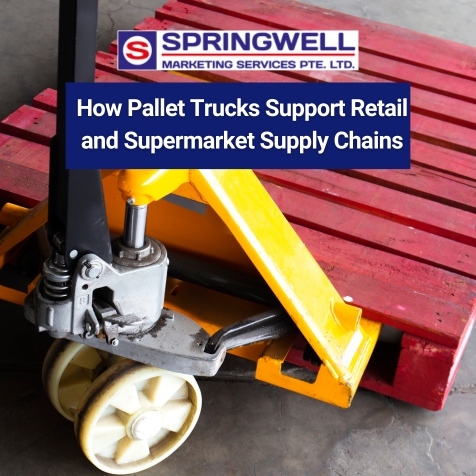
In today’s fast-paced retail environment, efficiency is everything. Supermarkets and retail stores in Singapore manage high volumes of goods daily, from bulk deliveries at the loading bay to shelf replenishment in-store. To keep operations smooth, reliable material handling equipment is essential — and pallet trucks play a critical role. Compact, versatile, and cost-effective, pallet trucks are the unsung heroes of the retail and supermarket supply chain.
The Role of Pallet Trucks in Retail & Supermarket Logistics
Unlike large warehouses that rely heavily on forklifts, retail outlets and supermarkets often work in tight spaces with constant customer traffic. Pallet trucks provide the perfect balance of power and manoeuvrability, enabling staff to:
- Move goods from delivery trucks into storage areas quickly.
- Transport stock from backrooms to shop floors during replenishment.
- Handle loads safely in narrow aisles where forklifts would be impractical.
By streamlining these movements, pallet trucks ensure that shelves are always stocked and customers enjoy a seamless shopping experience.
Benefits of Pallet Trucks for Retailers and Supermarkets
Pallet trucks bring several advantages that directly impact productivity and safety in retail supply chains:
- Efficiency: Staff can move heavy goods faster, reducing downtime during busy hours.
- Space-Saving: Their compact design is ideal for narrow supermarket aisles and backroom storage.
- Cost-Effective: Pallet trucks are far more affordable than forklifts, making them suitable for businesses of all sizes.
- Safety: They minimise manual lifting, lowering the risk of worker injuries.
- Versatility: From dry goods to frozen products in cold storage, pallet trucks handle a wide range of tasks.
Types of Pallet Trucks and Their Applications in Retail
Different retail operations require different pallet truck solutions. Some of the most common include:
- Manual Pallet Trucks: Simple and durable, these are ideal for small shops and quick stock transfers.
- Electric Pallet Trucks: Perfect for supermarkets and larger retail warehouses, they speed up heavy load handling and reduce operator fatigue.
- Specialised Pallet Trucks: Options such as low-profile pallet trucks for display racks or stainless-steel models for hygienic food handling environments ensure every need is met.
By selecting the right type, retailers can optimise both efficiency and safety in their daily operations.
Real-Life Applications in Retail & Supermarkets
Pallet trucks support supply chains at every stage of retail operations, including:
- Stock Replenishment: Staff can restock shelves quickly during off-peak hours.
- Bulk Deliveries: Large shipments from suppliers are easily moved from loading docks into storage areas.
- Cold Storage Handling: Electric pallet trucks are widely used in supermarkets for chilled and frozen goods.
- Promotional Displays: During festive sales, pallet trucks help move bulk promotional items straight to the shop floor.
These applications highlight just how integral pallet trucks are in keeping retail operations running smoothly.
Safety & Best Practices in Retail Environments
While pallet trucks are user-friendly, safe operation is crucial, especially in customer-facing environments like supermarkets. Best practices include:
- Operator Training: Ensuring staff know proper handling techniques.
- Load Management: Never exceeding the pallet truck’s rated capacity.
- Maintenance Checks: Regular inspections to ensure brakes, wheels, and hydraulics are in good working order.
- Clear Pathways: Keeping aisles unobstructed for both staff and shoppers.
Following these practices reduces risks and ensures smooth daily operations.
Choosing the Right Pallet Truck for Your Retail Supply Chain
Every retail operation is unique, and the right pallet truck depends on factors such as:
- Store Size & Aisle Width
- Load Capacity & Frequency of Use
- Operating Environment (ambient, cold storage, outdoor loading bays)
Partnering with a trusted supplier like Springwell ensures you get pallet trucks that are not only durable but also backed by expert advice, servicing, and after-sales support.
Takeaway
From warehouses to shop floors, pallet trucks are indispensable for retail and supermarket supply chains in Singapore. They enhance efficiency, improve safety, and keep goods moving smoothly — ensuring shelves are always stocked and customers remain satisfied.
At Springwell, we provide a wide range of pallet trucks designed to meet the unique demands of retail and supermarket operations.
Contact Springwell today to find the right pallet truck solution for your business and take the next step in strengthening your supply chain.
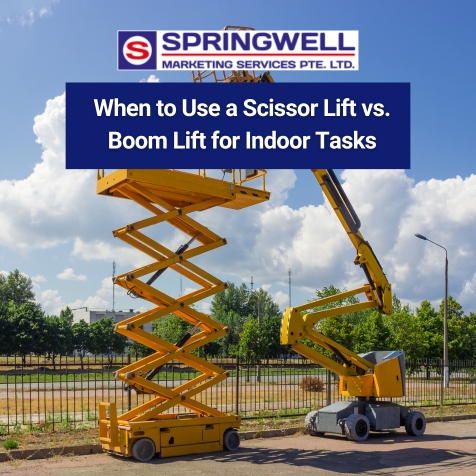
Choosing the right aerial work platform can make the difference between a smooth, efficient project and costly delays. While both scissor lifts and boom lifts help workers reach elevated areas safely, each serves distinct purposes depending on your specific indoor requirements.
Understanding when to deploy each type of lift will help you maximise productivity, ensure worker safety, and avoid unnecessary equipment costs.
Today, we will break down the key differences between scissor lifts and boom lifts for indoor applications, helping you make informed decisions for your next project.
What Are Scissor Lifts and Boom Lifts?
Before diving into specific applications, let’s clarify what sets these two machines apart.
Scissor Lifts
Scissor lifts use a crisscrossing metal support system that extends vertically, much like an accordion. They provide a stable platform that moves straight up and down, offering excellent weight capacity and a spacious work area.
Most scissor lifts designed for indoor use are electric-powered, making them ideal for enclosed spaces.
Boom Lifts
Boom lifts, also called cherry pickers or bucket trucks, feature an articulating arm that can extend both vertically and horizontally.
This arm typically ends in a small basket or platform. Boom lifts excel at reaching over obstacles and accessing hard-to-reach areas that require precise positioning.
Key Factors to Consider for Indoor Work
Several factors should influence your decision when selecting aerial equipment for indoor tasks:
Ceiling Height and Space Constraints
Indoor environments often present unique spatial challenges. Low ceilings, narrow corridors, and tight corners can limit your equipment options.
Scissor lifts typically require more vertical clearance due to their folding mechanism, while boom lifts may need additional space for their extending arms.
Floor Conditions
Indoor floors vary significantly, from polished concrete warehouses to delicate finished surfaces in retail spaces.
Equipment weight distribution and tire types become crucial considerations to prevent floor damage.
Power Requirements
Indoor work typically demands electric equipment to avoid exhaust fumes and reduce noise levels. Both scissor lifts and boom lifts offer electric variants, but their runtime and charging requirements differ.
Precision and Reach Requirements
Some tasks require pinpoint accuracy, while others need broad coverage areas. The nature of your work will heavily influence which lift type serves you best.
When to Choose Scissor Lifts for Indoor Tasks
Scissor lifts shine in specific indoor scenarios where stability and platform space take priority.
Large Platform Work Areas
When your project requires multiple workers, extensive tools, or bulky materials at height, scissor lifts provide unmatched platform space.
Their rectangular work areas typically range from 6 to 8 feet in length, accommodating several team members comfortably.
Warehouse Maintenance and Inventory Management
Large warehouses benefit from scissor lifts’ ability to handle heavy loads while providing stable work platforms.
Whether you’re installing overhead lighting, conducting HVAC maintenance, or managing high-bay storage, scissor lifts offer the stability and capacity needed for these demanding tasks.
Ceiling Installation Projects
Installing drop ceilings, light fixtures, or sprinkler systems often requires workers to move systematically across large areas.
Scissor lifts allow teams to position themselves directly beneath work areas and make incremental adjustments as they progress.
Heavy Load Capacity Needs
Scissor lifts typically support 225 to 1135 kilograms, significantly more than most boom lifts.
When your indoor project involves heavy materials, multiple workers, or substantial tool requirements, scissor lifts provide the necessary weight capacity.
When to Choose Boom Lifts for Indoor Tasks
Boom lifts excel when precision, reach, and obstacle navigation become primary concerns.
Accessing Hard-to-Reach Areas
Indoor spaces often contain obstacles like machinery, shelving units, or architectural features that block direct vertical access.
Boom lifts can extend up and over these obstructions, reaching areas that would be impossible for scissor lifts to access.
Detailed Maintenance Work
Tasks requiring precise positioning, such as electrical repairs, detailed painting, or equipment servicing, benefit from boom lifts’ ability to position workers exactly where needed. The articulating arm allows for fine adjustments that scissor lifts cannot match.
Working Around Obstacles
Manufacturing facilities, retail spaces, and office buildings often contain permanent fixtures that cannot be moved. Boom lifts can navigate around these obstacles, extending over conveyor systems, around columns, or through tight spaces.
High-Precision Applications
When your work requires reaching specific points rather than covering broad areas, boom lifts provide superior positioning control.
This makes them ideal for tasks like installing signage, performing detailed inspections, or accessing specific equipment components.
Safety Considerations for Indoor Use
Both lift types require specific safety protocols for indoor applications.
Electrical Safety
Indoor environments often contain electrical hazards that outdoor work doesn’t present.
Ensure your chosen equipment maintains appropriate clearances from power lines, electrical panels, and other energised components. Many indoor boom lifts feature insulated booms for electrical work.
Floor Protection
Protecting interior flooring requires careful equipment selection. Look for lifts with non-marking tires and appropriate weight distribution to prevent damage to finished surfaces.
Some facilities may require protective mats or specialised tyre compounds.
Overhead Clearance
Calculate total height requirements carefully, including the lift’s stowed height plus any items workers will carry.
Sprinkler systems, light fixtures, and ceiling-mounted equipment can create unexpected clearance issues.
Cost Considerations
Budget often plays a decisive role in equipment selection.
Rental vs. Purchase Costs
Scissor lifts generally cost less to rent or purchase than boom lifts with comparable height capabilities.
However, boom lifts may complete certain tasks more efficiently, potentially offsetting higher equipment costs through reduced labour time.
Operational Efficiency
Consider how each lift type affects project timelines.
Scissor lifts may require more setup and repositioning for complex tasks, while boom lifts might complete the same work with fewer moves but at a slower pace due to their smaller platforms.
Takeaway
Your decision should align with your specific project requirements, budget constraints, and safety considerations.
For projects requiring stable platforms, heavy lifting capacity, and systematic coverage of large areas, scissor lifts typically provide the best solution. They excel in warehouse environments, large-scale installations, and situations where multiple workers need to collaborate at height.
Boom lifts serve projects best when precision, obstacle navigation, and targeted access take priority. They’re ideal for maintenance work, detailed installations, and accessing specific points in complex indoor environments.
Springwell for Material Handling Equipment
Springwell offers reliable, durable, and innovative material handling solutions to meet your every need. From scissor lifts and pallet trucks to trailer jacks and jib cranes, we provide top-quality equipment designed to improve efficiency and safety in your operations.
Whether you’re optimising a warehouse or managing heavy loads, Springwell is your trusted partner for seamless material handling. Discover our full range of products and let us help you streamline your workflow today!
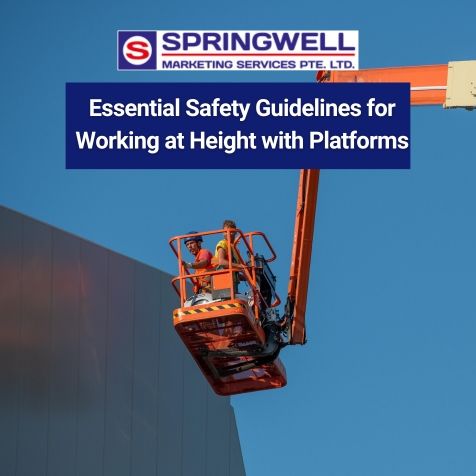
Working at height remains one of the most dangerous activities in construction, maintenance, and industrial work. Falls from height are a leading cause of workplace deaths in Singapore, accounting for a significant proportion of fatalities annually, according to the Ministry of Manpower (MOM).
Elevated work platforms offer a safer option than ladders or scaffolding for many tasks, but also come with risks. Following proper safety protocols can be the difference between completing a job safely and facing serious injury.
Today, we will explore the essential safety guidelines for using elevated work platforms, from pre-use inspections to emergency procedures, helping protect lives and ensure compliance with health and safety regulations.
Understanding Different Types of Work Platforms
Before examining safety protocols, it’s crucial to understand the various types of elevated work platforms available and their specific applications.
Mobile Elevated Work Platforms (MEWPs)
Mobile elevated work platforms include scissor lifts, boom lifts, and cherry pickers. These machines offer excellent mobility and can reach significant heights, making them ideal for construction, maintenance, and installation work.
Each type has specific weight limits, reach capabilities, and terrain requirements that directly impact safety procedures.
Static Work Platforms
Static platforms include scaffolding systems, podium steps, and fixed access platforms.
While these don’t offer the mobility of MEWPs, they provide stable work surfaces for extended tasks. Their safety considerations focus more on proper assembly, load distribution, and fall protection systems.
Temporary Access Platforms
These include tower scaffolds, mobile tower systems, and temporary staging areas.
They’re commonly used for short-term projects and require careful attention to ground conditions, stability, and proper assembly procedures.
Pre-Use Safety Inspections
Every elevated work platform requires thorough inspection before use, regardless of when it was last checked. This critical safety step can prevent equipment failures that lead to serious accidents.
Visual Inspection Checklist
Start with a comprehensive visual examination of the entire platform. Look for obvious damage such as cracks, dents, or missing components.
Check all welds, joints, and connection points for signs of stress or wear. Inspect the platform deck for damage, ensuring it’s clear of debris and provides adequate grip.
Pay particular attention to hydraulic systems, looking for leaks, damaged hoses, or worn fittings. Examine tyres or tracks for proper inflation, wear patterns, and damage that could affect stability.
Functional Testing
After visual inspection, conduct functional tests of all systems. Test all controls to ensure they respond appropriately and smoothly.
Check emergency stop functions and lowering systems. Verify that safety devices, such as tilt sensors and overload protection systems, are working correctly.
Test communication systems if the platform is equipped with them, and ensure all warning lights and alarms function properly.
Documentation Requirements
Record all inspections according to your organisation’s procedures and regulatory requirements. Note any defects found and actions taken.
Never use equipment that fails inspection until repairs are completed by qualified personnel.
Personal Protective Equipment Requirements
Proper PPE forms a critical line of defence when working at height with platforms. The specific requirements may vary depending on the type of platform and work being performed.
Fall Protection Systems
Full body harnesses are typically required when working from MEWPs, even though the platform provides a protected working area. The harness should be attached to designated anchor points within the platform basket, never to adjacent structures.
Ensure harnesses fit properly and are in good condition. Check all buckles, stitching, and metal components before each use. Replace any harness showing signs of wear or damage.
Additional PPE Considerations
- Hard hats protect against falling objects and should be worn at all times.
- Safety boots with a good grip help prevent slips on platform surfaces.
- High-visibility clothing ensures workers remain visible to ground personnel and equipment operators.
Consider additional protection based on the specific work environment, such as eye protection for grinding operations or respiratory protection in dusty conditions.
Safe Operating Procedures
Following established operating procedures helps prevent the majority of platform-related accidents. These procedures should be tailored to your specific equipment and work environment.
Pre-Operation Setup
Before raising any platform, ensure the ground surface is level, stable, and capable of supporting the equipment’s weight. Extend outriggers or stabilisers according to manufacturer specifications.
Check that the area below and around the platform is clear of personnel and obstacles.
Establish communication protocols with ground personnel and ensure emergency procedures are understood by all team members.
During Operation
Maintain three points of contact when entering or exiting platforms. Keep the platform basket clean and organised, avoiding overloading with tools and materials.
Never exceed the platform’s rated capacity, including personnel, tools, and materials.
Avoid sudden movements that could destabilise the platform. Move the platform gradually and be aware of overhead obstacles, power lines, and other hazards.
Weather Considerations
Wind conditions significantly impact platform safety. Most manufacturers specify maximum wind speeds for operation, typically around 12-15 metres per second. Stop work immediately if conditions exceed safe limits.
Rain, ice, and snow create additional hazards through reduced visibility and slippery surfaces. Adjust work procedures accordingly or postpone operations until conditions improve.
Emergency Procedures and Rescue Plans
Despite best efforts, emergencies can occur when working at height. Having clear emergency procedures and rescue plans can save lives.
Emergency Communication
Establish reliable communication methods between platform operators and ground personnel. This might include two-way radios, mobile phones, or hand signals for shorter distances. Ensure backup communication methods are available.
Ground personnel should be trained to recognise emergency situations and know how to respond appropriately.
Equipment Failure Response
If platform controls fail, remain calm and use emergency lowering procedures as specified by the manufacturer. Most platforms have manual or auxiliary lowering systems that can bring the platform down safely.
Never attempt to exit a platform at height unless facing immediate life-threatening danger. Wait for proper rescue procedures to be implemented.
Rescue Planning
Develop site-specific rescue plans before beginning work. Identify qualified rescue personnel and ensure necessary equipment is available. Consider factors such as access routes, medical response, and communication with emergency services.
Regular rescue drills help ensure procedures work effectively and personnel understand their roles during emergencies.
Staying Safe While Working at Height
Working at height with platforms requires strict attention to safety procedures and hazard awareness. Success relies on proper equipment, thorough inspections, training, and consistent safe practices.
Safety is everyone’s responsibility—operators, ground personnel, and supervisors. Regular communication, ongoing training, and commitment to procedures ensure everyone goes home safely.
Springwell for Material Handling Equipment
Discover reliable, high-quality material handling solutions with Springwell. From pallet trucks to jib cranes, we provide equipment designed to streamline your operations and boost efficiency.
Partner with us to find the right tools for your business and keep your workflow moving seamlessly. Contact us today!

Order picking is a critical part of any warehouse operation. It accounts for a significant portion of labour costs and often directly impacts customer satisfaction. Efficient order picking ensures faster deliveries, accurate shipments, and a smoother workflow. But did you know that the type of order picker trolley you use could make or break how efficient your operation is?
If you’re looking to optimise your process, reduce downtime, and better support your team, we will walk you through why choosing the right order picker trolley is key, and how to make an informed decision.
Why Picking Efficiency Matters
Before we deep-dive into trolleys, it’s essential to highlight why picking efficiency is so crucial.
Order picking accounts for nearly 50-60% of total warehouse operational costs, according to industry analyses. When this process isn’t optimised, it leads to delays, increased labour costs, and lower customer satisfaction.
Efficient picking helps:
- Reduce time spent retrieving items.
- Minimise human errors, such as shipping incorrect products.
- Maximise throughput, allowing more orders to be processed in less time.
- Improve overall employee satisfaction by reducing physical strain.
Now, where do trolleys fit into this equation? The type of equipment your pickers use has a direct impact on how smoothly and quickly they can perform their tasks. Enter the order picker trolley.
What Is an Order Picker Trolley?
An order picker trolley is more than just a cart on wheels. It’s a specialised piece of equipment designed to simplify and speed up retrieving items from various storage zones in your warehouse.
Some are basic two-shelf models, while others include features like barcode mounting brackets, dividers, and even compartments for returns and waste collection.
From lightweight models designed for small items to heavy-duty trolleys crafted for bulkier products, order picker trolleys are versatile tools that cater to different operational needs.
The Challenges of Using the Wrong Trolley
Using a mismatched or poorly designed trolley can lead to some frustrating (and costly) headaches for warehouses:
- Reduced Productivity: Trolleys that don’t align with the volume or type of items being moved can slow pickers down.
- Workplace Injuries: Heavy or unwieldy trolleys can lead to strain and even accidents, creating health and safety issues.
- Damaged Items: Poorly designed trolleys may fail to secure items properly, resulting in damaged products.
- Inefficient Use of Space: A trolley without proper compartments or organisation leads to inefficiencies, as pickers waste time sorting messy loads.
Essentially, an ill-fitting trolley drains both time and resources, something every manager prefers to avoid.
Choosing the Right Order Picker Trolley for Your Operation
Selecting the right trolley might seem daunting at first, but breaking it into clear, actionable steps can make this process seamless.
1) Assess Your Picking Needs
Start by understanding the requirements of your warehouse. Are your pickers handling small, lightweight items, or bulkier, heavier products?
Do they pick across multiple storage zones, or are they confined to a specific aisle? Answering these questions will determine the trolley size, weight capacity, and features you’ll need.
2) Prioritise Ergonomics
Your pickers spend hours pushing and pulling trolleys through aisles. Choosing an ergonomic design helps reduce strain and fatigue. Look for features like:
-
- Adjustable handle heights.
- Lightweight frames for easy manoeuvrability.
- Swivel wheels for better control.
3) Choose the Right Capacity
A trolley with too little capacity means more trips back and forth, while an oversized one can be cumbersome to manoeuvre in tighter spaces.
Strike a balance by choosing a trolley based on your average order size and item weight.
4) Invest in Compartmentalised Designs
Trolleys with bins, shelves, or dividers make it easier to organise orders.
This not only improves picker efficiency, but also minimises errors and speeds up the packing process.
5. Opt for Built-in Technology
For tech-forward warehouses, consider trolleys with mounting brackets for barcode scanners or built-in tablet holders.
These features enable pickers to seamlessly integrate with your warehouse management system (WMS), improving accuracy and speed.
6) Factor in Durability
Trolleys subject to heavy or daily use need to be durable.
Invest in high-quality materials like stainless steel or aluminium to ensure longevity, even with frequent load-bearing.
Types of Trolleys to Consider
Here are common types of order picker trolleys tailored for different operational needs:
- Basic Two-Tier Trolleys: Ideal for lightweight items in small warehouses. These are cost-effective and easy to manoeuvre, but may lack advanced features.
- Multi-Level Trolleys: Multi-level trolleys work well for high SKU (stock-keeping unit) environments with a variety of small items. Multiple shelves keep everything organised and within reach.
- Heavy-Duty Trolleys: Designed to handle bulkier or heavier items, these trolleys have a higher weight capacity and often feature reinforced frames.
- Custom-Built Trolleys: For warehouses with unique needs, custom-built trolleys can be tailored with specific sizes, compartments, or storage add-ons.
The Benefits of Optimised Trolley Systems
Still wondering if upgrading your trolleys is worth the investment? Here’s the payoff:
- Faster Picking Times: Workers spend less time navigating or sorting items, allowing them to complete orders faster.
- Improved Worker Safety: Ergonomic designs reduce strain and the risk of injuries, leading to a happier, healthier team.
- Reduced Errors: Tools like compartmentalised shelving prevent pick-and-pack mistakes.
- Higher Overall Efficiency: Streamlined picking processes allow you to meet customer demands with confidence and speed.
- Cost Savings: While better trolleys might seem expensive initially, their long-term benefits far outweigh the costs.
Should You Make the Switch?
The short answer? Absolutely. Optimising your warehouse with the right equipment boosts productivity, trims down operational costs, and ensures happy team members and customers alike.
Takeaway
Selecting the perfect order picker trolley isn’t just an operational decision; it’s a strategic move to enhance efficiency, minimise costs, and future-proof your business. By investing in equipment that supports your team’s daily needs, you’re also delivering greater value to your customers.
Wondering where to start? Explore a range of order picker trolleys tailored to every requirement, and take that first step towards transforming how your warehouse operates.