


Heavy-Duty vs Light-Duty Trolleys: What’s the Best Choice for You?
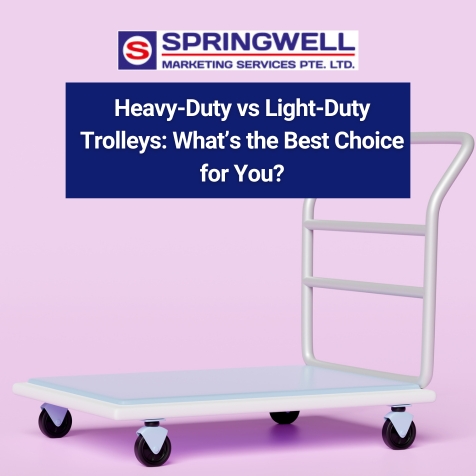
When it comes to transporting goods efficiently, trolleys are a go-to solution for professionals in various industries. But deciding between a heavy-duty or a light-duty trolley can be tricky if you don’t know exactly what you need. Choosing the right type is crucial for optimising your workflow, ensuring safety, and protecting your investment.
Today, we’ll take a closer look at the key differences between heavy-duty and light-duty trolleys, what they’re best suited for, and how to decide which one is the right choice for your requirements.
Why the Right Trolley Matters?
Whether you’re running a warehouse, managing a retail store, or even just organising your home garage, having the right trolley can make a world of difference.
A poorly chosen trolley can lead to inefficiencies, potential injuries, and even unnecessary wear and tear on your tools and equipment. On the other hand, the right trolley makes the transportation of goods safer, faster, and more convenient.
Here’s where understanding the distinction between heavy-duty and light-duty trolleys becomes essential. Beyond just size and weight capacity, these trolleys are designed for different needs and contexts, offering specific features that cater to particular tasks.
What Is a Heavy-Duty Trolley?
Heavy-duty trolleys are robustly designed to carry and move exceptionally heavy loads. These are the trolleys you’d find on factory floors, in warehousing operations, or in environments where tough jobs demand durable equipment.
Key Features of Heavy-Duty Trolleys:
- High Weight Capacity: Most heavy-duty trolleys can handle loads starting from 500 kg and upward, depending on the model.
- Durable Materials: They are typically made from reinforced steel or industrial-grade aluminium, ensuring maximum resilience.
- Larger Wheels: Designed for easier manoeuvring over rugged or uneven surfaces.
- Customisation Options: Many offer extensions, shelves, or ergonomic handles that cater to specific industrial needs.
- Longer Lifespan: Built to endure wear and tear even under challenging conditions.
Best Applications for Heavy-Duty Trolleys:
- Warehouses and manufacturing plants for heavy equipment and items.
- Construction sites to transport building materials.
- Automotive workshops for parts and machinery.
- Event setups involving bulky staging equipment or gear.
What Is a Light-Duty Trolley?
Light-duty trolleys, as the name suggests, are engineered for tasks that involve carrying lighter and smaller items. They are often more compact and agile, designed for more straightforward jobs and environments where ease of use and manoeuvrability are a priority.
Key Features of Light-Duty Trolleys:
- Lower Weight Capacity: Light-duty options typically support anywhere from 50 kg to around 200 kg.
- Lightweight Build: Often made from aluminium or plastic, ensuring easy portability.
- Compact Design: These trolleys are sleek, making them well-suited for tighter spaces like offices or retail spaces.
- Simple Maintenance: With fewer heavy-duty components, these trolleys tend to be easy to clean and maintain.
- Cost-Effective: They are typically less expensive than heavy-duty options, contributing to a lower upfront investment.
Best Applications for Light-Duty Trolleys:
- Retail environments for stocking shelves or moving inventory.
- Offices to transport files, stationery, or small equipment.
- Homes for moving gardening tools, small furniture, or DIY materials.
- Libraries and schools for organising and transporting books or supplies.
Comparing Heavy-Duty and Light-Duty Trolleys
Understanding the key differences between heavy-duty and light-duty trolleys can help you select the right option for your specific needs.
Weight Capacity:
- Heavy-duty trolleys: Can handle 500 kg and above.
- Light-duty trolleys: Support up to 200 kg.
Material Construction:
- Heavy-duty trolleys: Made from reinforced steel or heavy aluminium for maximum durability.
- Light-duty trolleys: Constructed from lightweight aluminium or plastic for easy handling.
Best Suited For:
Heavy-duty trolleys: Ideal for industrial settings and heavy workloads.
Light-duty trolleys: Perfect for use in offices, retail environments, and homes.
Ease of Maneuvering:
Heavy-duty trolleys: Built to be used on rugged terrain, but may be harder to handle in tight spaces.
Light-duty trolleys: Compact, easy to manoeuver, and suitable for indoor use.
Cost:
Heavy-duty trolleys: Higher cost reflects increased durability and load capacity.
Light-duty trolleys: More budget-friendly, making them accessible for everyday tasks.
When to Choose a Heavy-Duty Trolley?
Opt for a heavy-duty trolley if your operations involve consistently moving large or heavy items. They are ideal for businesses where safety is paramount, such as manufacturing, construction, or logistics. The higher upfront investment in a heavy-duty trolley pays off over time, as these trolleys are built to withstand heavy wear.
However, if your use case does not demand carrying heavy loads, a heavy-duty option might be overkill and less cost-effective.
When to Choose a Light-Duty Trolley?
Light-duty trolleys are a fantastic option for lighter tasks such as moving goods efficiently around a workspace or home. Their ease of manoeuvrability, combined with affordability, makes them the preferred choice for smaller-scale tasks. They’re especially suited to environments where precision matters, such as in retail stores or offices.
But remember, pushing a light-duty trolley beyond its maximum capacity can compromise not only the trolley but also your safety.
Making the Right Choice for Your Needs
Choosing between a heavy-duty and light-duty trolley comes down to understanding your specific needs:
- Evaluate Load Capacity: Think about the maximum weight you’ll need to transport on a regular basis.
- Identify Your Work Environment: Rugged spaces demand durable wheels and reinforced construction, making heavy-duty options more suitable.
- Consider Frequency of Use: High-frequency, heavy-weight tasks lean towards heavy-duty, while periodic, lighter tasks favour light-duty models.
- Budget: Light-duty trolleys are more affordable, but heavy-duty trolleys deliver better long-term durability.
Takeaway
Both heavy-duty and light-duty trolleys offer incredible benefits, but they serve very different purposes.
By understanding your workflow and the specific demands of your tasks, you can choose the right trolley to improve efficiency and productivity. Don’t just buy any trolley; invest in one that fits your unique requirements.
Still unsure which trolley suits your needs? Our team of experts is here to help you make the right choice. Contact us today or explore our extensive range of hand trolleys today.

Manual stackers and powered stackers are two types of lifting equipment used in warehouses and other industrial settings. Both have their own advantages and disadvantages, and the choice between the two ultimately depends on a variety of factors, such as budget, workload, and specific needs of the warehouse.
Today, we will compare manual stackers with powered stackers to help you determine which type is best suited for your warehouse.
Manual Stackers
Manual stackers, also known as hand pallet trucks or hand-powered lift trucks, are operated by a person pushing or pulling a handle to manually lift and lower loads.
They are typically used for low- to medium-duty applications and have a maximum lifting capacity of around 2,000 pounds.
Advantages of Manual Stackers
- Cost-effective: Manual stackers are typically more affordable than powered stackers due to their simplicity and lack of expensive components.
- Versatile: These stackers can be used in a variety of warehouse settings, including narrow aisles and tight spaces.
- Easy to operate: With no electrical components or complicated controls, manual stackers are easy for anyone to use, with minimal training required.
- Lower maintenance costs: Since there are fewer moving parts, manual stackers have lower maintenance costs compared to powered ones.
Disadvantages of Manual Stackers
- Limited lifting capacity: As mentioned earlier, manual stackers have a maximum lifting capacity of around 2,000 to 3,000 pounds. This may not be enough for some warehouses that handle heavier loads.
- Slower compared to powered stackers: Manual stackers are slower in operation than powered ones. This can result in slower productivity and longer wait times for loading and unloading tasks.
- Requires physical effort: Unlike powered stackers that use electricity or fuel, manual stackers require physical effort from the operator. This can put a strain on the body and may lead to fatigue or injuries over time.
- Not suitable for outdoor use: Due to their limited lifting capacity and slow operation, manual stackers are not recommended for outdoor use or rough terrain. They are better suited for indoor operations on smooth surfaces.
Powered Stackers
Powered stackers, also known as electric or motorised stackers, are a type of material handling equipment that uses electricity or fuel to lift and move loads.
Composed of a mast, forks or platform, and a power source, powered stackers provide efficient and ergonomic solutions for material handling.
Advantages of Powered Stackers
- Increased Efficiency: With the ability to lift and move heavy loads, powered stackers offer increased efficiency compared to manual stackers. They can also handle larger loads and operate at a faster speed.
- Ergonomic Design: Powered stackers are designed with ergonomics in mind, reducing strain on workers and promoting safe material handling practices. This helps prevent injuries and improves overall productivity.
- Versatile Applications: Unlike manual stackers, powered stackers can be used for both indoor and outdoor operations, making them more versatile. They can also be equipped with different attachments to handle various types of materials.
Disadvantages of Powered Stackers
While powered stackers offer many advantages, they also have some disadvantages that should be taken into consideration before making a purchase decision. These include:
- Higher Cost: Powered stackers are more expensive than manual ones due to their complex machinery and components.
- Maintenance Requirements: Powered stackers require regular maintenance to ensure proper functioning, which can add up to the overall cost of ownership.
- Limited Maneuverability: Unlike manual stackers, powered ones have limited manoeuvrability due to their larger size and weight. This can make it challenging to navigate through narrow aisles or small spaces.
- Training Requirements: Operating a powered stacker requires specialised training and certification, which can be time-consuming and add to the initial cost of purchasing the equipment.
How To Choose The Right Stacker For Your Needs
When considering whether a manual or powered stacker is the right choice for your business, it’s essential to consider the specific needs and requirements of your operations. Here are some factors to keep in mind when selecting a stacker:
- Load Capacity: Determine the maximum weight that you will need to lift on a daily basis and select a stacker with an appropriate load capacity.
- Lift Height: Consider the height of your storage racks or shelves and choose a stacker with enough lifting height to reach them.
- Type of Load: If you have irregularly shaped or fragile loads, opt for a powered stacker with adjustable forks or specialized attachments to ensure safe and secure handling.
- Manoeuvrability: Evaluate the layout of your warehouse or storage facility and select a stacker with the appropriate turning radius and manoeuvering capabilities to navigate through narrow aisles or tight spaces.
- Durability: Consider the construction materials and overall build quality of the stacker to ensure its durability and longevity under heavy use.
Takeaway
In summary, selecting the right stacker for your material handling needs requires careful consideration of several factors.
By taking into account the weight and dimensions of your loads, as well as the specific requirements of your work environment, you can choose a stacker that will enhance efficiency, safety and durability in your operations.
Keep in mind that regular maintenance and proper training for operators are also crucial to ensuring the longevity and optimal performance of your stacker equipment.

Electric pallet trucks are becoming increasingly popular in the material handling industry due to their numerous advantages over traditional manual or gas-powered alternatives. These types of vehicles are used for moving and lifting heavy loads within warehouses, factories, and distribution centres.
In recent years, there has been a significant increase in demand for electric pallet trucks, which can be attributed to various factors, such as advancements in technology, cost-effectiveness, and environmental awareness.
What is Pallet Trucks?
Pallet trucks, also known as pallet jacks or pump trucks, are material handling equipment used for lifting and moving palletised loads.
They come in various forms, such as manual, electric, and gas-powered. Pallet trucks typically have two forks that slide under the pallet to lift it off the ground and can be operated by a single person.
They are mostly used in warehouse, manufacturing, and distribution settings for efficient movement of heavy loads.
Types of Pallet Trucks
There are several types of pallet trucks available, each designed for specific purposes. Some common types include:
- Manual Pallet Trucks: These pallet jacks are manually operated and require the user to pump a handle to lift the load. They are ideal for lighter loads or smaller spaces.
- Electric Pallet Trucks: These pallet jacks use an electric motor to lift and move heavy loads. They offer more power and efficiency compared to manual ones and are suitable for larger spaces.
- High Lift Pallet Trucks: These pallet trucks have a higher lifting height, making them suitable for loading and unloading from trucks or shelves. They are ideal for warehouses or distribution centres with high storage racks.
- All Terrain Pallet Trucks: These pallet jacks are designed with larger wheels to navigate rough and uneven surfaces, such as gravel, grass, or dirt. They are commonly used in outdoor environments like construction sites or farms.designed with larger wheels
Advantages of Electric Pallet Trucks
1) Cost-effectiveness
Electric pallet trucks offer a significant cost advantage over traditional manual or gas-powered options. These vehicles do not require the purchase of fuel, which can be a considerable expense for businesses that rely heavily on material handling equipment.
Additionally, electric pallet trucks require minimal maintenance and have longer lifespans than their gas-powered counterparts, resulting in further cost savings for businesses.
2) Increased efficiency and productivity
Electric pallet trucks are designed to increase efficiency and productivity in warehouses and factories.
Due to their electric motors, these vehicles can move heavier loads faster and with less effort compared to manual or gas-powered options. This results in increased productivity, as operators can move more loads in a shorter amount of time.
Moreover, electric pallet trucks are equipped with advanced features such as power steering and ergonomic design, which makes operating them easier and less tiring for workers. This not only improves their overall performance, but also reduces the risk of injuries or strains from lifting heavy loads manually.
3) Reduced environmental impact
One of the major benefits of using electric pallet trucks is their reduced impact on the environment.
With zero emissions and no reliance on fossil fuels, these vehicles help to minimise air pollution and contribute towards a cleaner and healthier work environment.
Additionally, electric pallet trucks have lower operational noise levels compared to gas-powered alternatives, making them suitable for use in noise-sensitive areas such as hospitals or residential areas. This not only benefits the workers operating the vehicles, but also reduces noise pollution in the surrounding areas.
The Future of Electric Pallet Trucks
As technology continues to advance and the world shifts towards more environmentally-friendly practices, electric pallet trucks are positioned to play a significant role in the future of material handling.
With potential advancements in battery technology and increased investment in sustainable transportation, we can expect to see even more efficient and powerful electric pallet trucks on the market.
In fact, some companies have already started investing in all-electric warehouses, utilising electric pallet trucks for both indoor and outdoor operations. This not only reduces their carbon footprint, but also saves money on fuel costs and maintenance expenses.
Takeaway
In conclusion, electric pallet trucks offer numerous benefits over traditional gasoline or diesel-powered vehicles. From reduced emissions and noise pollution to increased efficiency and cost savings, they are a valuable asset for any material handling operation.
As technology continues to advance, we can expect electric pallet trucks to become even more efficient and widely adopted in the industry. So if you’re looking to upgrade your material handling equipment, consider investing in an electric pallet truck – it’s a decision that will benefit both your business and the environment.
Springwell For Material Handling Equipment
At Springwell, we offer a wide range of material handling equipment, including pallet trucks. Our pallet trucks come in various sizes and load capacities to cater to different operational needs.
We understand that every business has unique requirements and strive to provide customizable solutions for our customers. Contact us today!
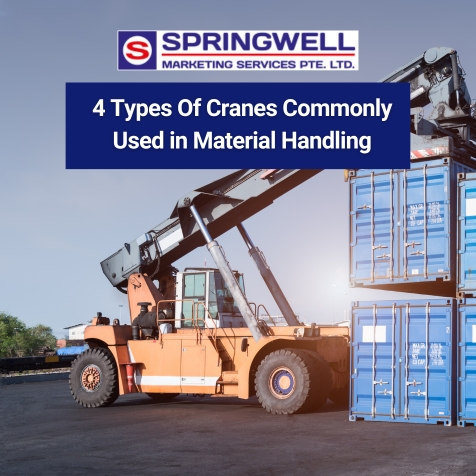
Cranes are essential equipment used in material handling to lift and move heavy objects. They come in various shapes, sizes, and types, each designed for a specific purpose.
Cranes have been used for centuries in the construction, manufacturing, and transportation industries. With technological advancements, the design and usage of cranes continue to evolve.
Today, we will discuss four common types of cranes used in material handling operations, and how to choose the right one for your project.
Types of Cranes
There are numerous types of cranes, each with its unique capabilities and functions. Here are four common types used in material handling operations:
1) Bridge Crane
Bridge cranes, also known as overhead cranes or suspended cranes, consist of a bridge beam that travels along two horizontal rails installed on both sides of the workplace. These cranes are commonly used in factories and warehouses to lift heavy objects across the workspace.
Bridge cranes come in various configurations depending on their lifting capacity, such as single-girder, double-girder, or gantry style
2) Jib Crane
Jib cranes are a type of small crane that features a horizontal arm (jib) that supports a hoist and trolley unit.
They are typically used in workshops, loading docks, or construction sites to lift materials at a specific location. Jib cranes can rotate 360 degrees, making them ideal for precise material handling operations.
3) Gantry Crane
Gantry cranes, also known as portal cranes, are similar to bridge cranes, but are supported by legs instead of rails.
These cranes are commonly used in outdoor areas, such as shipping ports and construction sites, to transport heavy loads across open spaces.
4) Tower Crane
Tower cranes are used for tall construction projects, such as skyscrapers.
They have a vertical mast and a horizontal boom that can rotate 360 degrees to move materials to different locations on the job site. These cranes are typically fixed to the ground or mounted on a mobile platform.
How Cranes Work
All cranes work on the same basic principle of lifting and moving heavy loads using a combination of pulleys, cables, and motors. The operator controls the load movement by using various controls located in the crane’s cab.
The first step in operating any crane is to properly set up the base or foundation and ensure that it can support the weight of the crane and its maximum load capacity.
Once this is done, the mast or boom is raised into position using hydraulic power. The boom length can also be adjusted depending on how far materials need to be lifted.
As the load is lifted, counterweights are often used to balance out the weight for stability. To move materials horizontally, cranes may also be equipped with a trolley system which runs along the boom.
Choosing the Right Crane for the Job
When it comes to choosing the right crane for a specific job, there are several factors that need to be considered. These include:
- Type of load: The type and weight of the load being lifted will determine what type of crane is best for the job. For example, a tower crane would be more suitable for lifting heavy construction materials, while a mobile crane may be better for lighter loads.
- Lifting height and radius: The required height and horizontal distance that the load needs to be lifted will also affect which crane is best for the job. Different cranes have different maximum heights and radii, so it’s important to know these specifications beforehand. For instance, if the load needs to be lifted to a great height or over a large distance, a tower crane would be more suitable.
- Working environment: The conditions of the working environment should also be considered when choosing a crane. For example, if the job site is tight and has limited space for manoeuvring, a compact or mobile crane may be necessary. If the job site is located in an area with strong winds or other challenging weather conditions, a sturdier crane, such as a crawler crane, may be required.
Takeaway
Choosing the right crane for material handling is crucial for ensuring safety and efficiency. It involves considering factors such as load capacity, height and distance requirements, and working environment conditions.
By carefully evaluating these factors, construction companies can select the most suitable crane for their specific needs and ensure successful completion of their projects.
Springwell, Your Choice For Material Handling Solutions
At Springwell, we understand the importance of selecting the right equipment for material handling. That’s why we offer a wide range of material handling solutions to cater to the diverse needs of our clients.
Contact us today to learn more about our products!
Step stools and ladders are commonly used tools in many settings, such as homes, workplaces, and construction sites. They provide a convenient way to reach objects that are out of reach or complete tasks at a higher level. However, they can also pose safety risks if not used properly.
Today, we will discuss how to remain safe while using step stools and ladders. We will cover the common hazards associated with these tools and provide practical tips for preventing accidents.
Common Hazards Associated with Step Stools & Ladders
Before discussing safety measures, it’s important to be aware of the potential hazards associated with step stools and ladders. Some of the most common hazards include:
a) Slips and Falls
Slips and falls are the leading cause of injuries when using step stools and ladders. They can occur due to various reasons such as:
- Incorrect placement or positioning of the stool or ladder
- Uneven or slippery surfaces
- Overreaching or leaning too far while on the tool
This can cause serious injuries, especially if the person falls from a significant height.
To prevent slips and falls, always ensure that the stool or ladder is on a stable and level surface. If necessary, use non-slip mats or have someone hold the base for extra stability. Avoid overreaching or leaning too far while on the tool and always maintain three points of contact (two hands and one foot) when climbing.
b) Tip-Overs
One of the most common accidents involving stools and ladders is tip-overs. This occurs when the stool or ladder becomes unstable and falls over, causing the person on it to also fall. Tip-overs can happen due to various reasons, such as:
- Uneven surfaces: If the surface that the stool or ladder is placed on is uneven, it can cause it to become unbalanced and tip over.
- Improper placement: Using a stool or ladder near doorways, walkways, or other high traffic areas can increase the chances of someone accidentally bumping into it and causing a tip-over.
- Overreaching: When a person reaches too far to one side while standing on a stool or ladder, it can cause the center of gravity to shift and result in a tip-over.
Tips for Safe Use of Stools and Ladders
When using stools or ladders, there are a few precautions you can take to ensure your safety and prevent tip-overs.
1) Choose the Right Tool for the Job
Before starting any task that requires a stool or ladder, consider the height and type of work you will be doing.
A step stool may be sufficient for reaching high shelves in the kitchen, but a taller ladder may be necessary for changing light bulbs on high ceilings. Using the appropriate tool will help reduce the risk of accidents.
2) Inspect Before Use
Before stepping onto a stool or ladder, take a moment to inspect it for any signs of damage or wear and tear.
Look for cracks, loose screws, or any other defects that may compromise its stability. If you notice any issues, do not use the tool and either repair it or replace it.
3) Choose a Stable Surface
When using a stool or ladder, always make sure to place it on a flat and stable surface.
Avoid placing them on uneven ground or surfaces that are slippery. This will help prevent the tool from tipping over while in use.
4) Maintain Three Points of Contact
Always maintain three points of contact while using a stool or ladder to ensure your safety—this means keeping either two feet and one hand or two hands and one foot in contact with the ladder at all times.
This practice helps provide better balance and stability, reducing the risk of slips or falls when working at heights.
5) Keep Your Body Centered
When using a stool or ladder, always keep your body centered between the side rails or legs to maintain balance.
Avoid leaning too far to one side as this can cause the tool to become unstable and potentially lead to a fall.
6) Use Proper Footwear
Wear closed-toe shoes with non-slip soles whenever you use a stool or ladder to ensure safety. Non-slip soles provide better traction, reducing the risk of slipping on smooth or uneven surfaces.
Closed-toe shoes also protect your feet from potential injuries caused by falling objects or accidental bumps.
7) Never Overreach
Always make sure that you are within arm’s reach of your work area while using a stool or ladder.
Overreaching can cause the tool to tip over or cause you to lose your balance, which may lead to falls and potential injury.
8) Keep Work Area Clear
Before using a stool or ladder, take the time to ensure your work area is completely clear of any clutter, obstacles, or loose items.
This not only helps prevent tripping hazards but also creates a safer environment, giving you more stability and freedom to move while working.
Takeaway
Using a step stool or ladder may seem simple, but it’s important to follow proper safety measures to prevent accidents and injuries. Remember to always inspect the tool before using it, use the right tool for the job, and never overreach while on a stool or ladder.
By following these tips, you can ensure a safe and successful project every time. So next time you need to reach high places during your DIY projects or chores, keep these safety measures in mind!