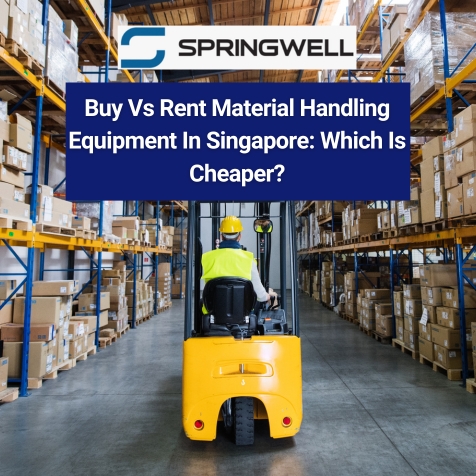
Short answer: Buy if the equipment is part of daily operations and will be used consistently for years. Rent if you need it for a short project, a seasonal peak or an uncertain requirement.
The cheaper option upfront is not always the cheaper option overall, so compare total cost of ownership against total rental cost for the period you expect to use the equipment.
Should I Buy Or Rent Material Handling Equipment?
It comes down to how often and how long you will use it. Trolleys, platform trucks, stackers, lifting equipment and cranes all follow the same logic: frequent, long-term use favours buying; temporary or fluctuating use favours renting.
|
Factor |
Buying |
Renting |
|---|---|---|
|
Upfront cost |
Higher |
Lower |
|
Long-term use |
Usually cheaper |
Rental charges add up |
|
Short-term projects |
Often uneconomical |
More flexible |
|
Equipment availability |
Always on hand |
Depends on rental stock |
|
Maintenance |
Your responsibility |
Depends on the agreement |
|
Storage |
You need space for it |
Little long-term storage needed |
|
Customisation |
More options |
Usually limited |
|
Temporary demand |
Equipment may sit idle |
Scale up and down as needed |
|
Asset ownership |
Yes |
No |
Actual costs and responsibilities depend on the equipment and the rental agreement.
When Does Buying Make More Sense?
Buy when the equipment is used every working day and forms part of your regular workflow. A warehouse that relies on the same trolley or lifting equipment daily benefits from having it permanently available.
Buying is worth considering when:
- Usage is consistent throughout the year
- The equipment has a long expected service life
- You have the capital available
- You need specific specifications or configurations
- The equipment must be available at short notice
The longer you expect to use the equipment, the more important it is to compare total cost of ownership against cumulative rental costs.
What Does Buying Give You?
- Equipment is always available, with no rental, to arrange for each job
- Better value when used consistently for several years
- Full control over how and when it is used
- Option to choose specifications that suit your workflow
What Are The Ongoing Costs Of Owning?
The purchase price is only the start. Budget for:
- Maintenance and servicing
- Repairs and replacement parts
- Storage space
- Depreciation
- Replacement when the equipment becomes outdated or unsuitable
Total cost of ownership is often much higher than the sticker price.
When Does Renting Make More Sense?
Rent when the requirement is temporary or uncertain. A business taking on a short-term project may need extra lifting or handling equipment for a few weeks or months, and have no use for it afterwards.
Renting is worth considering when:
- Equipment is needed for a specific project
- Demand changes significantly through the year
- You want to avoid a large upfront investment
- Equipment is only needed occasionally
- You do not want to store extra equipment
Renting lets you increase handling capacity for a peak without permanently expanding your inventory.
What Does Renting Give You?
- Lower upfront commitment
- Rental period matched to the project or demand peak
- No idle equipment once the project ends
- Easy to switch equipment when requirements change
What Should I Check Before Renting?
Rental costs add up over long periods, so understand the full cost before signing. Check:
- Rental duration and minimum rental periods
- Delivery and collection charges
- Who is responsible for maintenance
- Damage and repair policies
- Equipment availability
- Replacement arrangements if the equipment becomes unavailable
Compare the complete rental cost, not just the daily or monthly rate.
Who Handles Maintenance And Downtime?
Owners handle their own servicing and repairs. Rental providers often cover maintenance, but only if the agreement says so.
Downtime hurts either way, especially when the equipment is essential to daily operations, so compare the cost and responsibility of maintenance, repairs and downtime under both options before deciding.
Does The Type Of Equipment Change The Decision?
Yes. Simple equipment used every day is usually worth buying. Specialised equipment needed only for certain projects is usually worth renting.
|
Equipment type |
Typical pattern |
|---|---|
|
Material handling trolleys |
Daily use, low cost, easy to maintain: usually buy |
|
Platform trucks |
Daily use in most warehouses: usually buy |
|
Stackers |
Depends on frequency; buy for daily use, rent for peaks |
|
Lifting equipment |
Depends on the job; rent for project-specific needs |
|
Cranes |
High cost, often project-specific: often rent |
|
Specialised handling equipment |
Rarely used: usually rent |
Weigh purchase price, expected lifespan, usage frequency and maintenance requirements together.
How Do I Compare The Cost Of Buying Vs Renting?
Estimate actual usage first, then run both formulas.
|
Formula |
|
|---|---|
|
Buying |
Purchase price + maintenance + repairs + storage − resale value |
|
Renting |
Rental rate × rental period + delivery/collection charges + other fees |
For long-term requirements, also work out cost per month or cost per use for each option. This is a more realistic comparison than purchase price against advertised rental rate.
Questions To Ask Before Buying Or Renting
- How often will we use the equipment?
- How long will we need it?
- Is demand expected to stay consistent?
- What is the total purchase cost?
- What is the total rental cost for the expected period?
- Who handles maintenance and repairs?
- What happens if the equipment breaks down?
- Do we have suitable storage space?
- Do we need a specific equipment configuration?
- What happens if our handling requirements change?
Final Thoughts
Buy for equipment you use frequently. Rent for equipment you need temporarily or when demand fluctuates.
Compare the full cost of ownership or rental over the period you expect to use the equipment, not the upfront price alone. That gives a clearer picture of which arrangement fits your material handling requirements.
Consult Springwell Today
Looking for the right material handling equipment for your operations?
Springwell supplies material handling equipment for a range of industrial and workplace applications in Singapore. Get in touch with our team to discuss your requirements and find equipment that suits your workspace, load requirements and day-to-day handling needs.