


Short Fork vs Long Fork Pallet Trucks: Which Should You Choose?
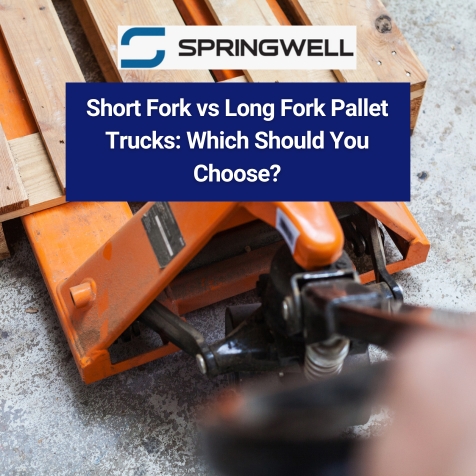
When purchasing a pallet truck, most businesses focus on load capacity, wheel material, or overall durability.
However, one specification that often gets overlooked is fork length.
Choosing between a short fork and a long fork pallet truck can have a significant impact on productivity, manoeuvrability, and workplace safety. The right option depends largely on the type of pallets you handle, the available operating space, and the nature of your daily material handling tasks.
Today, we’ll explore the differences between short fork and long fork pallet trucks to help you determine which option is best suited for your operation.
Understanding Fork Length in Pallet Trucks
Fork length refers to the distance from the heel of the fork to the fork tip.
While dimensions vary between models, pallet trucks generally fall into two categories:
Short Fork Pallet Trucks
- Typically between 800mm and 1000mm
- Designed for smaller pallets and confined spaces
Long Fork Pallet Trucks
- Typically between 1500mm and 2500mm
- Designed for larger pallets and longer loads
The choice is not simply about handling heavier loads. Fork length affects how easily you can move pallets, navigate aisles, and transport oversized materials.
When Short Fork Pallet Trucks Make More Sense
Short fork pallet trucks are commonly used in environments where space is limited.
Their compact design makes them easier to manoeuvre through narrow aisles, tight storage areas, and congested workspaces.
Businesses often choose short fork pallet trucks for:
- Retail backrooms
- Small warehouses
- Workshops
- Production areas with limited floor space
- Loading and unloading within confined areas
Because the forks are shorter, operators can make tighter turns and position loads more accurately.
Advantages of Short Fork Pallet Trucks
Better Manoeuvrability
One of the biggest benefits of short forks is improved handling.
Operators can navigate narrow aisles and crowded storage areas more easily compared to longer models.
Easier Positioning
Shorter forks allow for more precise pallet placement, particularly when working in compact storage systems.
Suitable for Small Pallets
Many businesses handle half pallets, custom pallets, or smaller loads that do not require standard-length forks.
Using shorter forks prevents unnecessary overhang and improves stability.
Limitations of Short Fork Pallet Trucks
Despite their advantages, short forks may not be suitable for every application.
They can struggle with:
- Large pallets
- Long materials
- Double pallet handling
- Oversized industrial loads
Insufficient fork support can affect load stability and increase handling risks.
When Long Fork Pallet Trucks Are the Better Choice
Long fork pallet trucks are designed for handling larger and longer loads.
They provide greater support across the entire pallet, reducing the likelihood of load shifting during transportation.
These models are commonly used in:
- Warehouses handling oversized pallets
- Manufacturing facilities
- Distribution centres
- Logistics operations
- Industrial environments with bulky materials
Long forks are especially useful when moving non-standard loads that extend beyond the dimensions of conventional pallets.
Advantages of Long Fork Pallet Trucks
Improved Load Support
Longer forks distribute weight more evenly across the pallet.
This helps maintain load stability during movement.
Ability to Handle Larger Pallets
Long fork pallet trucks can accommodate oversized pallets that would otherwise be difficult to transport safely.
Greater Efficiency for Large Loads
In some operations, long forks allow operators to move larger quantities of materials in a single trip, reducing handling time.
Limitations of Long Fork Pallet Trucks
While they offer greater load support, long forks require more operating space.
Businesses may encounter challenges such as:
- Reduced manoeuvrability
- Larger turning radius
- Difficulty navigating narrow aisles
- Increased storage space requirements
In facilities where space is limited, these factors can affect overall workflow efficiency.
Key Factors to Consider Before Choosing
Pallet Size
The first consideration should always be the size of the pallets being handled.
A pallet truck should provide adequate support without excessive overhang.
Using forks that are too short may compromise load stability, while excessively long forks can make manoeuvring more difficult than necessary.
Available Workspace
Consider your operating environment.
If your warehouse contains narrow aisles and tight turning points, short forks may provide significant operational advantages.
For larger warehouses with wider access routes, long forks may offer greater flexibility.
Type of Materials Handled
Certain industries frequently transport oversized products such as:
- Building materials
- Industrial equipment
- Long cartons
- Manufacturing components
These applications often benefit from longer fork configurations.
Operational Efficiency
Fork length can directly impact productivity.
The right choice allows operators to move loads safely, while maintaining smooth workflow throughout the facility.
Selecting a pallet truck that matches your daily operations can reduce handling time and improve overall efficiency.
Is There a “Best” Fork Length?
There is no single fork length that works for every business.
A short fork pallet truck may be ideal for a retail stockroom but completely unsuitable for a manufacturing facility handling oversized components.
Likewise, a long fork pallet truck may excel in a distribution centre while becoming cumbersome in a small warehouse.
The best solution depends on balancing:
- Load size
- Available space
- Handling requirements
- Workplace layout
- Productivity goals
Evaluating these factors carefully will help ensure you choose a pallet truck that supports both safety and operational performance.
Final Thoughts
Fork length is one of the most important, yet often overlooked considerations when selecting a pallet truck.
Short fork pallet trucks offer superior manoeuvrability and are ideal for confined spaces, while long fork pallet trucks provide better support for oversized pallets and longer loads.
Rather than choosing based solely on load capacity, businesses should assess their warehouse layout, pallet dimensions, and handling requirements to determine the most suitable option.
The right pallet truck can improve efficiency, reduce handling risks, and support smoother day-to-day operations.
Find the Right Pallet Truck for Your Operations
At Springwell, we supply a wide range of pallet trucks designed to meet the needs of warehouses, factories, logistics facilities, and industrial operations.
Whether you require a compact short fork pallet truck for tight spaces or a long fork model for oversized loads, our team can help you identify the most suitable solution for your requirements.
Contact Springwell today to explore our range of material handling equipment and improve the efficiency of your workplace operations.
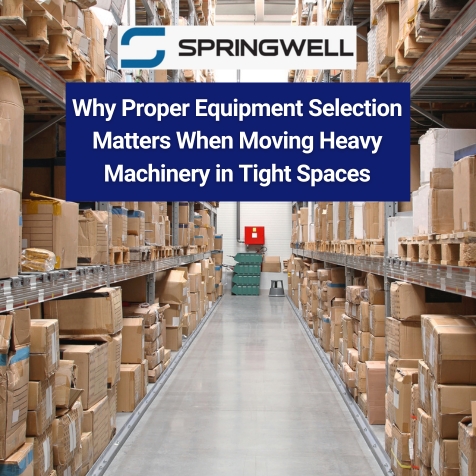
Moving heavy machinery is rarely straightforward. The challenge becomes even greater when the available space is limited.
Whether you’re operating in a warehouse, factory, workshop, or production facility, tight aisles, narrow access routes, and restricted work areas can significantly increase the risk of accidents, equipment damage, and operational delays.
While many businesses focus on the weight of the machinery being moved, the choice of material handling equipment is often equally important. Using the wrong equipment can create unnecessary risks, especially when manoeuvring large loads through confined environments.
Today, we’ll explore why equipment selection plays a critical role in safe machinery movement, and how choosing the right solution can improve both safety and efficiency.
The Challenges of Moving Machinery in Limited Space
Industrial facilities are becoming increasingly space-conscious.
As businesses maximise storage capacity and production areas, working spaces often become tighter and more congested. This creates several challenges when moving heavy equipment:
- Limited turning radius
- Narrow aisles and walkways
- Restricted access points
- Obstructed sight lines
- Increased risk of collisions
- Reduced room for error
In these environments, larger equipment is not always the most effective solution.
A machine that can easily handle the load may still struggle to navigate the available space safely.
This is why selecting equipment based on both load capacity and operating environment is essential.
Why Bigger Equipment Isn’t Always Better
Many people assume that larger lifting equipment automatically provides a safer solution for heavy loads.
In reality, oversized equipment can create additional challenges in confined areas.
For example, forklifts require sufficient space for turning, positioning, and reversing. In tight environments, operators may face difficulty manoeuvring around corners, shelving systems, machinery, or production lines.
Using equipment that is too large for the available workspace can lead to:
- Increased collision risks
- Damage to machinery and infrastructure
- Reduced visibility
- Longer handling times
- Higher operational stress for operators
The goal is not simply to move the load, but to move it safely and efficiently.
Matching Equipment to the Task
Different material handling equipment serves different purposes.
Selecting the most suitable option often depends on factors such as:
- Machinery dimensions
- Total load weight
- Travel distance
- Floor conditions
- Available operating space
- Required lifting height
For confined environments, businesses often benefit from equipment designed for manoeuvrability, rather than maximum lifting capacity.
Common solutions include:
Hand Pallet Trucks
Hand pallet trucks provide excellent manoeuvrability for transporting palletised loads over short distances.
Their compact footprint allows operators to work effectively in narrow aisles where larger powered equipment may struggle.
Industrial Stackers
Stackers offer lifting capability while maintaining a smaller footprint than conventional forklifts.
They are particularly useful when machinery or materials need to be positioned at elevated heights within restricted spaces.
Lift Tables
Lift tables help operators raise and position heavy components safely during assembly, maintenance, or relocation projects.
By bringing loads to the correct working height, they also reduce manual handling risks.
Work Positioners
Work positioners allow precise adjustment and placement of heavy items, improving control when working in crowded or space-constrained environments.
Safety Considerations Before Moving Machinery
Before any machinery relocation begins, proper planning is essential.
A site assessment should include:
Route Planning
Identify:
- Narrow passages
- Doorways
- Turning points
- Floor obstructions
- Overhead clearances
Understanding the full route helps prevent unexpected challenges during the move.
Load Assessment
The machinery’s:
- Weight
- Dimensions
- Centre of gravity
should be evaluated before selecting handling equipment.
Loads with uneven weight distribution may require additional precautions to maintain stability throughout the move.
Floor Conditions
Floor integrity plays a major role in safe machinery handling.
Operators should assess:
- Floor load capacity
- Surface condition
- Slopes and gradients
- Expansion joints
- Wet or slippery areas
Even small floor irregularities can affect equipment performance when handling heavy loads.
The Importance of Operator Control
In tight spaces, precision is often more important than speed.
Equipment that allows better control can significantly reduce the risk of accidents.
Manual and pedestrian-operated equipment often provides greater visibility and positioning accuracy when compared to larger ride-on machines operating in confined environments.
When visibility is limited, businesses should also consider using spotters to guide movements and monitor clearances.
Clear communication between operators and spotters helps prevent collisions and improves overall safety.
Reducing Risk Through Proper Equipment Selection
Every machinery move carries some level of risk.
However, many incidents occur because the selected equipment is not suitable for the environment rather than the load itself.
Choosing the correct material handling equipment can help:
- Improve manoeuvrability
- Reduce damage to equipment and facilities
- Enhance operator safety
- Increase productivity
- Minimise downtime
- Improve workflow efficiency
By focusing on the specific demands of the workspace, businesses can achieve safer and more reliable machinery handling operations.
Final Thoughts
When moving heavy machinery in confined spaces, success depends on more than lifting capacity alone.
Factors such as manoeuvrability, visibility, stability, and operator control all play a crucial role in ensuring a safe and efficient move.
Rather than relying on the largest equipment available, businesses should focus on selecting material handling solutions that are suited to both the load and the working environment.
With proper planning and the right equipment, even challenging machinery relocation tasks can be completed safely, efficiently, and with minimal disruption to operations.
Find the Right Material Handling Equipment for Your Facility
At Springwell, we provide a wide range of material handling equipment designed to support safe and efficient operations across warehouses, factories, workshops, and industrial facilities.
From hand pallet trucks and stackers to lift tables and specialised lifting solutions, our team can help you identify equipment that matches your operational requirements and workspace constraints.
Contact Springwell today to explore practical solutions for safer and more efficient machinery handling.
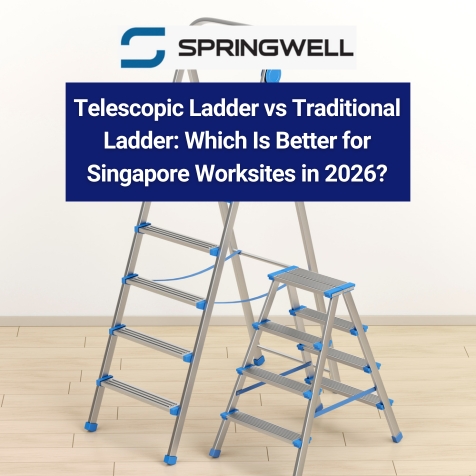
What if your most essential height access tool could shrink to just 25% of its deployed height, while still meeting the latest 2026 MOM safety standards?
That’s the challenge many facility managers and contractors face today.
As industrial units in Singapore become increasingly space-constrained, storing and transporting traditional ladders has become a growing operational headache. A fixed-frame ladder that reaches 3.8 metres may perform well on-site, but fitting it into a service van or compact workshop is another story entirely.
Today, we compare modern telescopic ladders against traditional access equipment to help businesses understand the trade-offs between portability, stability, setup speed, and MOM compliance.
We’ll also examine the safety standards, load-testing requirements, and practical considerations that matter most in real industrial environments.
Key Takeaways
- Telescopic ladders offer major space-saving advantages for service vans and compact storage areas.
- Traditional platform ladders still provide superior stability for prolonged industrial tasks.
- EN131-6 certification remains essential for industrial telescopic ladders in Singapore.
- Modern 2026 models feature improved locking systems and safer soft-close mechanisms.
Understanding the Telescopic Ladder
A telescopic ladder is a retractable access tool designed with overlapping sections that slide into one another. Unlike conventional ladders, it collapses into a compact form for easier storage and transportation.
For Singapore businesses operating in warehouses, service facilities, commercial buildings, or mobile maintenance environments, this compact design offers a major operational advantage.
Many contractors no longer have the luxury of storing large fixed-frame ladders, especially in crowded workshops or service vehicles where every square metre matters.
Most industrial telescopic ladders are available in either straight or A-frame configurations depending on the intended use. Modern 2026 models also place much greater emphasis on integrated safety systems, particularly the locking mechanism that ensures each rung remains securely engaged during use.
The Evolution of Retractable Ladder Technology
Material engineering has significantly improved telescopic ladder performance over the last decade. High-grade 6061-T6 aluminium alloys now allow manufacturers to reduce overall ladder weight while still maintaining the industrial load ratings required for MOM compliance.
Many premium models have also moved away from older manual locking systems in favour of soft-close retraction mechanisms. These systems help slow the ladder’s collapse speed, reducing the risk of finger injuries during storage and handling.
For industrial users, this translates into:
- safer daily operation,
- smoother deployment,
- and longer equipment lifespan.
Why More Singaporean Contractors Are Choosing Telescopic Ladders
For mobile contractors and facility maintenance teams, portability is a top priority. A telescopic ladder collapses to a compact size, easily fitting into:
- Passenger lifts
- Small utility rooms
- Standard service vans (no roof rack needed)
This makes them ideal for technicians who travel between multiple sites daily.
Their adjustable height is another major advantage. In spaces with different ceiling heights or limited overhead clearance, a single telescopic ladder can do the job of multiple fixed-length ladders.
Modern industrial models have also seen significant stability upgrades. Features like wide stabiliser bars, anti-slip rubber feet, and secure locking indicators give users more confidence on slippery floors compared to older retractable ladders.
Telescopic vs Traditional Ladders: The Professional Comparison
Choosing between a telescopic ladder and a traditional platform ladder involves more than just portability. Each option performs differently, depending on the type of work being carried out.
Telescopic ladders excel in short-duration tasks where mobility and storage efficiency matter most. They are ideal for:
- quick inspections,
- lighting adjustments,
- CCTV servicing,
- and general maintenance work requiring frequent movement.
Traditional platform ladders, however, still outperform telescopic designs in many heavy-duty industrial applications. Their wider standing platforms provide superior stability for tasks involving drilling, electrical servicing, or prolonged work at height.
Workers also experience less foot fatigue during longer tasks because the standing surface distributes weight more evenly than narrow ladder rungs. This is why many safety officers continue to prefer platform ladders for jobs exceeding 30 minutes or tasks requiring both hands.
Storage & Space Efficiency
Storage footprint remains one of the strongest arguments in favour of telescopic ladders.
A traditional fixed-frame ladder with a 10-foot reach may require more than 2.4 metres of vertical storage space. A telescopic ladder with similar reach capability can often retract to under 1 metre.
For Singapore businesses operating in compact warehouses, service vehicles, or high-density industrial units, this difference can significantly improve operational flexibility and transportation efficiency.
Safety Standards & Industrial Compliance in Singapore
Not all telescopic ladders are suitable for industrial use. Businesses should ensure their equipment complies with relevant workplace safety standards, particularly EN131-6 certification, which specifically applies to telescopic ladder designs.
This standard evaluates the structural stresses created by retractable mechanisms and ensures the ladder can safely support industrial working loads.
Critical Safety Features to Inspect
Before purchasing or deploying a telescopic ladder, operators should inspect:
- locking indicators,
- anti-slip rubber feet,
- stabiliser bars,
- hinge conditions,
- and industrial load labels.
Modern models now commonly include green/red locking indicators and reinforced anti-collapse protection systems to reduce accidental deployment failures.
Regular inspections are equally important, especially in high-use industrial environments where wear and tear may affect locking performance over time.
Choosing the Right Ladder for Your Worksite
The best ladder depends entirely on how the equipment will be used day to day.
Businesses prioritising portability, compact storage, and frequent transportation will often benefit more from telescopic ladders. They are especially useful for mobile maintenance teams and short-duration access tasks.
However, businesses performing prolonged industrial work at height may still find platform ladders to be the safer and more practical option. Their enhanced stability and larger working platforms make them better suited for demanding operational environments.
In reality, many facilities benefit from maintaining both ladder types for different operational requirements rather than relying exclusively on one solution.
Securing Your Industrial Advantage for 2026
Modern industrial worksites demand equipment that balances portability, durability, compliance, and worker safety.
A high-quality telescopic ladder offers clear advantages for Singapore’s increasingly compact and mobile work environments. However, traditional platform ladders continue to play an essential role in heavy-duty industrial applications, where stability remains the top priority.
Since 1984, Springwell Industries has supported local businesses with industrial access solutions designed around long-term reliability and workplace safety.
By selecting properly certified equipment and maintaining strict inspection standards, businesses can improve operational efficiency while staying fully compliant with evolving WSH requirements.
Frequently Asked Questions
Are telescopic ladders legal for industrial use in Singapore?
Yes, provided the ladder complies with relevant safety standards, such as EN131-6 and Singapore’s Workplace Safety and Health regulations.
What is the maximum weight capacity of a professional telescopic ladder?
Most industrial-grade telescopic ladders support up to 150kg, including the worker and carried tools.
How often should ladders be inspected?
Ladders should undergo daily visual checks alongside scheduled maintenance inspections to ensure they remain safe for industrial use.
Can telescopic ladders be used on uneven ground?
Only models designed with levelling systems or stabilising features should be used on uneven surfaces. Standard models generally require a flat, stable base during operation.
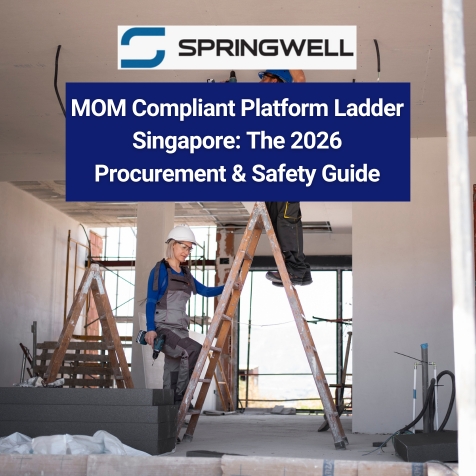
Is your industrial ladder actually a S$20,000 fine waiting to happen during your next MOM spot check?
Most safety managers in Singapore know that household-grade stools don’t belong on a factory floor. The real challenge is understanding the difference between “industrial-grade” equipment and a genuinely MOM-compliant solution.
As Workplace Safety and Health (WSH) enforcement becomes stricter, procurement decisions carry more responsibility than ever. Businesses are expected to ensure every ladder used on-site complies with Singapore’s latest safety standards, while reducing fall-from-height risks across daily operations.
Investing in a high-quality MOM-compliant platform ladder in Singapore helps protect workers, improve operational safety, and keep facilities audit-ready for the long term.
In this 2026 guide, we’ll walk through the key safety requirements, technical specifications, and procurement considerations businesses should know before purchasing industrial access equipment.
Key Takeaways
- Why Singapore’s WSH guidelines increasingly favour platform ladders over traditional A-frame ladders
- The essential technical specifications required for industrial compliance
- How to calculate proper working height to prevent overreaching
- What safety officers should look for during inspections and audits
- Common maintenance issues caused by Singapore’s humid industrial environment
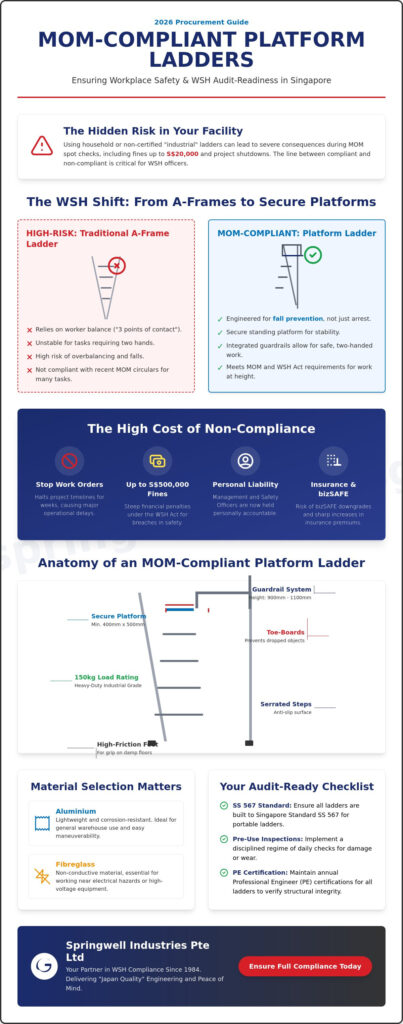
Understanding MOM Compliance for Platform Ladders in Singapore
An MOM-compliant platform ladder in Singapore is more than a standard climbing tool. It is a purpose-built work-at-height solution designed to improve worker stability and reduce fall risks during industrial tasks.
Unlike traditional ladders, platform ladders provide:
- a stable standing platform,
- integrated guardrails,
- toe-board protection, and
- better support for prolonged work.
This allows workers to safely use both hands while performing maintenance, inspections, or warehouse operations, without relying purely on balance.
The Ministry of Manpower (MOM) increasingly prioritises these solutions because they reduce overreaching incidents and provide stronger fall prevention compared to conventional step ladders.
Why Procurement Standards Matter
Under the Workplace Safety and Health (WSH) Act, procurement teams have a legal responsibility to ensure workplace equipment complies with recognised safety standards.
For industrial ladders, this usually means compliance with:
- Singapore Standard SS 567,
- Work at Heights regulations, and
- relevant industrial load requirements.
These standards define critical areas such as structural integrity, load-bearing capacity, slip resistance, and platform safety.
It’s no longer enough to simply purchase a ladder marketed as “industrial.” Safety officers and facility managers are expected to verify whether the equipment is actually suitable for regulated workplace use.
The Impact of the 2018 MOM Circular
The 2018 MOM Circular significantly changed how many Singapore businesses approach work-at-height safety.
Previously, the “three points of contact” rule was considered sufficient for ladder work. However, industries increasingly recognised that workers performing tasks with tools often needed both hands free, making traditional ladders less practical and more dangerous.
As a result, there has been a stronger push toward platform ladders equipped with:
- secure standing areas,
- guardrails,
- toe-boards, and
- anti-slip protection.
This reflects a broader industry shift from “fall arrest” toward proactive “fall prevention.”
Consequences of Non-Compliance
Using uncertified or non-compliant ladders creates risks that go beyond equipment failure.
Companies may face:
- Stop Work Orders (SWOs),
- failed WSH audits,
- higher insurance premiums,
- bizSAFE downgrades,
- or financial penalties under the WSH Act.
In serious cases, fines can reach up to S$500,000.
Liability has also shifted in recent years. Management personnel and safety officers may now be held accountable for negligent procurement decisions involving unsafe workplace equipment.
Technical Specifications of a Compliant Platform Ladder
Not all industrial ladders meet modern compliance standards. Procurement teams should carefully evaluate technical specifications, rather than rely solely on appearance or price.
A compliant ladder should first meet the requirements of a heavy-duty industrial load rating. In most cases, this means supporting at least 150kg to safely accommodate:
- the worker,
- tools,
- equipment components, and
- repeated daily usage.
Lower-rated ladders may suffer from structural fatigue or instability over time, especially in demanding industrial environments.
Platform & Guardrail Requirements
The platform itself plays a major role in worker safety. A properly designed platform ladder should provide enough standing space for stable movement during extended tasks.
Key features typically include:
- a minimum platform size of 400mm x 500mm,
- guardrails between 900mm and 1100mm in height,
- toe-board protection, and
- slip-resistant surfaces.
These features help minimise overbalancing and reduce the likelihood of dropped objects on-site.
Anti-Slip Features for Singapore’s Environment
Singapore’s humid climate creates additional slip risks in warehouses, factories, and maintenance areas.
High-quality platform ladders often include:
- serrated steps,
- high-friction rubber feet,
- oil-resistant footing, and
- textured standing platforms.
These details become especially important in environments exposed to moisture, chemicals, or oily flooring.
Material Selection: Aluminium vs Fibreglass
Choosing the right ladder material depends heavily on the work environment.
Aluminium platform ladders are commonly preferred for warehouse and logistics operations because they are lightweight, durable, and easy to move around large facilities.
Fibreglass ladders, on the other hand, are essential for electrical or high-voltage environments due to their non-conductive properties.
For facilities involved in M&E maintenance, electrical servicing or live circuit work, fibreglass is often considered a mandatory safety requirement, rather than an optional upgrade.
Stability & Anti-Tip Mechanisms
Stability remains one of the most important safety considerations for work-at-height equipment.
Higher-quality platform ladders may include:
- outriggers,
- reinforced locking systems,
- spring-loaded castors, or
- wider base frames.
These features improve stability by reducing the risk of:
- lateral tipping,
- accidental shifting,
- or movement during use.
For taller ladders, especially, anti-tip mechanisms are critical in maintaining worker confidence and reducing workplace incidents.
How to Choose the Right Ladder for Your Facility
Selecting the correct MOM-compliant platform ladder in Singapore involves more than measuring ceiling height.
A proper assessment should account for:
- working height,
- frequency of use,
- facility layout,
- task type,
- and environmental conditions.
a) Calculate Working Height Properly
One common mistake is purchasing ladders based purely on maximum reach height.
Instead, businesses should calculate platform height by subtracting roughly 2 metres from the total working height required. This helps prevent dangerous overreaching behaviour, which remains a common cause of workplace falls.
b) Match the Ladder to Usage Frequency
Ladders used repeatedly throughout the day should have a heavy-duty industrial frame capable of handling constant usage.
For example:
- warehouse picking operations,
- routine maintenance,
- and production floor inspections
These typically require more robust equipment than occasional access work.
Facilities with limited storage space may also benefit from foldable platform ladder designs that reduce storage footprint without compromising safety.
c) Platform Ladders vs Traditional Step Ladders
Many safety officers in Singapore now restrict prolonged use of traditional A-frame ladders for industrial tasks.
Current WSH recommendations generally favour platform ladders when:
- work exceeds 15–30 minutes,
- tasks require both hands,
- or workers operate above 2 metres.
The added stability helps reduce worker fatigue, while improving task efficiency and safety outcomes.
Although platform ladders involve a higher upfront investment, industrial-grade models often last significantly longer than cheaper alternatives, resulting in lower long-term replacement costs.
Inspection & Maintenance: Staying Audit-Ready
Maintaining an MOM-compliant ladder is not just about compliance — it’s a core part of workplace safety management.
Businesses should establish a regular inspection process that includes:
- pre-use checks,
- scheduled maintenance,
- annual inspections,
- and proper documentation.
Even a quick visual inspection before each shift can help identify serious safety risks early.
Common Wear & Tear in Singapore’s Climate
Singapore’s humidity accelerates wear on industrial equipment, especially in high-use environments.
Common issues include:
- rivet corrosion,
- joint fatigue,
- hardened rubber feet,
- worn anti-slip surfaces,
- and frame instability.
Ladders exposed to chemical residue or outdoor environments may deteriorate even faster if not properly maintained.
To extend lifespan:
- clean ladders regularly,
- store them in dry shaded areas,
- and replace worn components proactively.
Immediate Red Flags to Watch For
Any ladder showing the following issues should be removed immediately from service:
- bent side rails,
- cracked welds,
- missing rivets,
- loose fasteners,
- wobbling during use,
- or damaged anti-slip surfaces.
Unsafe equipment should always be clearly tagged as:
“Out of Service”
until repaired or replaced.
Springwell Industries: Your Partner in WSH Compliance
Springwell Industries has supported Singapore’s industrial sector since 1984, providing businesses with heavy-duty access equipment designed for demanding workplace environments.
With decades of experience in industrial safety solutions, the company understands the operational challenges faced by:
- warehouses,
- logistics hubs,
- manufacturing plants,
- and maintenance facilities.
Beyond supplying equipment, Springwell also provides guidance on:
- platform ladder selection,
- MOM compliance requirements,
- PE inspections,
- and long-term maintenance planning.
This helps businesses build safer workplaces while staying prepared for future WSH enforcement standards.
Future-Proof Your Workplace Safety Strategy
Workplace safety expectations continue to evolve, especially in industries that involve frequent work at height.
Choosing a reliable MOM-compliant platform ladder in Singapore is not simply about passing inspections. It’s an investment in:
- worker protection,
- operational continuity,
- and long-term compliance.
Businesses that prioritise certified, industrial-grade equipment today are far better positioned to reduce liability risks and maintain safer operations in the years ahead.
Frequently Asked Questions
1) What makes a platform ladder MOM compliant in Singapore?
To qualify as an MOM-compliant platform ladder in Singapore, the equipment must typically comply with SS 567:2020 standards for structural integrity and workplace safety.
A compliant platform ladder should include:
- a secure standing platform,
- integrated guardrails,
- toe-board protection,
- and a clearly labelled industrial load rating.
These features help reduce fall risks and improve worker stability during industrial tasks.
2) Is it mandatory to use platform ladders instead of A-frame ladders?
A-frame ladders are not completely banned, but WSH guidelines increasingly prioritise platform ladders for longer-duration or higher-risk tasks.
Platform ladders are generally recommended when:
- work exceeds 15–30 minutes,
- both hands are required,
- or workers operate above 2 metres.
Their larger standing platform and guardrail protection help reduce overreaching and worker fatigue.
3) How often should industrial ladders be inspected?
Industrial ladders should undergo:
- routine pre-use visual checks,
- scheduled maintenance inspections,
- and annual inspections by a competent person.
For heavy-duty industrial environments, Professional Engineer (PE) load testing may also be required to ensure structural integrity and ongoing compliance.
4) Can household ladders be used in warehouses?
No. Household ladders are generally not designed for industrial environments and may not meet Singapore’s workplace safety standards.
Industrial sites typically require ladders certified to:
- SS 567, or
- EN131 Professional standards
with sufficient industrial load capacity.
Using uncertified equipment may expose businesses to compliance violations and workplace safety risks.
5) What is the maximum height allowed for a platform ladder in Singapore?
Mobile platform ladders commonly support working heights of up to around 4 metres.
Beyond that height, businesses may need to consider:
- mobile scaffold towers,
- elevated work platforms,
- or other specialised access systems
depending on site conditions and WSH requirements.
6) Do platform ladders require toe-boards?
Toe-boards are typically required when there is a risk of tools or materials falling from height.
They help prevent objects from slipping off the platform and improve compliance with Work at Heights safety requirements.
7) What is SS 567 and why is it important?
SS 567 is the Singapore Standard governing the design, testing, and safety requirements of portable ladders.
It serves as a key benchmark during:
- MOM inspections,
- workplace audits,
- and procurement evaluations.
Using equipment that complies with SS 567 helps reduce operational risks and improve workplace safety standards.
8) Are fibreglass platform ladders better than aluminium ladders?
It depends on the application.
Fibreglass ladders are preferred for:
- electrical work,
- live circuit environments,
- and high-voltage applications
because they are non-conductive.
Aluminium ladders are generally preferred for:
- warehouses,
- logistics operations,
- and general industrial use
because they are lightweight and easier to maneuver.
The Definitive Guide to Industrial Lift Tables in Singapore (2026)
Did you know that musculoskeletal disorders and back injuries accounted for over 30% of all non-fatal workplace injuries reported to the Ministry of Manpower (MOM) in 2023? It’s a sobering statistic that highlights the hidden costs of manual material handling in Singapore’s busy warehouses. You’ve likely felt the pressure of maintaining high pallet throughput while worrying about the physical strain on your crew. Investing in a high-quality lift table isn’t just about moving heavy loads; it’s a strategic move to safeguard your staff and ensure your facility operates at peak efficiency without the risk of costly downtime.
We understand that choosing between manual and electric models can be confusing, especially when you need to guarantee compliance with MOM Professional Engineer (PE) standards. This guide helps you master everything from ergonomic benefits to technical load testing so you can select the perfect equipment for your specific needs. You’ll learn how Japan Quality engineering and local support can reduce workplace injuries and keep your machinery in tip-top condition for years to come. We’ll cover essential safety certifications, custom design solutions, and the long-term reliability that has been the hallmark of Springwell Industries since 1984.
Key Takeaways
-
Understand why the scissor mechanism remains the industry standard for stability and how it transforms material handling into a safer, more ergonomic process.
-
Evaluate the evolution of power sources to determine whether manual, electric, or pneumatic systems best suit your facility’s specific duty cycles and speed requirements.
-
Master a professional selection framework to choose the ideal lift table by balancing load frequency, environmental factors, and long-term cost-efficiency.
-
Navigate Singapore’s Workplace Safety and Health (WSH) Act and identify when mandatory MOM Professional Engineer (PE) load testing is required for your equipment.
-
Leverage Springwell’s 40-year heritage and "Japan Quality" engineering to ensure your facility’s lifting solutions remain in tip-top condition for years to come.
Table of Contents
-
Understanding the Industrial Lift Table: More Than Just a Lifting Platform
-
Deep Dive into Power Sources: Manual, Electric, and Pneumatic
-
How to Choose the Right Lift Table for Your Singapore Facility
-
Springwell Industries: 40 Years of Lifting Excellence in Singapore
Understanding the Industrial Lift Table: More Than Just a Lifting Platform
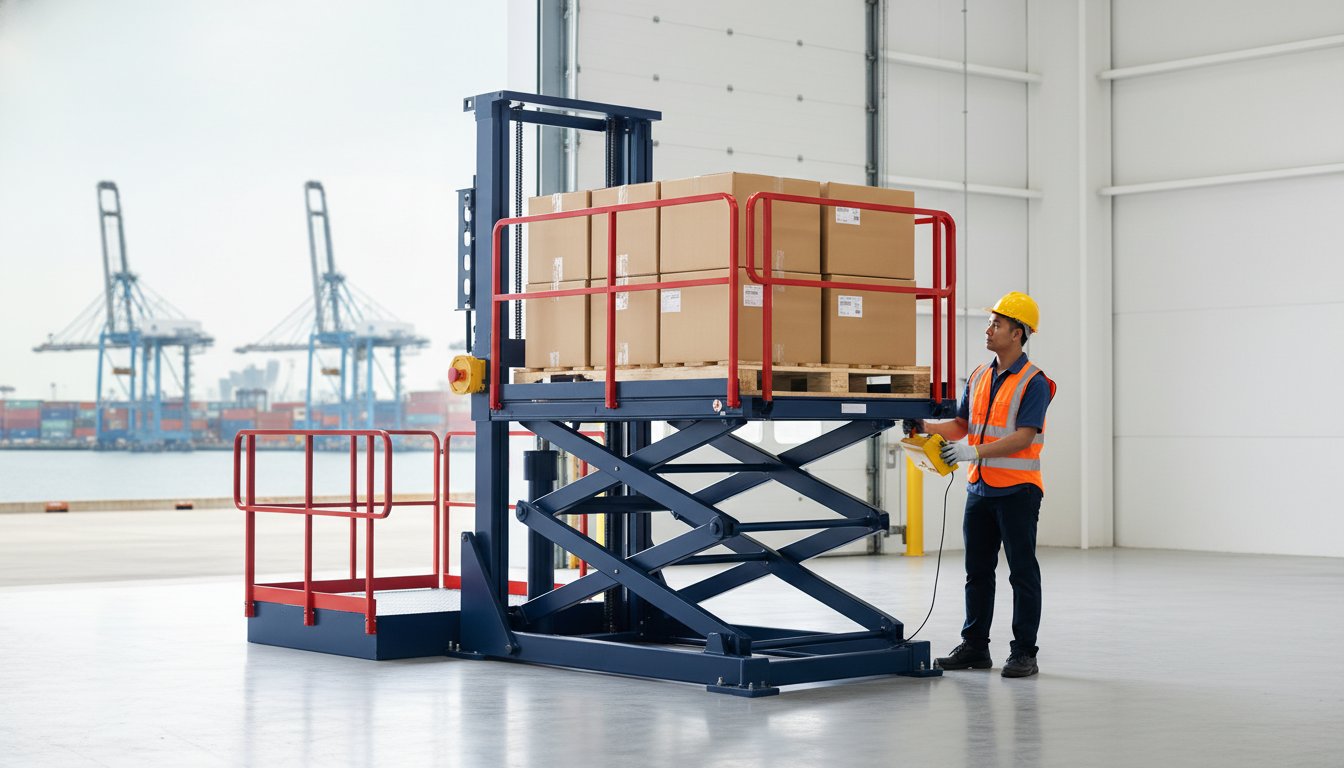
A lift table is a heavy-duty material handling solution designed to raise or lower heavy loads to precise ergonomic heights. At its core, the equipment relies on a "scissor" mechanism, which is the industry standard for maintaining vertical stability under pressure. This design ensures that the platform remains level even when carrying unevenly distributed weight. Since 1984, Springwell Industries has seen Singaporean SMEs transition from traditional manual lifting to these mechanized work positioners to meet modern safety standards. The system consists of three essential components: the top platform, the reinforced scissor legs, and the power actuator, which can be hydraulic or electric. These elements work in tandem to ensure that heavy crates or components are handled with the hallmark traits of safety, service, and quality.
The Critical Role of Ergonomics in Modern Warehousing
Workplace injuries often stem from repetitive bending and reaching outside the "Golden Zone," the space between a worker’s knees and shoulders. Lift tables eliminate these risks by bringing the work to the operator. In 2022, the Ministry of Manpower (MOM) reported that musculoskeletal disorders accounted for a significant portion of work-related ill-health in Singapore. Implementing ergonomic equipment leads to reduced medical leave and higher staff retention rates in local factories. "Ergonomic lifting is not a luxury but a baseline for productivity in a labor-tight market like Singapore." By providing a stable work surface, these tools allow employees to maintain a neutral posture, which is vital for long-term health in high-volume warehouse environments. This commitment to physical well-being and accessibility is also crucial in domestic environments; for expert support, Indiana Home Safety & Mobility provides high-quality stairlifts and aging-in-place solutions for residential and commercial properties.
Beyond physical safety, boosting team morale through well-organized corporate events is another effective retention strategy; if you’re planning a warehouse celebration or staff appreciation lunch, you can learn more about EZBBQ Singapore to simplify your event planning and treat your hardworking crew.
In addition to corporate catering, fostering a culture of personal wellness is also beneficial; for instance, stellarsg.com discusses how choices like silver jewellery can offer surprising health benefits for your team members.
Key Terminology: Scissor Lifts vs. Work Positioners
Choosing the right equipment requires understanding technical specifications that impact daily operations. Stationary factory units are often bolted to the floor for permanent production lines, while mobile warehouse trolleys offer flexibility for cross-docking tasks. Managers must evaluate the "stroke," which refers to the total vertical travel distance, and the "collapsed height" to ensure the unit fits under existing racking or mezzanine levels. Load capacity is another vital metric. It’s essential to include a 15% to 20% safety buffer for dynamic loads to keep the machinery in tip-top condition. This buffer ensures the equipment remains reliable and can pass rigorous MOM Professional Engineer load testing requirements. Whether you are looking for Japan Quality or a tailored solution, understanding these terms prevents costly procurement errors.
Deep Dive into Power Sources: Manual, Electric, and Pneumatic
The evolution of material handling equipment has transformed the humble lift table from a basic mechanical platform into a sophisticated piece of industrial machinery. Since our founding in 1984, we’ve observed a shift where manual foot pumps, once the industry standard, now share the floor with advanced battery-operated units designed for 24/7 logistics hubs. Choosing the right power source is critical because it directly impacts your duty cycle and operational speed. While a manual unit might handle 5 to 10 lifts per hour, an electric model can comfortably manage continuous cycles in high-volume assembly lines.
Beyond speed, you must consider the total cost of ownership. Manual units offer a lower initial investment and require minimal maintenance, making them cost-effective for secondary workstations. Conversely, high-efficiency electric models reduce operator fatigue and physical strain, which helps businesses comply with the Workplace Safety and Health (General Provisions) Regulations by minimizing ergonomic risks. Specialized pneumatic (air-powered) tables also exist for hazardous or explosive environments where electrical sparks pose a significant safety threat.
Manual Hydraulic Lift Tables: The Reliable Workhorse
These units utilize a robust hydraulic jack mechanism operated via a foot pedal, allowing for precise height control during delicate tasks. They’re the ideal choice for budget-conscious SG workshops where lifting frequency remains low. Our manual tables feature "Japan Quality" seals, a hallmark of engineering excellence that prevents oil leaks even after years of rigorous use. This reliability ensures your equipment stays in tip-top condition without constant intervention. For smaller operations, these mobile units provide the flexibility to transport goods across the warehouse floor effortlessly while maintaining high safety standards; similarly, for managers looking to simplify their logistics, EZBBQ Singapore provides a convenient way to cater for the team without the stress of manual planning.
Electric and Battery-Powered Tables: Maximizing Throughput
For high-frequency environments, push-button electric tables are essential for maintaining productivity. Mobile battery-powered units are particularly popular in Singapore’s modern logistics hubs, where they often run for 8 to 12 hours on a single charge. These tables prioritize operator protection with safety features like "dead-man" switches and emergency stop buttons. If your facility handles volatile materials, pneumatic options offer a tailored solution for spark-free operation. Choosing the right power source ensures you meet MOM standards while optimizing your workflow. If you’re unsure which power source fits your facility, our team can provide tailored material handling advice to help you decide.

How to Choose the Right Lift Table for Your Singapore Facility
Selecting a lift table requires a methodical approach based on four pillars: Environment, Load, Frequency, and Mobility. Many warehouse managers hesitate at the upfront cost of specialized models, yet the investment in a low-profile or stainless steel unit often pays for itself by preventing operational bottlenecks. A critical factor that’s frequently overlooked is the collapsed height. If you rely on hand pallet trucks for loading, a table with a high collapsed profile will require a floor pit or a bulky ramp. Choosing a low-profile model allows for direct floor-level loading, which saves precious square footage in compact Singaporean industrial units.
While off-the-shelf products might seem convenient, they often fail to meet the specific rigors of a high-intensity workplace. We always encourage clients to seek custom design solutions rather than settling for generic equipment. Tailored engineering ensures the hydraulic system is calibrated for your specific cycle counts, maintaining the hallmark traits of Safety, Service and Quality that define our Japan Quality standards.
Environmental Considerations: From Cold Rooms to Cleanrooms
In Singapore’s food, chemical, and pharmaceutical sectors, Grade 304 or 316 stainless steel is mandatory to meet hygiene regulations. Our local humidity levels, which often hover around 80%, can cause rapid oxidation on standard steel. Applying high-grade anti-corrosion coatings is essential to keep your lift table in tip-top condition for years; additionally, specialists like Donewright Stainless provide high-quality stainless steel and aluminium fabrication services that meet the most demanding industrial hygiene and durability standards.
Capacity and Platform Size Calibration
To avoid hydraulic strain and premature seal failure, calculate your load based on a "worst-case scenario" rather than your average weight. We recommend a 25% safety buffer above your heaviest anticipated pallet. Platform dimensions should align precisely with the 1200mm x 1000mm pallets standard in the SG supply chain to prevent overhang. Safety during operation depends heavily on understanding weight distribution. Eccentric loading refers to the placement of a load off-center on the platform, which creates uneven pressure on the scissor mechanism and can lead to structural warping or dangerous instability. Ensuring your platform size matches your load footprint minimizes this risk and keeps your operations within MOM Professional Engineer safety standards.
To ensure your load calculations are accurate and your equipment remains safe, you can discover Independent Scale Service for professional industrial weighing solutions.
Singapore Safety Standards and MOM Compliance
The Workplace Safety and Health (WSH) Act governs every warehouse operation in Singapore. It’s a strict legal framework designed to protect workers, and failing to meet these standards leads to heavy penalties. Under the WSH (General Provisions) Regulations, any equipment used for lifting must be fit for purpose and regularly maintained. For instance, a heavy-duty lift table used in a high-intensity environment must feature specific safety components like toe guards to prevent foot injuries and safety bellows to keep debris out of the scissor mechanism. Maintenance locks are equally vital. They ensure the platform stays secure while technicians perform repairs, preventing accidental descent.
We recommend regular Visual Inspection Services as a proactive measure. It’s better to spot a hairline crack or a worn seal during a routine check than to deal with an equipment collapse during a shift. This meticulous approach keeps your assets in tip-top condition and prevents the S$20,000 to S$50,000 fines often associated with workplace safety lapses. Our commitment to Japan Quality ensures that every piece of equipment we touch meets these rigorous local demands; similarly, for those prioritizing safety in a domestic context, Indiana Home Safety & Mobility provides reliable aging-in-place solutions and stairlift installations.
In addition to equipment safety, securing your facility’s access points is a key part of risk management; AN Digital Lock provides professional digital door and gate locks to help protect your industrial or commercial premises.
Navigating MOM PE Certification for Lift Tables
Not every piece of equipment needs a Professional Engineer (PE) certificate, but many heavy-duty systems do. If your lift table is classified as a lifting machine under the WSH Act, it requires a PE to certify its structural integrity before it’s put into service. During a load test, the engineer applies weights reaching 125% of the rated capacity to ensure the welds and hydraulics hold firm under pressure. You can’t skip this step if you value legal compliance and worker safety. Our team helps you manage this process seamlessly through our MOM Professional Engineer Load Testing services.
For facilities that require precise structural verification, SOCWeld provides a digital platform to automate and manage welding documentation, ensuring all industrial equipment meets the highest safety standards.
Daily Safety Checklists for Operators
Safety starts before the power switch is flipped. Operators should perform pre-shift inspections every morning to look for hydraulic leaks or debris caught in the castor wheels. When loading the platform, always center the weight. Off-center loads cause scissor torque, which can bend the frame or cause a tip-over. We prioritize our hallmark traits of Safety, Service and Quality in all staff training programs. Well-trained workers identify hazards faster, which keeps the floor productive and accident-free. Don’t let a simple oversight in loading lead to a week of equipment downtime.
Ensure your warehouse equipment meets all Singapore regulatory requirements today. Contact Springwell Industries for a professional safety consultation.
Springwell Industries: 40 Years of Lifting Excellence in Singapore
Established in 1984, Springwell Industries has spent four decades as a cornerstone of Singapore’s industrial landscape. We aren’t just an equipment vendor; we’ve evolved into a trusted partner for warehouses and factories across the island. Our deep local roots mean we understand the specific regulatory requirements and space constraints unique to the Singapore market. We focus on the hallmark traits of Safety, Service and Quality to ensure your operations remain efficient and compliant. By choosing an industry veteran, you secure the stability of a company that has supported Singapore’s growth through every economic cycle.
This progress is also reflected in the residential market, where AI New Launch provides detailed analysis of the city’s new condominium developments for professionals looking to stay ahead of urban trends.
For those looking to complement these developments with high-quality interior finishes, you can visit Home Expo Asia to discover how vinyl flooring can be used creatively on both floors and walls.
As Singaporean industries continue to integrate with global supply chains, clear communication becomes as vital as robust equipment. To support this growth, many local firms partner with Chinese Edge to equip their workforce with professional Mandarin skills; for those requiring business English proficiency to coordinate with global partners, click here to explore English Explorer’s available courses.
Bishamon and Japan Quality: The Hallmark of Reliability
High-uptime manufacturing plants in Singapore consistently choose "Japan Quality" to avoid the hidden costs of equipment failure. Our long-standing partnership with Bishamon allows us to deliver engineering that stands the test of time. A critical differentiator is the longevity of Bishamon hydraulic seals. While generic alternatives often leak within 12 to 18 months of heavy use, Bishamon components are designed for years of rigorous cycling. This reliability is why our Bishamon Pallet Trucks and lifting systems are found in the most demanding logistics hubs. Investing in a premium lift table powered by Japanese hydraulics ensures your workflow stays uninterrupted and your maintenance costs stay low.
Customized Lifting Solutions for Unique SG Challenges
Every warehouse has its own set of bottlenecks. At Springwell, we don’t believe in a one-size-fits-all approach. We provide tailored modifications such as integrating conveyor rollers for automated production lines or adjusting platform sizes to fit narrow aisles. Our local service center at Admiralty Street ensures your equipment stays in tip-top condition with rapid response times. Having local stock and a dedicated workshop means we can fabricate parts or perform repairs without the long lead times associated with overseas shipping. Whether you need MOM Professional Engineer Load Testing or a custom-fabricated lift table, our team has the technical expertise to deliver. We take pride in helping you meet safety standards while maximizing productivity.
For organizations planning larger-scale industrial projects or relocating heavy equipment between international sites, collaborating with expert machinery movers UK ensures that complex plant installations are handled with the same level of precision and safety.
Our commitment to your business goes beyond the initial sale. We offer comprehensive after-sales support and visual inspection services to keep your fleet operational. If you’re looking for a partner that prioritizes your uptime as much as you do, we’re ready to help.
This holistic approach to support extends to the wider community; for professionals balancing a busy career with family life, finding reliable educational support like Math tuition Hougang ensures their children receive the same level of quality and dedication in their studies as we provide for your industrial needs.
This focus on fleet reliability should also apply to your company’s transportation; Carz World Pte Ltd provides Singaporean businesses with dependable vehicle options like the Honda Vezel Hybrid to ensure smooth operations both inside and outside the warehouse.
Contact our experts for a tailored lift table consultation
Future-Proof Your Operations with High-Performance Lifting Solutions
Selecting the ideal lift table for your facility involves more than just comparing load capacities. It’s about finding the right balance between power sources like electric or pneumatic systems and ensuring your workflow remains seamless under heavy demand. Since 1984, Springwell Industries has built a reputation for reliability, providing over 40 years of industrial expertise to the Singapore market. We’ve evolved alongside local industries to offer tailored solutions that prioritize both efficiency and operator safety, a commitment to accessibility that is mirrored in the residential sector by Indiana Home Safety & Mobility through their specialized aging-in-place solutions.
As an authorized distributor of Bishamon "Japan Quality" equipment, we bring world-class engineering to your doorstep. Our commitment to excellence includes providing in-house MOM Professional Engineer (PE) testing and certification services, ensuring your equipment meets every regulatory requirement for peace of mind. We take pride in keeping your machinery in tip-top condition so you don’t have to worry about equipment downtime or compliance issues. Our team is here to act as your trusted partner, helping you navigate technical specifications with a consultative approach.
Browse our comprehensive range of industrial lift tables and discover how our hallmark traits of safety and service can transform your workspace today. We look forward to supporting your next big project.
Frequently Asked Questions
Do I need an MOM license to operate a manual lift table in Singapore?
You don’t need a specific MOM operator license for a manual lift table in Singapore. However, the Workplace Safety and Health (General Provisions) Regulations require all lifting equipment to be maintained in a safe condition. While manual units are exempt from mandatory statutory inspections by a Professional Engineer, your warehouse staff should still receive internal safety training to prevent musculoskeletal injuries during daily operations.
What is the difference between a scissor lift and a lift table?
A scissor lift is primarily mobile equipment designed to elevate personnel to high work areas, while a lift table is a material handling tool used to position heavy goods at ergonomic heights. Scissor lifts often feature guardrails and controls on the platform for the operator. In contrast, lift tables are typically used on production lines or in packing stations to reduce manual lifting strain for warehouse workers.
When integrating these tables into a broader logistics strategy, utilizing specialized electric pallet jacks and stackers from PHS Lift can further enhance the efficiency of your material handling processes.
Furthermore, for businesses looking to modernize their manufacturing and maintenance records, SOCWeld provides a comprehensive guide to implementing digital welding documentation for better safety and compliance.
How often should I service my hydraulic lift table in a warehouse environment?
You should schedule professional servicing for your hydraulic lift table at least once every 6 months to maintain its hallmark traits of safety and quality. For warehouses operating 24/7 or handling more than 50 cycles per day, quarterly maintenance prevents hydraulic fluid leaks and seal degradation. Regular visual inspection services help identify worn pivot pins or frayed cables before they lead to costly operational downtime.
While focusing on warehouse lift tables is key, maintaining larger systems like freight lifts or commercial elevators is equally important for overall facility safety; you can discover NOVALIFT for specialized expertise in the maintenance and compliance of vertical transport systems.
Can a lift table be customized for a cleanroom environment in Singapore?
Yes, we provide tailored solutions by manufacturing equipment using Grade 304 or 316 stainless steel for cleanroom environments. These units feature specialized non-marking wheels and food-grade hydraulic oil to meet stringent hygiene standards. Since 1984, our engineering team has adapted equipment to comply with ISO 14644-1 Class 100 requirements, ensuring your material handling equipment remains rust-resistant and easy to sanitize for sensitive industrial applications; similarly, for those who value hygiene in personal care, Stellar SG offers professional ear piercing services that prioritize safety and sterile procedures.
What is the maximum load capacity available for stationary lift tables?
Stationary models typically offer load capacities ranging from 500kg to over 10,000kg for heavy-duty industrial applications. High-capacity models often utilize reinforced double-scissor mechanisms to maintain stability under extreme weight. Selecting the right capacity is crucial. Exceeding the rated load by even 10% can cause structural deformation or hydraulic failure, which compromises your warehouse safety standards and risks damaging your inventory.
How do I know if my lift table requires a Professional Engineer (PE) certificate?
Your equipment requires a Professional Engineer (PE) certificate if it’s a power-operated lifting machine used to lift loads or personnel under the WSH (General Provisions) Regulations. MOM requires these machines to undergo a thorough examination by a PE every 12 months. If your unit is integrated into a permanent dock leveler or hoisting system, you’ll need this certification to remain legally compliant in Singapore; similarly, for those who value certified safety in personal services, Stellar SG provides professional ear piercing that adheres to strict sterile standards.
Are electric lift tables safe for use in damp or outdoor conditions?
Standard electric models aren’t safe for damp conditions unless they’re specifically built with an IP65 or higher ingress protection rating. Exposure to Singapore’s high humidity or rain can cause electrical short circuits and rapid corrosion of the scissor mechanism. For outdoor use, you should opt for galvanized finishes and weatherproofed motor enclosures to keep the equipment in tip-top condition and ensure operator safety.
What is the average lifespan of a high-quality Japan-made lift table?
A high-quality Japan-made unit typically lasts between 10 to 15 years when supported by a regular maintenance regime. These units are celebrated for their superior engineering and durability, often outlasting cheaper alternatives by at least 5 years. Investing in "Japan Quality" equipment reduces your long-term replacement costs and ensures you have a reliable, trusted partner for your daily warehouse operations and logistics needs.
Just as long-term planning is essential for maintaining industrial equipment, making informed decisions about the next generation’s education is a priority for many Singaporean families; for those weighing secondary school options, Learning Voyage Education Centre provides a detailed comparison between the O-Levels and the Integrated Programme.
Similarly, for business owners looking to optimize their corporate assets, understanding vehicle depreciation is just as important as maintaining machinery; check carzworld.com.sg for a guide on which cars maintain the best resale value in Singapore.