


How to Operate a Trailer Jack
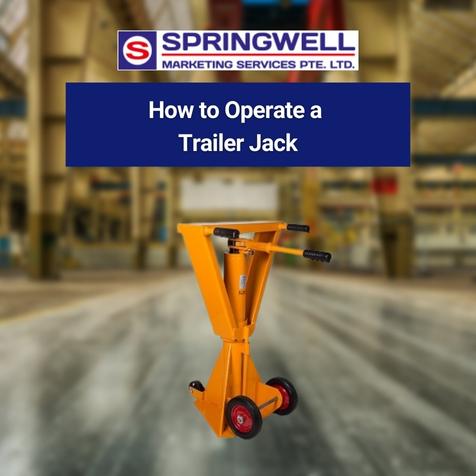
Trailer jacks are an essential tool for anyone who frequently hauls trailers. They assist in lifting and stabilizing the tongue of a trailer, making it easier to attach or detach from a vehicle.
Although they may seem straightforward, it is important to know how to operate a trailer jack correctly to ensure safety and prevent damage.
Step 1: Choose the right type of trailer jack
The first step in operating a trailer jack is choosing the right one for your specific needs. There are three main types of trailer jacks:
- A-frame: These are the most common type and are usually bolted or welded onto the trailer frame. They come in various weight capacities and can be manually cranked or have a built-in motor for electric operation.
- Swivel: These jacks have a swivelling bracket that can be moved out of the way when not in use. They are useful for trailers with limited space or those that require extra ground clearance.
- Drop-leg: This type of jack has an extra leg that can be adjusted for different heights, making it ideal for trailers with uneven ground.
Step 2: Position the trailer and vehicle
Before operating the jack, make sure your trailer and vehicle are properly positioned.
The trailer should be on a flat, level surface and the vehicle should be in park with the parking brake engaged.
Step 3: Attach the jack to the trailer
If using a manual jack, insert the handle and crank it clockwise to raise the trailer tongue off the ground.
If using an electric jack, simply press the button to lift it. The top of the jack should be positioned under the centre of the tongue for maximum stability.
Step 4: Secure with support blocks
Even if the jack is stabilized, it is always a good idea to place support blocks under the trailer tongue for added safety. These can be wooden blocks or specialized stabilizing jacks.
Step 5: Lower the trailer onto the hitch
Once you have secured the trailer with support blocks, slowly lower it onto the hitch of your vehicle.
Make sure both are properly aligned and latched securely.
Step 6: Detach the jack
After attaching the trailer, you can now detach the jack by reversing the process used to attach it.
If using a manual jack, crank it counterclockwise to lower the tongue back onto the ground. For electric jacks, simply press the button to lower it.
Remember to always store the jack in a secure location when not in use to prevent damage or theft.
Takeaway
By following these steps, you can safely and effectively operate a trailer jack for all your hauling needs.
Always remember to choose the right type of jack, position the trailer and vehicle properly, and securely attach and detach the jack.
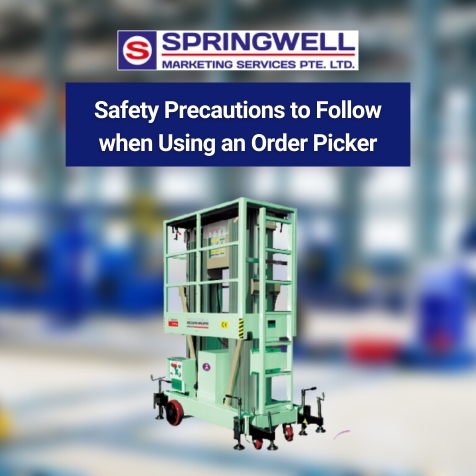
Order pickers are essential pieces of equipment in warehouses, factories, and distribution centres. They are used to lift heavy items and provide a safe way for workers to reach high shelves.
However, the use of order pickers comes with inherent risks that can result in accidents or injuries if proper safety precautions are not followed.
Today, we will discuss some important safety precautions to follow when using an order picker. These precautions should be implemented by both operators and other personnel working in the vicinity of order pickers.
Operator Training
One of the most critical safety precautions is ensuring that all operators are properly trained before using an order picker. This includes understanding how to operate the equipment safely, emergency procedures, load capacities, and how to inspect the equipment for any defects or malfunctions.
Operators should also be trained on how to properly handle and stack materials on the order picker’s platform to prevent tipping or overloading, which can result in accidents and injuries.
Inspecting the Equipment
Before each use, operators should conduct a thorough inspection of the order picker. This includes checking for any damaged or worn parts, loose bolts or screws, and proper functioning of safety features such as brakes and guardrails.
If any defects are found during the inspection, the equipment should be taken out of service immediately and not used until it has been repaired by a qualified technician.
Proper Use of Personal Protective Equipment (PPE)
Operators must wear appropriate personal protective equipment while operating an order picker. This includes hard hats, high-visibility vests, safety glasses, and non-slip shoes.
PPE is essential in protecting operators from falling objects, slips or trips, and other hazards that may arise while using an order picker. It should be worn at all times during operation and when working in the vicinity of order pickers.
Load Capacity
Order pickers have specific load capacities that must be strictly adhered to. Overloading the equipment can cause it to tip over or malfunction, resulting in accidents and injuries.
It is crucial to know the weight of the materials being lifted and ensure they do not exceed the maximum capacity of the order picker. This information can usually be found on a label attached to the equipment or in the operator’s manual.
Safe Operating Procedures
Operators should follow safe operating procedures at all times when using an order picker. This includes keeping both hands on the controls, maintaining a safe speed, and avoiding sudden movements.
Operators should also be aware of their surroundings and use caution when manoeuvring near obstacles or other workers. They should never allow anyone to ride on the equipment with them and should follow all traffic rules and signs within the warehouse.
Regular Maintenance
Regular maintenance is crucial in ensuring the safe operation of order pickers. It is recommended to have scheduled maintenance performed by a qualified technician at least once every six months.
However, operators should also conduct daily inspections before each use to check for any potential issues that may arise during operation. Any defects or malfunctions should be reported immediately to prevent accidents or injuries.
Takeaway
Following these safety precautions is crucial in preventing accidents and injuries when using an order picker. It is the responsibility of both operators and other personnel working in the vicinity to adhere to these precautions at all times.
Proper training, regular equipment inspections, use of PPE, adherence to load capacities, safe operating procedures, and regular maintenance are essential for a safe and productive work environment when using order pickers.
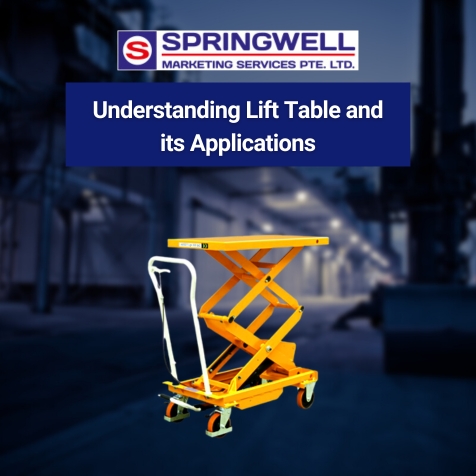
Lift tables are an invaluable piece of equipment for a wide range of industries. From commercial warehouses to automotive manufacturing, lift tables provide a safe and efficient way to move heavy materials up or down in a controlled environment.
Understanding the different types of lift tables available and how they work to help you decide which type is best for your business.
What is a Lift Table?
Simply put, a lift table is a platform-like device that uses mechanical or hydraulic technology to raise and lower material. It can be powered manually or electrically depending on the application. The height of the table can be adjusted to suit the individual needs of each job.
Lift tables have many advantages over traditional loading and unloading methods. They are portable, allowing for easy relocation if needed. They also provide a greater level of safety by helping to reduce the risk of injury from manual lifting or carrying heavy objects.
Types of Lift Tables
There are several different types of lift tables available on the market today:
- Manual Lift Tables: A manual lift table is operated by hand and does not require any type of power source. They are the least expensive option but can be slow to operate and require a lot of physical effort.
- Pneumatic Lift Tables: This type of lift table is powered by compressed air and can be operated with a foot pedal. They are fast and efficient but require costly setup and maintenance to keep them running properly
- Hydraulic Lift Tables: These types of tables use a hydraulic pump to move materials up or down. They are more powerful than air lift tables and can be used to move heavier items.
- Electric Lift Tables: This type of lift table is powered by an electric motor. They are fast and efficient and require minimal physical effort to operate.
Applications for Lift Tables
Lift tables are used in a variety of industries, including manufacturing, warehousing and construction.
- In manufacturing settings, they provide an easy way to move parts up or down so they can be loaded onto other machines or placed into storage.
- In a warehouse setting, lift tables can be used to help move large, heavy items like pallets or boxes from one level to another. This eliminates the need for manual lifting and reduces the risk of injury.
- In construction, lift tables provide an efficient way to move materials up or down without having to use a ladder or scaffolding. This can be especially helpful when working on uneven terrain or in tight spaces where ladders cannot be safely used.
Takeaway
Lift tables are an invaluable piece of equipment for many industries. They provide a safe and efficient way to move heavy materials up or down in a controlled environment, reducing the risk of injury from manual lifting.
No matter what industry you are in, a lift table can help make moving materials easier and more efficient. With proper use and maintenance, these machines will serve you well for many years to come.
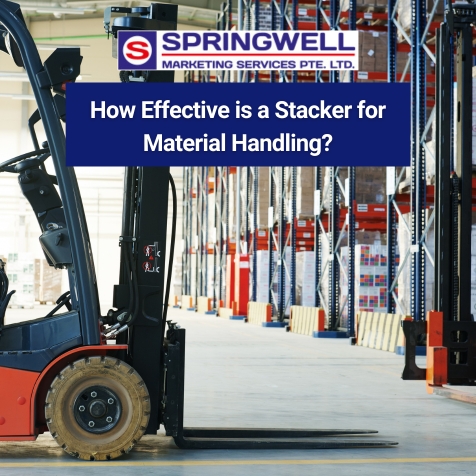
Handling material can be a complex and time-consuming task. It requires careful monitoring of the material being handled to ensure that it is done safely and efficiently.
One way to make this process easier is by using a stacker, a piece of equipment that allows you to stack items on top of one another in an efficient manner.
What is a Stacker?
A stacker is a machine designed to move items from one level of the warehouse to another. The stacker is equipped with a special platform or arm that can be used to lift and transfer materials quickly and efficiently.
It also helps reduce manual labour by allowing one person to perform multiple tasks at once.
Types of Stacker
There are a few different types of stackers, all designed to suit the specific needs of your business.
1) Manual stackers
Instead of using an electronic control system, these stackers contain a hydraulic system that allows them to move and lift pallets. They have two wheels on the front of the stacker and one on the back that allows the machine to spin and turn. It also has a lever on the front.
2) Electric stackers
Also known as a powered stacker, this type is also powered by batteries, along with an electric motor. Electric pallet stackers are the easiest to operate due to their entirely electronic controls.
3) Semi-Electric stackers
This type combines manual and electric functions, creating a hybrid. It is ideal for short-distance pallet transportation and stacking. As partially battery-powered pallet stackers, they rely on batteries that typically last for a workday.
How Does a Stacker Help with Material Handling?
Material handling is one of the most important functions in any warehouse.
A stacker can help improve warehouse efficiency by reducing the amount of time spent on transporting goods from one area to another.
In addition, the stacker allows for easier and more efficient storage of material, as it can be placed into bins or racks and lifted up or down with ease. This decreases the amount of time spent on manually filing items away or finding them in storage.
Benefits of Using a Stacker
- Reduces manual labour – The stacker can reduce the amount of manual labour required to move material from one level to another, reducing fatigue and increasing efficiency.
- Improves safety – Stacking items securely helps to reduce the risk of injury or accidents. It also ensures that goods are safely placed and stored away from potential damage or hazards.
- Increases storage capacity – With a stacker, you can increase your storage capacity by stacking materials on top of each other and in racks. This allows for more efficient storage and transportation of goods.
- Reduces overall costs – The stacker reduces the amount of time and resources needed to transport material, making it more cost-effective in the long run.
Takeaway
A stacker is an invaluable tool for improving material handling and storage in a warehouse. It reduces manual labour, improves safety, and increases storage capacity, all while saving time and money.
If you are considering investing in one of these machines, make sure to consult an expert first. They can help you find the right stacker for your warehouse and give you advice on how best to use it.

A material lift is a device used to help move and transport heavy, bulky items, as well as materials of all kinds. It is a mechanical lifting device that can be used to move objects from one location to another with ease and efficiency.
Material lifts are available in various sizes and configurations, depending on the weight and size of the items being lifted or transported.
Benefits of Material Lifts
Material lifts offer many benefits for industrial and construction businesses. They can help to reduce strain on workers’ bodies when moving heavy materials, as well as help to prevent back and neck injuries from manually lifting items.
Material lifts are also a great way to save time when transporting items between areas or even up and down levels in a building. Additionally, they can be used to move materials around safely, quickly, and efficiently, reducing the risk of accidents or injuries.
Types Of Material Lifts
There are various types of material lifts available on the market. Some of the most common types include hydraulic lifts, forklifts, and pallet jacks. Each type is suited to different purposes and environments, so it’s important to choose the right type for your needs.
Hydraulic Lifts
Hydraulic lifts are used for lifting and transporting large, bulky items, such as pallets or machinery. These types of lifts usually have a platform that can be raised or lowered using hydraulic cylinders.
They are usually powered by diesel fuel or electricity and require an operator to operate them safely and effectively.
Forklifts
Forklifts are a type of powered truck used to lift pallets and other items. They come in a variety of sizes, from the standard electric forklift to the larger diesel-powered types.
Forklifts can be equipped with attachments for handling specific tasks, such as lifting and stacking pallets or transporting heavy materials.
Pallet Jacks
Pallet jacks are smaller than forklifts and are used for transporting small loads. They are typically powered by electricity or manually operated and come with either a platform or a vertical handlebar.
Pallet jacks can be used to move bulk items, such as boxes of paper and other materials, quickly and safely.
Takeaway
Material lifts are an essential piece of equipment for any industrial or construction business that needs to move heavy or bulky materials. They can help reduce strain on workers’ bodies, while also helping to save time and effort.
No matter what kind of material you need to move, having an effective lifting system in place can help to make your job easier and safer. Invest in a quality material lift and ensure that your materials are transported safely and efficiently.
Check out our material handling equipment store to find the material lift you need.