


Types of Jib Cranes | Jib Crane Service Classification
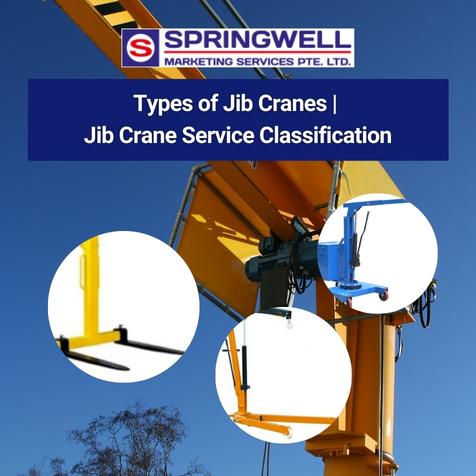
What is a Jib Crane?
Jib cranes are reliable lifting machines with a sturdy arm or boom that extends from the main body to provide expansive reach and features a lattice design to reduce weight on loads. Perfect for working in cramped spaces, jib cranes have an uncomplicated design to efficiently complete repetitive tasks with ease. Capable of hoisting up to 250 pounds all the way up 15 tons, these extremely flexible and versatile cranes can cater your specific needs.
Jib cranes, also know as boom cranes as they are also known, are a type of overhead lifting equipment that is affixed to either the ceiling, wall, beam or column. This form of crane lies in its jib which holds up the device for its lifting capabilities. The structure and design depend solely on this said jib.
Freestanding Jib Crane
These are the most common type of jib cranes, as they have a base structure that is round or square in shape and is firmly secured to the ground. This ensures maximum stability while it lifts even heavy loads with ease. The hoist trolley can be moved along the arm by either motor drive or pneumatic power and can be rotated in any direction; these are the most common type of jib cranes found in warehouses and manufacturing facilities.
- Base Plate Mounted
For maximum stability, a base plate mounted freestanding jib crane is bolted to an anchored concrete slab reinforced with additional sturdy gussets. The design of the jib crane permits its boom to easily maneuver around any potential overhead barriers and place the hoist in a desired spot.
- Foundation Mounted
By implementing a foundation mounted freestanding jib crane, the welded steel plate at the bottom of its mast is seamlessly embedded on the first layer of concrete. An additional pour will provide extra stability and reinforcements to negating any need for gussets.
- Sleeve Insert Mounted
A sleeve insert mounted freestanding jib crane is similar to the foundation type, with a sleeve embedded into concrete during its first pour. Subsequently, this allows for a secure fitment of the crane’s mast as it slips snugly into said sleeve- allowing for effortless disassembly and relocation without any damage or detriment to the integrity of your structure.
Articulating Jib Cranes
An articulating jib crane provides superior maneuverability and responsiveness compared to a standard jib crane. Thanks to its swivel arm and boom, it can effortlessly rotate around obstructions for optimal positioning of loads. Furthermore, this versatile device can be easily mounted on walls, floors, ceilings or bridges as needed.
Wall Mounted Jib Cranes
Wall mounted jib cranes, also known as wall pillar or cantilever jib cranes, are the most efficient types of lifting systems for any business. They don’t require a large amount of space since they take up minimal floor and foundation area. These special models complement overhead bridge crane and monorail system perfectly by being placed close to the underside of your lowest building structure; consequently providing maximum clearance under and above their lift booms!
Choose between a cantilever or tie rod support design for your wall mounted jib crane depending on the weight and size of loads you need to lift. Both are reliable, safe options that can provide dependable service in any application.
- Cantilever
Maximize your workspace with a cantilever wall jib crane! This type of crane is secured to the wall by two brackets, forming an immovable frame. Extending from this frame is a cantilever boom that runs perpendicular to the floor – granting you more clearance than any other design.
- Tie Rod Supported
Tie rod jib cranes are the most cost-effective way to hoist items within a bay, along walls, columns and elsewhere. Similar to cantilever designs, it is connected to a wall or column by two brackets; one bracket affixed directly onto the boom perpendicular to the floor while another connects it with its tie rod support. With this device’s versatility and affordability in mind, you’ll never need any other lifting mechanism!
Mast Jib Cranes
Mast type jib cranes are floor-supported and stabilized from the ceiling, affixed to the building’s own beams. Unlike foundation or base plate supported jib cranes, mast jibs require little floor space and no holes in your facility’s foundation! This means you don’t need to modify anything about your structure for these types of crane – an economical approach that can make a huge difference on costs without sacrificing any quality lifting capabilities. Think of it as getting all the advantages of tie rod supported jib craneless disruption to the site itself – a win/win situation!
Portable Jib Cranes
Featuring a lightweight and mobile design, the portable jib crane is the perfect solution for your material-handling needs. Not only can it be operated by just one person, but its capacity of less than half a ton allows you to move large loads without having to rely on other resources. It’s base is conveniently designed with both wheels or fork lift capabilities so that anyone can easily operate this device!
Hydraulic Jib Crane
A hydraulic jib crane is a type of portable jib crane that has a hydraulic cylinder to raise and lower the arm. The lifting system of a hydraulic jib crane uses a hydraulic cylinder that is attached to the boom to lift and lower loads. The hydraulic mechanism can be powered by a battery or be a hand pump type, depending on the design of the crane.
Wall Traveling Jib Crane
Wall traveling jib cranes provide a revolutionary way to utilize the space of any building, allowing for efficient and effortless movement, lifting, and transporting of heavy loads. Moving along rails that are mounted on walls or other supporting structures, these remarkable machines use their vertical lifting abilities in conjunction with lateral movements to maximize the area’s potential.
Ceiling Mounted Jib Cranes
Ceiling mounted jib cranes are not only an efficient way to save on valuable floor space, but they also provide a unique lifting capability. Available in stationary or platform-mounted options and with the capacity of up to one ton and spans over 16 feet, along with 360° pivot range; these crane systems can easily serve multiple workstations while optimizing your workspace.
Workstation Jib Crane
Workstation jib cranes are an invaluable tool to guarantee the safety of your employees while simultaneously raising productivity. Their ergonomic positioning makes it easier for workers to maneuver and position a workpiece, as well as transport it onto other applications with ease. Additionally, you can find these cranes in all available mounting configurations that cater directly to any given application’s needs.
Truck Mounted Jib Cranes
Truck-mounted jib cranes are some of the most versatile and widely used types of crane on the market. Made from high tensile strength steel, they can be securely bolted onto any trailer or truck bed to take advantage of their full range of features — including a telescopic boom ideal for accessing hard-to-reach locations such as power lines, roofs and light poles regardless of terrain or weather conditions.
At Springwell Marketing, we offer a comprehensive range of jib cranes designed to provide the ultimate in lifting power, portability and versatility. Our range of cranes are manufactured with safety as our top priority — each one is thoroughly tested and inspected before leaving our factory. So you can rest assured that you are getting the highest quality product available.
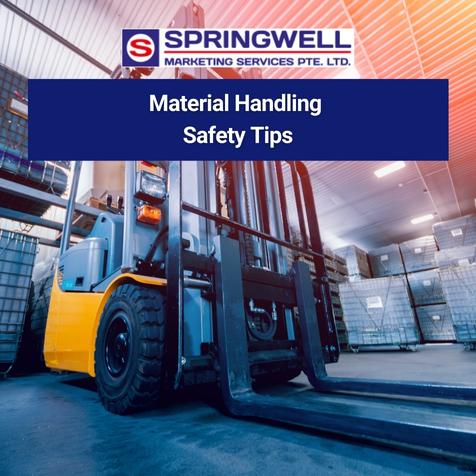
Introduction To Material Handling
Material handling safety is a key part of creating a safe working environment in any manufacturing or warehousing facility. It involves the transport, storage, and control of materials and products throughout the production process. Safety practices should be employed to minimize the risks associated with manual material handling such as injuries from slips, trips, and falls; strains, sprains and fatigue; as well as other hazards.
Loading Dock Safety
Loading docks can be dangerous places, especially when workers are not aware of the potential hazards.
1. Determine weight limits of the dock and any equipment being used to lift or move heavy materials.
2. Make sure dock workers are aware of their surroundings, particularly when driving a forklift.
3. Wear protective gear such as gloves, goggles, and hard hats while working in the loading area.
4. Use appropriate signage on the docks to indicate any potential hazards, such as wet floors or uneven surfaces.
5. Secure dock doors and other entrances to the area with locks or alarms.
6. Inspect the dock regularly for signs of wear and damage that could lead to slips, trips, or falls.
7. Provide adequate lighting so workers can properly see what they’re doing on the dock.
8. Ensure all dock workers are properly trained in how to safely operate any machinery or equipment used on the loading docks.
9. Establish clear rules and regulations for workers operating in the loading dock area, such as speed limits, noise levels.
Electrical Hazards Safety
Electrical hazards pose a multitude of serious risks to workers, ranging from electrical shocks to severe third-degree burns.
1. Limit access to prevent unauthorized people from entering and coming into contact with electrical wiring and equipment.
2. Ensure all electrical equipment is properly grounded and regularly inspected for defects or faults.
3. Provide proper training for workers on how to identify and address electrical hazards.
4. Ensure that only qualified personnel are allowed to operate any machinery or equipment containing electrical wiring.
5. Make sure that all exposed wires and cables are properly covered or insulated to prevent accidental contact.
6. Regularly inspect any electrical switchgear, circuit breakers and other equipment for signs of overheating, sparks, or smoke.
7. Enforce that workers always wear protective gear.
Fire Hazards Safety
Fire hazards are the most common risk to employees. To ensure safety, employers should:
1. Ensure that all facilities are equipped with appropriate fire extinguishers and other fire-fighting equipment.
2. Develop a comprehensive fire prevention plan which includes proper storage of flammable materials, emergency evacuation procedures and regular inspections for any signs of potential fires.
3. Provide employees with proper training on the use of fire-fighting equipment.
4. Ensure that all areas and building structures are free from combustible materials and debris, and any potential sources of ignition are prevented or eliminated.
5. Install smoke detectors and sprinkler systems throughout the premises, as well as clearly marked exit signs in case of an emergency evacuation situation.
6. Conduct regular safety drills to ensure that employees are familiar with the evacuation procedures in case of a fire emergency.
7. Develop a risk assessment program for identifying potential areas of danger within the workplace.
Hazard Communication
1. Create safety procedures for handling hazardous materials and make sure that all employees understand the risks associated with their use.
2. Distribute Material Safety Data Sheets (MSDS) to each employee detailing potential hazards, first-aid instructions, and protective measures for working with hazardous materials.
3. Ensure that proper labeling of hazardous materials.
Overall Safety Tips for Material Handling:
1. Ensure that all personnel are compliant with safety standards and wear the proper safety equipment such as steel toe shoes, gloves, face shields, and hard hats when handling materials or operating any equipment.
2. Inspect all material handling equipment prior to use and inspect it regularly for any signs of wear on the brakes, tires, or frames.
3. Keep walkways and work areas free of obstructions to reduce the risk of slips, trips, and falls.
4. Always lift with your legs instead of your back when manually carrying items; make sure you have a good grip on the load to avoid dropping it.
5. Maintain proper loading techniques by evenly distributing the weight and keeping heavier items closer to the mast.
7. Utilize suitable equipment for heavier loads or awkward shapes.
8. Wear proper personal protective equipment such as safety glasses, gloves, face shields, and hard hats when handling materials or operating any equipment.
9. Lock out/tag out any moving machinery whenever possible to avoid contact with pinch points, blades, or other hazardous areas.
10. Avoid overexertion by asking for help when necessary and taking breaks as needed.
11. Be aware of your surroundings to anticipate potential dangers and alert other workers to threats in the area.
Conclusion
By following these basic material handling safety tips, your loading and unloading operations can run smoothly and safely. Your best defense against injuries is to be aware of the potential dangers and take all necessary precautions to protect yourself and those around you.
With a little extra awareness and caution, you’ll be able to ensure that your loading and unloading operations go off without a hitch.

Jib cranes are one of the most commonly used overhead cranes. They are also known as wall-mounted cranes since they are mounted on the wall or on a column. Jib cranes offer many advantages and can be used in a variety of applications, making them a versatile option for material handling.
What Is a Jib Crane
A jib crane is an overhead crane that consists of a horizontal beam (the jib) that is supported by a wall-mounted bracket or pillar. The jib can be rotated, allowing the load to be moved in a circular arc.
Jib cranes are available in a variety of sizes and capacities, and can be customised to suit the specific needs of the application.
The Advantages of Jib Cranes
There are many advantages to using a jib crane, including:
– They make it possible to move heavy loads without the need for a large overhead crane, saving on space and installation costs.
– Jib cranes can be used in a variety of applications, including manufacturing, assembly, and maintenance.
– Jib cranes can be operated manually or electrically, making them suitable for both light and heavy loads.
Disadvantages of Jib Cranes
There are a few disadvantages to using a jib crane, including:
– Jib cranes can be more expensive than other types of crane, such as an overhead crane.
– They require regular maintenance to ensure smooth operation and to prevent wear and tear.
– Jib cranes can be dangerous if not used properly, so it is important to follow all safety instructions when using one.
– They require a solid wall or column to be mounted on, which may not be possible in some workspaces.
If you are considering using a jib crane in your workplace, it is important to weigh the advantages and disadvantages to decide if it is the right choice for you.
Uses of Jib Cranes
Jib cranes are most commonly used in factories and warehouses to move heavy materials around. They can also be used in construction sites, garages, and other industrial settings. Jib cranes offer a number of advantages over other types of crane, making them a popular choice for many businesses.
Shipping
Robust cranes with heavy lifting capacities have always been a part of the shipping industry for booting and unloading purposes. Jib cranes, in particular, are efficient at loading boats and moving materials from docks or trucks.
Construction
Jib cranes are also used in construction settings, often for lifting and moving heavy materials like bricks or concrete blocks. They can also be used to lower materials down from high buildings under construction.
Manufacturing
Jib cranes are commonly found in manufacturing settings, where they are used for tasks such as moving heavy machinery or large pieces of equipment. They can also be used for lifting and moving raw materials or finished products around a factory floor.
Warehousing
Jib cranes are also used in many warehousing applications, often for loading and unloading trucks or for moving materials around a warehouse. They can also be used to load and unload ships at dockside.
There are many other potential uses for jib cranes in both commercial and industrial settings. They are frequently used in automotive assembly plants, for example, and can be found in a variety of other manufacturing facilities. Jib cranes can also be used in construction applications, such as for hoisting materials to upper floors of a building under construction.
In general, jib cranes are versatile pieces of equipment that can be used in a wide range of settings.
Types of Jib Cranes
There are several different types of jib cranes, each of which is designed for specific applications.
Freestanding Jib Crane
Jib cranes are the most common type of crane, and they can be used indoors or outdoors. They often work with bridge cranes. These standalone machines have a lifting capacity of a few pounds to several tons, depending on where they’re installed.
Articulating Jib Cranes
An articulating jib crane is different than a standard jib crane because it has an arm that rotating along with the boom. This allows for easy movement and positioning of loads, even around corners or other obstacles. Articulating jib cranes can be mounted on walls, floors, ceilings, or bridges.
Wall Mounted Jib Cranes
Wall mounted jib cranes, also called wall pillar or cantilever jib cranes, do not need floor or foundation space and are more compact than other types of jib cranes . They can supplement a monorail or overhead bridge crane , take up less room, and be installed close to the bottom of a building so there is maximum clearance under and above the boom.
Mast Jib Cranes
Mast type jib cranes are floor supported and top stabilised. They don’t require foundation supports or base plates, and they take up very little floor space. This makes them a very economical lifting method, much like tie rod supported jib cranes.
Portable Jib Cranes
Portable jib cranes look almost like freestanding or articulating jib cranes, just that they are installed on a mobile base that can be wheeled or fork lifted have a capacity of less than half ton. The design of portable jib cranes means that one person can move large amounts materials without the need for other resources.
Hydraulic Jib Crane
A hydraulic jib crane is a portable jib crane with a hydraulic cylinder that lowers and raises the arm of the crane. The lifting system uses a hydraulic cylinder attached to the boom of the crane which lifts and lowers loads. The hydraulic mechanism can either be powered by battery or hand pump, depending on design.
Workstation Jib Crane
Workstation jib cranes are a tool that allows for both productivity and safety in the workplace. By being easy to manipulate, they make it possible for workers to place or move a workpiece with ease. These types of cranes also come in every mounting configuration you could need to specifically meet the needs of any application.
Truck Mounted Jib Cranes
Truck mounted jib cranes are a specialised type of crane that is designed to be used in conjunction with a truck or other vehicle. These cranes are typically used in construction or other industrial applications where a large amount of lifting and moving needs to be done.
All in all, jib cranes offer a versatile and convenient solution for many different lifting needs. If you think that a jib crane could be the right solution for your business, be sure to reach out to us.

The term work platform can refer to many different types of equipment, but the commonality is that they are all used to assist workers in performing their duties. In general work platforms are usually also referred to as step stools:
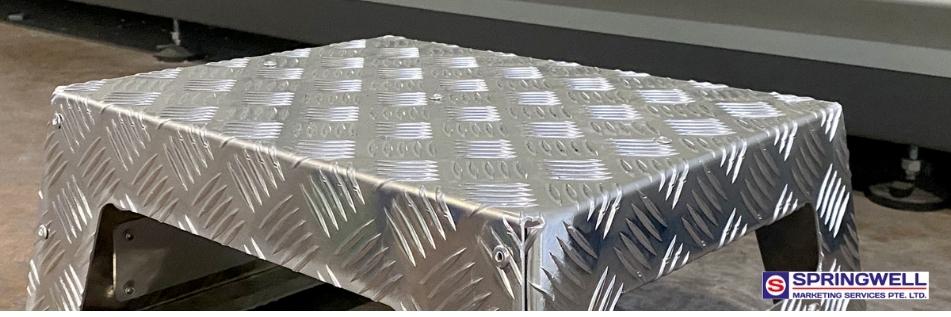
Other types of work platforms would include: heavy duty work platforms (like Tri-arc work platform), where it will look more elaborated.

And then there are aerial work platforms:
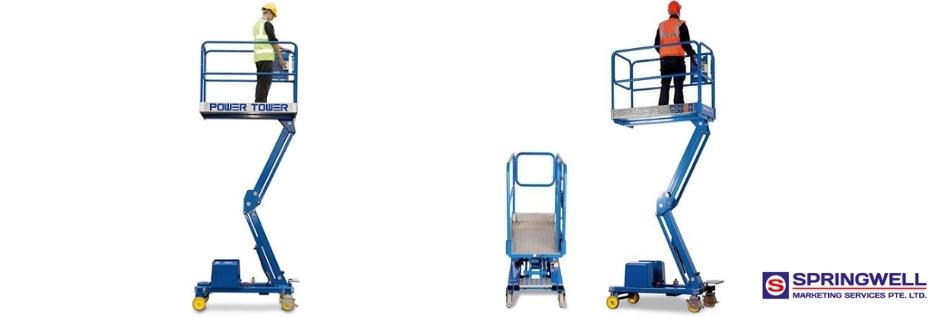
There are a few things you should keep in mind when choosing a work platform. The most important thing is to make sure that the platform you choose is comfortable and easy to use. You also want to make sure that it is durable and can hold up to the rigours of your work.
Here are a few factors to keep in mind when choosing a work platform:
Ease of Use:
You want a platform that is easy to set up and use. It should be intuitive and user-friendly.
Durability:
The platform should be able to withstand the wear and tear of your work. It should be made of high-quality materials that can withstand repeated use.
Weight Capacity:
The platform should be able to support the weight of your tools and materials. It should have a high weight capacity to ensure stability.
Portability:
The platform should be easy to transport from one work site to another. It should be lightweight and compact for easy storage and transportation.
Other Questions You Need To Ask Yourself
Height You Require:
The platform should be the right height for your needs. It should be adjustable to accommodate different users and different tasks. Make sure that there is still enough room on the new platform for workers to do their job optimally.
Size Of The Platform:
The platform should be the right size for your needs. It should be large enough to provide a stable work surface, but not so large that it is difficult to transport or store.
What Safety Measures Do You Need:
The platform should have the right safety features for your needs.
Some aerial work platforms have guardrails to ensure that workers have a proper grip and do not fall off. Others have bins or trays to catch tools and materials that may fall.
How Will You Use The Platform:
The platform should be versatile enough to accommodate different tasks. It should be able to reach high places, but also be able to maneuver in tight spaces.
Will The Platform Be Exposed To Certain Elements:
The platform should be able to withstand exposure to the elements, whether it is rain, snow, or sunlight.
These are just a few of the factors that need to be considered when designing a work platform. Depending on the specific needs of the job, there may be other factors to consider as well.
When it comes to choosing the right work platform, it is important to consult with experts who can help you find the perfect solution for your needs. At Springwell Marketing, we have a team of experts who can help you find the perfect work platform for your business. Contact us today to learn more about our services.

Order pickers play an important role in many different types of material handling projects. If your warehouse doesn’t already use them, read on to find out how they can help streamline your operation.
You’ve arrived at the right place whether you’re new to warehousing or you have only heard the term order picker before (it’s also commonly referred to as a stock picker, order selector, or warehouse selector). This article describes what an order picker is, how it operates in your warehouse after being integrated, which industries can use them, and how they promote operator comfort while maintaining safety and efficiency.
What Is An Order Picker?
Warehouse order pickers are machines that enable operators to pick individual items at low, medium, or high levels. They’re highly manoeuvrable and can be used for stacking, transporting, or transferring items to a pallet, trolley, or roll cage before distribution to stores.
Types of Order Pickers
There are several types of order pickers available, starting with the low-level order picker. Low-level order pickers typically work on the ground and can have a platform elevation height of 1,000mm to reach the first level above.
Different Order Picking Methods
1. Single Order Picking
Single order picking is the most common type of picking method. In single order picking, each picker gathers items for a single order before moving on to the next. This type of picking is often used for fast-moving items that are picked frequently.
2. Batch Order Picking
Batch order picking is a method where a picker gathers items for several orders at once. The picker will fill up a tote or cart with items for multiple orders before moving on to the next batch. This type of picking is often used for slower-moving items that are not picked as often.
3. Zone Order Picking
Zone order picking is a method where items are grouped together in zones based on how often they are picked. The most frequently picked items are in the first zone, and the least picked items are in the last zone. Pickers will go to each zone and pick all of the items for all of the orders in that zone before moving on to the next zone. This type of picking is often used for fast-moving items that are picked frequently.
4. Wave Order Picking
Wave picking is a method where orders are assigned to pickers in waves. A picker will go through and pick all of the items for all of the orders in their wave before the next wave is released. This type of picking is often used when there are a large number of orders that need to be picked at the same time.
5. Cluster Order Picking
Pickers can work on multiple orders at the same time with the cluster picking method. Pickers, on the other hand, pick a variety of goods for numerous sales instead of concentrating on similar SKUs (items) for many purchases.
6. Pick and Pass Method
Associates pick SKUs for various orders at a time from within their zone and the bins, tote or containers are then passed to the next zone in the pick and pass method.
Which Order Picking Method Is Best?
The order picking process that will work best for your company depends on various factors such as warehouse size and inventory levels, the number of orders received per day, and the average number of items in each order.