


5 Things To Consider Before You Buy a Pallet Truck
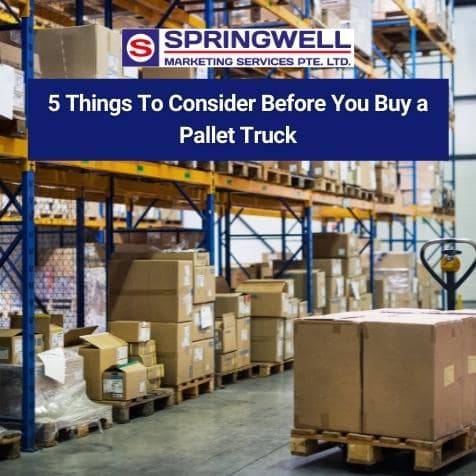
A pallet truck (also known as a pump truck or pallet jack) is a trolley with forklift-like attachments that may be used to lift and transport pallets. The tapered forks of the truck fit between the pallet and the load, while the pump handle can be utilized to raise and lower it.
There are many types of pallet trucks – all designed to lift and transport pallets.
Basic Functionality of a Pallet Truck
- Pallet loading capacity
- Allows for easy manoeuvre
- Requiring little to zero maintenance
If you are planning to buy a pallet truck, there are certain factors that should be considered beforehand. Pallet trucks are available in a wide range of designs and features. Some have self-powered hydraulics whereas others work with hand pumps. Here is the list of key points that should be kept in mind before you decide on which pallet truck you should get.
(1) Loading Capacity (Don’t pay for more than what you need)
Understanding your company’s pallet jack application is critical. Are your pallets usually 500 LBS or less? 4,000 LBS or less? Or 10,000 LBS or more? Pallet jacks with a maximum lifting capacity of between 3 and 5,500 pounds are standard.
Hand pallet jacks with higher capacities will usually be more expensive as they have higher loading capacity.
(2) Determine the pallet jack width, length, and lift height needed
The same logic may be applied to the width and length you’ll need for your jack. A pallet jack’s typical form is 27″ wide by 48″ long. However
If you have especially wide or long pallets that need to be moved around, you may want to consider looking for models with greater width and length capacities.
As far as lift height goes, this will depend on the specific application of your pallet jacks. Some models are designed to move goods only a few inches off the ground.
The pallet jack’s capability of lifting and lowering in height will impact its price. A typical jack lowers to 3″ and lifts up to 7.75,” however there are Low & Ultra Low hand pallet jacks that drop heights down to 1.75″ if your application demands it.
These pallet jacks will naturally cost more.
(3) Determine the frequently that you will be using your pallet truck
You must also consider the typical usage of your new hand pallet jack. Will you use it only once a day? Or will it be used continuously for the duration of your shift? How often will this machine be operated?
Pallet jacks have a few key components that must be of good quality to endure frequent use. The load rollers and steer wheels on a hand pallet jack are the difference between high- and low-quality versions.
(4) Know your pallet jack manufacturer
The pallet jack’s logo isn’t always on the pallet jack itself. Instead, a material handling company will affix its logo to the jack to conceal the fact that it was made by a different firm.
The manufacturers of these jacks know how to make a good product that will last for years, so it’s important to find out who made your pallet jack.
(5) Understand your warranty and the value of what it offers
Having a solid guarantee on your pallet jack is the only way to ensure that your purchase expectations are met. You will never be in this awful scenario of having to take or carry an order without the appropriate tools if you have a warranty you can trust.
Also, before you buy it, look at the warranty to be sure it’s good. Many businesses provide a broad guarantee that covers minor damage and flaws.
In conclusion, if you’re looking for a pallet jack that will last years, be sure to search for the following factors: warranty and pump mechanism. You may trust your purchase to provide you with years of dependable service if you consider these elements.
Still unsure of which pallet truck to get for your needs?
Head on over to Springwell marketing today and let our consultants recommend to you a suitable pallet truck for your company.
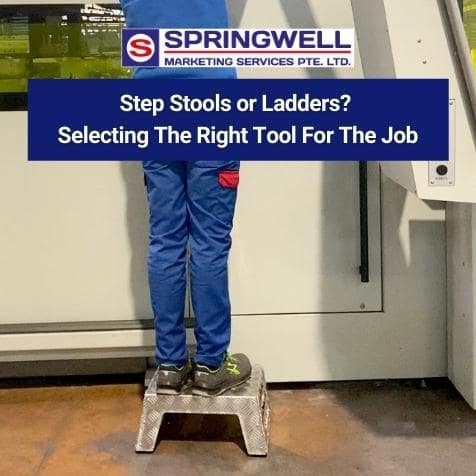
Ladders can be a lifesaver, whether you’re a professional contractor or just trying to change a light bulb. They can help you complete tasks that would otherwise be difficult or impossible. But not all ladders are created equal. If you are in the market for a ladder, make sure to invest in a quality model that will last.
(1) Safety
Purchasing an unusually inexpensive or secondhand ladder might expose you to the hazards that weather and use can create. In other words, critical screws in aluminium ladders may corrode, while dampness and decay can severely damage a wooden ladder’s structural integrity.
When you work at heights, whether it’s on a ladder or working from the ground, there are certain safety concerns that need to be addressed. This can lead to serious injury if your typical ladder collapses because it is open to the potential of such dangers.
Therefore, it is preferable to acquire a quality ladder from a reputable supplier so you can be confident that your ladder will last and will fulfil its function.
(2) Ensuring Workplace Efficiency
Investing in a quality ladder ensures that tasks are performed optimally. A safe and sturdy ladder will help avoid potential accidents, which can lead to costly downtime.
In some cases, ladders may also be custom-made to fit the specific needs of the workplace. This allows workers to be more productive by having the right tools for the job, without having to worry about safety hazards.
A ladder isn’t exactly a throwaway purchase, but it shouldn’t be! Whatever your budget for a ladder is, you won’t want to have to replace it anytime soon.
Furthermore, you’ll be entrusting your physical safety to it on a daily basis, so you don’t want it to fall apart in just months. With that in mind, spending a little more money for the sake of being safe is well worth it.
(3) Durability
Quality ladders are usually made out of aluminium or fiberglass. They are more durable, has stronger weight support, and easier to maintain – because they can be stored outdoors as they are less susceptible to rust.
Benefits of Getting an Aluminium or Fiberglass Ladder
- Extremely durable and strong
- Highly resistance to rust and oxidation
- Easy to maintain
- Can be stored outdoors
- Fiberglass ladders will maintain their strength (resistance to outdoor heat)
- Ladders made from aluminium are more light-weighted
(4) Great Functionality
We hold a wide variety of platform ladders here at Springwell Marketing, with each carefully manufactured for its intended purpose.
Many are designed with a variety of features that allow them to excel at particular jobs.
For instance, our Ranger PROPF Fibreglass Industrial Platform Ladder has an anti-slip rubber feet for maximum grip on any surface, while our StockMaster Navigator Ladder features a single control to brake and steers which keeps all four feet of the ladder firmly on the ground unless you are moving it.
Ladders with these functions are not only useful; they are highly necessary.
Some of the most basic safety characteristics include rubber feet to prevent a ladder from sliding against the ground. Ladders that are extremely low-cost or secondhand may lack some of these capabilities, making them inconvenient at best and potentially dangerous.
In conclusion, it is important to be aware of the features that make a ladder safe and functional. When choosing a ladder, be sure to consider its anti-slip feet, ability to brake and steer, and overall quality. With these features in mind, you can be sure that you are using a safe and reliable ladder every time.

What is a step stool?
A step stool is a folding stool with one or two steps that are concealed underneath the seat. It can also be referred to a simple, one-step or two-step wooden, plastic, steel, or aluminium construction that helps you reach higher.
A step stool is a foldable, self-supporting portable ladder that may be stored compactly. When extra height is required to access or execute tasks overhead safely, but not a full-sized ladder, step stools are useful and efficient.
This tool usually will allow you to get closer to heights, but it won’t let you go much beyond your natural reach.
What is a step ladder?
A step ladder is a “A”-shaped ladder with the capacity to ascend three to six steps. Step ladders are useful tools for working at heights because they allow you to reach areas out of your reach naturally. Most step ladders are constructed of fiberglass or aluminum.
It is different from a platform ladder – where the difference is that there is an actual platform found on the platform ladder.
Key Differences & Which Is Right For You?
Stools with a step function are similar to standard stools in that they are intended to sit on top of and have a length of less than 32 inches. A step ladder, on the other hand, is more like a two-sided ladder with extra treads than a regular step stool.
The key difference is that a step ladder is more stable because of its two-sided design, and it typically has a higher weight capacity than a standard stool. This makes it better suited for heavier projects or use in high-traffic areas. But if you only need to reach items that are lower than your waist, a standard stool will do the trick.
(1) Functionality
A step stool is the right option if you just need a little more height to reach the top shelf of cabinets. A step ladder is required for those working at a height of 12 feet or higher.
Stools with step bars are mostly used to allow those who aren’t able to reach normal heights to get the height they need without putting themselves at risk. They are smaller and lighter, so they’re easier to store under a counter or in a corner out of the way.
A step ladder is more useful for tasks like tree trimming, light bulb changing, painting, gutter replacement, Christmas lighting installation, and so on.
Both are common tools used even in industrial and warehouse settings.
(2) Versatility
Note that with several designs and configurations these days, there are step ladders that can be configured to suit various needs.
Some adjustable ladders, for example, have a strengthened auto-locking hinge that allows the user to transform it into a workbench.
On the other hand, there are step stools that are catered for more heavy duty requirements with greater reach as well.
Thus it is important to check with your supplier if they can recommend a model or a solution that can meet all of your requirements.
(3) Size
The size of either tool is one of the easiest ways to distinguish them. Naturally, the size of a step ladder is bigger than that of a step stool, making them more useful in an outdoor setting. Due to step ladders being bigger, they often weigh more than a step stool too. This leads nicely onto the next difference between the two.
(4) Portability
The mobility of a step ladder or stool is determined by its size and weight. A step stool is going to be more portable than a step ladder since it is smaller and lighter in weight. If you need to move things frequently, a step stool may be a better choice for you because it meets your reach and weight requirements.
(5) Weight Capacity
Step stools, because of their structure, usually will not be able to support more than 100kg of weight. They may not be utilised to transport heavy weights due to their design. Because these are often only available in three duty ratings, they’re better suited for light indoor usage. Stepladders, on the other hand, are capable of carrying a tremendous amount of weight and it is usually more stable.
Conclusion
It is often difficult to choose between a step stool and a step ladder. It all depends on what you want to use them for.
Getting a step stool in Singapore is a handy tool for reaching things that are high up or hard to get to. If you need a little lift around the house to reach some difficult heights, a step stool is the way to go. A step ladder, on the other hand, is your best option if you need assistance with tasks that require you to work at height.
When determining what is best for you, think about the nature of work that you will be engaging in and the condition in which you will be working in. It is also helpful to think about the weight that you will be carrying and the reach you would need.
Once all of these factors have been taken into account, you will definitely have a clearer idea of which product is best suited for your needs.
What Is a Pallet Truck?
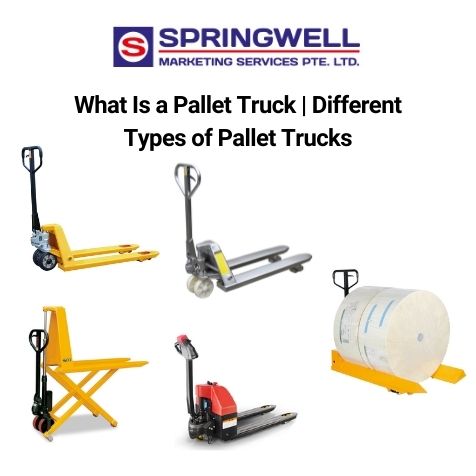
Pallet trucks, often known as “pallet jacks” or “pallet pumps,” are trolleys for lifting and transporting pallets. The truck’s tapered forks fit under the pallet, allowing the pump handle to be utilised to raise and lower the weight.
They can help automate tedious, repetitive manual activities in warehouses, allowing a many-person operation to be reduced to a single person’s work.
However, there are numerous variants of pallet truck available, each with its own set of advantages and uses.
Types of Pallet Truck
There are many different types of pallet truck available to suit all sorts of different requirements, including: High lift pallet trucks, low profile pallet trucks, mini pallet trucks, and more. But all in all, they can be categorised into these main categories:
(1) Manual Pallet Truck
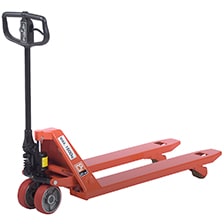
Manual pallet trucks are the most basic and most frequent kind of pallet truck. The typical fork dimensions of a manual pallet truck are 27″ X 48″.
A hand pallet truck, such as this heavy-duty hand pallet truck, is most often used to manually lift and transport loads of up to 2500 kg.
The handle is used to pump or hydraulically lift the forks once they are placed on a pallet, raising and transporting the pallet-loaded product to its intended destination.
(2) Electric Pallet Trucks

An electric pallet truck is commonly used for high-end constructions and automates much of the labour associated with transporting freight.
Electric pallet jacks, also known as electric pallet trucks, walkies, or power jack, are motorized to enable lifting and transporting of heavier and stacked pallets. The powered pallet jack is generally pushed by a throttle on the handle to move ahead or backwards, and it is steered using the handle.
(3) High-Lift pallet Trucks
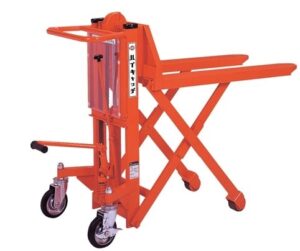
A high-lift pallet truck is typically utilised to lift objects much higher than a standard pallet truck while also functioning as a lifting table and workbench.
Pallet trucks with a highlift feature can transport pallets and raise them to an ergonomic working height for manual loading or unloading of goods. When the pallet is raised to a working height, the clever design immobilizes the unit.
(4) Weigh-Scale Pallet Truck:

Weigh-scale pallet trucks that weigh-scale can be used to weigh anything up to a certain amount, as well as give the efficiency and function of a normal pallet truck.
These pallet trucks come with built-in weighing scales that you can use to identify the weight of the load you’re shifting.
How To Use a Pallet Truck
In order to move a load using a pallet truck, you must first place that load on a pallet and secure it using suitable load restraint products (e.g. lashing straps).
Once your load has been restrained, you can manoeuvre your pallet truck into place, sliding the forks into the gaps provided for this purpose. You can then use the truck’s pump-action handle to raise the pallet up off the ground – watch this video to see how that works.
Pallet pump trucks make it easy to move loads around your premises while eliminating many of the risks associated with heavy lifting. Remember, if you need to move pallets across rough terrains, there are special all-terrain pallet trucks available for this purpose.
Pallet trucks have a wide range of uses, and that for each position you may need a specific type of pallet truck. If you want to minimise the amount of labor in your job, you can purchase an electric pallet truck. You may contact us to learn more about our complete line of pallet trucks.
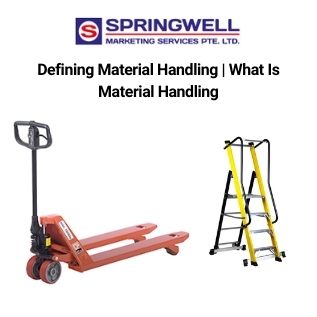
Material handling according to dictionary.com is defined as: the loading, unloading, and movement of goods, as within a factory or warehouse, especially by the aid of mechanical devices (1).
However, in actual fact, material handling is much more than the handling of inventory.
It is the movement, protection, storage and control of materials and products throughout their lifespan of manufacturing, warehousing, distribution, consumption, and disposal.
Material handling encompasses a range of components to keep the supply chain running. This includes a variety of equipment types (manual, semi-automated, and automated) and systems (single-level storage, multi-level storage, conveyors, etc.).
Efficiency Is Key
The name of the game is efficiency when it comes to designing your material handling system. When reacting to and planning for client and warehouse demands, efficient logistics are a must-have. Because inbound inventory’s material handling processes are just as essential as outbound ones.
Inbound logistics, for example, materials handling is another name for corporate facilities. Materials handling requirements must be met not just for the company’s departmental needs, but also to fulfil their customers’ demands.
The Four Parts of Material Handling
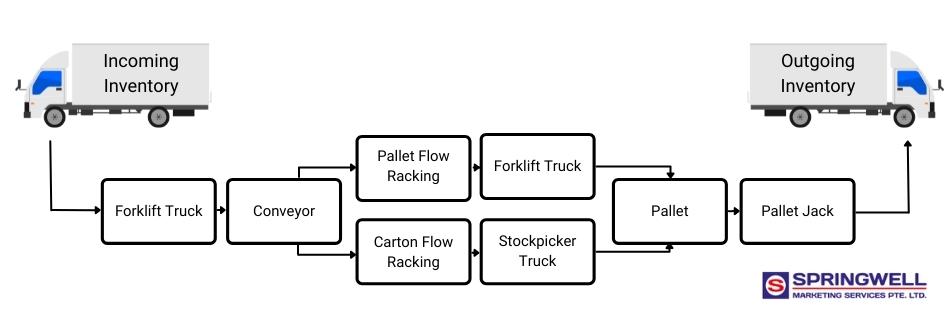
Material handling process has four dimensions that impact efficient product flow through your warehouse.
(1) Movement
For movement, this includes moving products from the incoming inventory front to outgoing inventory end.
The term “small-scale logistics” would involve the use of a forklift, for example, being used to transfer items from storage to a truck for transportation.
Large-scale distribution centers, on the other hand, use more sophisticated material handling equipment such as conveyor systems to move goods throughout a large facility.
(2) Time
This includes: coordinating how long goods stay in storage and receiving inventory-to-shipment timing – that impact the receipt of an order.
All in all, to ensure that everything gets delivered on time.
(3) Quantity
This includes: the management of the amount of product to be stored in the allotted space.
(4) Space
This includes: how much space available for the allocation of the products and goods.
Both quantity and space will ensure products have a space to be stored and subsequently transported out.
Material Handling Ensures Efficiency In Logistics System
All in all, material handling requires much coordination – between the 4 components.
Improved efficiency is a result of faster identification and retrieval of goods, as well as improved material handling. By making the logistics system respond quickly and effectively to plant and customer demands, material management increases productivity. Locating stock, accurately filling orders, efficiently transporting items to customers.
At Springwell Marketing – material handling equipment Singapore specialist, we take pleasure in matching the correct product to the customer’s requirements. When considering your material handling demands, it is critical that your logistics handling be as efficient as possible. Should you need assistance relating to material handling, contact us immediately to discover which material-handling equipment you would need for your business.