


Drum Handling Safety Precautions

Industrial drums of any size are a significant workplace hazard for anyone working in storage or material handling sectors. Manually moving, decanting, or otherwise dealing with drums may be both physically demanding and potentially hazardous, especially for any employee.
Although welding can be extremely dangerous, with the appropriate equipment and safe handling procedures, these hazards may be controlled. Safe management of industrial drums also necessitates not just awareness but continued training on the dangers associated with working with industrial drums.
Here’s a quick rundown of drum handling safety precautions to help you avoid workplace accidents. But first, we need to be aware of the common hazards associated with drum handling.
Common Safety Hazards Associated With Industrial Drum Handling
There are a number of safety concerns associated with industrial drum handling that vary depending on the situation. It is critical to handle drums as securely as possible, since every application has its own set of risk factors. Taking the time to analyse any assignment’s challenges is the first step in managing them. The following are some examples of typical safety hazards:
- Operating in tight spaces
- Operating in unsafe conditions (slippery floors, uneven surfaces; leading to falls)
- Handling half-filled drums that have weight imbalance
- Handling high quantities of industrial drums leading to overexertion and strain
- Trying to handle heavy drums manually (you would need to use a drum handle equipment instead)
- Improperly sealed drums that may leak unsafe materials
- Storing drums in restricted spaces where it would be difficult to move them
Safety Guidelines To Follow
Improper handling of industrial drums is not only dangerous, but also has a number of long and short-term consequences, including death, disfigurement, chemical burns, musculoskeletal injuries and illnesses linked to overuse strain. While different applications necessitate varied risk reduction techniques, the following methods are typical across most employment settings.
- Educate Your Employees: Make sure that employees are equipped with and educated on equipment that allows them to safely and effectively transport industrial drums.
- Adorn Protective Wear: When dealing with industrial drums, you would need appropriate gloves, headgear, and shoes. Make sure that all personnel on the floor have access to adequate protective gear.
- Follow Material Recommendation: Always read the MSDS and other product information. If a spill or accidental exposure occurs, utilize the recommended confinement methods.
- Ensure a Clean and Clutter-free Workplace: A clean environment is a safer one. Dust and clutter must be kept out of the workplace. Make sure your office is well-lit and provides access as needed for employee safety.
- Avoid Overfilling Drums: Take steps to secure the load and prevent spills.
The Importance of Having The Right Equipment & Training
Having the appropriate equipment and knowing how to use it correctly is an important aspect of risk management. When it comes to working with industrial drums, Easy Lift Equipment offers a variety of products that aid in improving on-the-job safety levels.
At Springwell Marketing, we offer ergonomic drum handling solutions for all drum handling applications, including transporting drums, loading and unloading trailers, weighing drums, or dumping and discharging drums.
For expert guidance on product choices or drum handling equipment, contact our staff – who are experts in material handling equipment directly.
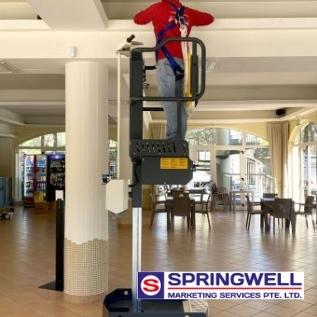
If you work in the logistics sector or are responsible for goods in a warehouse, there may be a requirement for maintenance at height.
Working at heights may make these tasks more difficult. From an ergonomic and fall danger perspective, reaching for a machine’s access point is hazardous. There are several ways to work at height, but it might be tough to decide which one is best for your workplace’s environment.
Today we will discuss the popular options in the workplace: Work Ladders and Work Platforms. We will also discuss their Pros and Cons.
Key Benefits of Work Ladders:
- Easy To Transport: Ladders constructed of materials like fiberglass are lightweight and simple to transport from station to station.
- Long Lifespan: A decent ladder can endure a whole existence if properly maintained.
- Hassle-free and Easy To Use: This is also certain if the worker has at least gone through a ladder safety training course.
However, the downsides of work ladders are that it has the potential for injury. Poorly placed ladders or those that are not tall enough for the task at hand can result in workers having to stretch uncomfortably or even end up falling off the ladder.
Downsides of Work Ladders:
- Restricting Step Space: Some ladders have delicate steps that workers must balance on, putting them at risk of falling.
- No Work Space Available: Workers do not have a work platform on which to use when working on ladders. This implies that all equipment and instruments must be connected to their body.
- Height Restrictions: You should never stand above the second rung of a ladder. This implies that the extent of your reach is restricted to the location where the ladder is located.
- No Safety Rails: There are typically no railings or barriers on a ladder to keep you in an enclosed space, increasing the risk of falls dramatically.
Key Benefits of Work Platforms:
There are a number of key benefits to using work platforms, which include:
- Increased Safety: When you increase the number of levels in which employees can reach your work platform, it becomes more hazardous to be on a ladder. Handrails at each level of your work platform help prevent injuries or accidents when compared to working alone.
- Adjustable In Height: Adjustable work platforms are available in a range of deck heights, making them suitable for working in tiny or huge areas.
- Cost-effective: There is no need to buy numerous different ladders because safety work platforms can adapt and change to each task.
Downsides of Work Platforms:
- Up-front Cost: Yes, you will definitely pay a little more up front for an adjustable work platform. However, the long-term cost savings you’ll experience once you invest in one will surely negate that initial price.
- Occupying Much Space At Times: Depending on the model and technology, work platforms tend to occupy more space than a ladder. However, with the technology that we have today, there are many work platforms that are portable and customisable.
In summary, work platforms provide a much safer and more efficient way to complete tasks at height. They may come with an up-front cost, but this cost is offset by the many benefits they offer. With so many different models and technologies available, there is sure to be a work platform that is perfect for your needs.
If you are still unsure of which solution is best for your business, you can always speak to our consultants and we will be able to advise you accordingly.
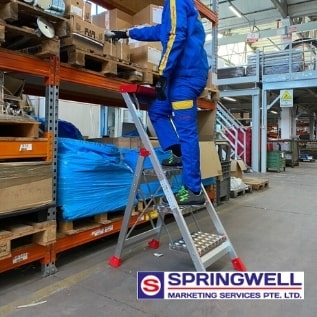
Consider just how many different ladder types there are: stepstools, stepladders, extension ladders, telescopic ladders, convertible multi-function ladders….you get the point. Safe ladder usage depends largely on using the right type of ladder for the job.
Today’s ladders are available in lightweight and strong materials, not like the wood ladders of yesterday. Modern ladders typically come in aluminum and fiberglass and usually have rungs that are serrated for slip resistance. In addition to the advantage of being light, fiberglass ladders have non-conductive side rails for added safety when working around electricity.
Given the frequent need for this tool, it is worth taking a little time to review how to safely choose the right ladder for the job at hand. Today, we will cover the factors to think about before choosing a ladder for work.
(1) Ladder Type
Ladders come in five main types although there are some variations within these styles. These five types include:
- Single-section ladder
- Stepladder
- Extension ladder
- Telescopic ladder
- Multi-function ladder
Single Section Ladder
Yes, this is your grandfather’s ladder. Used for thousands of years, the single-section ladder is useful for simple, level-ground applications where the top of the ladder is leaned directly against an object. The advantage of this ladder is that it is the lightest ladder available for a given length. The disadvantage is that because it is a single section, it is also the longest ladder for that length.
Stepladder
The stepladder is a single-section, fixed-length ladder with built-in stabilizing legs allowing applications for freestanding use. The legs fold compactly for storage. Stepladders are available in aluminum, fiberglass, and wood.
Extension Ladder
An extension ladder is a design that allows a series of single-section ladders to be deployed in a cascading manner, allowing higher ladder reach in a ladder that requires less storage space. Typically, an extension ladder has two single sections, but the compact extension ladder, such as that made by Werner, Co. comes with a three-section design providing easier storage and requiring less storage length. Standard extension ladders are available in aluminum, fiberglass, and wood. Compact extension ladders are available in fiberglass and aluminum.
Telescopic Ladder
The telescopic ladder is the newest innovation in ladders and is similar to an extension ladder, except that the rungs collapse for an even smaller storage footprint. Telescopic ladders are available in aluminum.
Multi-Function Ladder
The multi-function ladder uses lockable hinge joints and extension ladder design to function in a number of ways, including a step ladder with even or uneven side lengths, a single- section ladder, or as a support for scaffolding functioning like a sawhorse
(2) Ladder Height and Reach
Selecting the right length ladder is not as simple as determining the required vertical height. The ladder length must include several factors including:
- The highest standing point on the ladder (which is four rungs down from the top)
- Required overlap of ladder sections
- Height, when it is fully extended

Step ladders would include the length of the ladder when open as well as a maximum height you want to reach, calculated for an average person’s height of 5’9” with a vertical reach of 12”.
So if you know how high you want to reach, let’s say 10’, you would likely purchase a 6’ step ladder allowing you to safely stand almost 4’ above the ground.
(3) Ladder Weight Capacity
Duty rating is a category assigned to a ladder. It is a way to easily tell how much total weight a ladder can support in each of its steps without any risks for the user. It is written in Roman Numerals going from lighter loads to heavier ones. They start at III and go to I, then adding IA and IAA for even heavier loads.
Sample:
- Type IA (300 lbs. load limit)
- Type III (200 lbs. load limit)
- Type II (225 lbs. load limit)
- Type I (250 lbs. load limit)
Remember that these ratings include all of the weight the ladder can support. Some people make the mistake of going up a ladder because they’re under the allotted weight limit, not thinking about the heavy tools they’re carrying.
(4) Ladder Size
The larger the ladder, the bigger, bulkier and heavier they usually become. When selecting your ladder, consider how easy it will be to store or transport. The compact extension ladder goes a long way to improving maneuverability and ease of storage. Instead of two overlapping sections making up a standard 16-foot extension ladder, a compact extension ladder uses three shorter overlapping sections, making it easier to store and transport.
At the end of the day, choosing the right ladder starts with thinking what kind of job you’re going to be using it for. Then make sure you’ve taken all of the previous steps to ensure your product will not underperform, or, on the other hand, you would buy a ladder with features that you won’t ever be using or plain old overspending because of a lack of information.
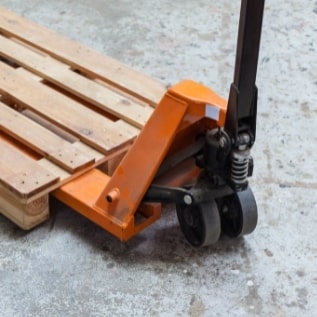
You must be asking: is there anything you can do to make sure your pallet truck doesn’t break down?
Today, we will share you some tips on the things you should look for when using your pallet truck so that you can repair it yourself. As a result, you extend the life of your pallet truck and save on your financial resources.
Preventive maintenance of your pallet truck is also critical for a safe working environment. You may prevent unpleasant surprises and extend the lifespan of the pallet truck by conducting a daily inspection of it. Constant inspections can save you time and money while prolonging the life of your pallet truck.
1. Top up the oil of your pallet truck regularly
You should check your pallet truck’s oil level every six months, and it should be replenished or changed as needed. Pallet trucks are most effective when equipped with hydraulic oil. If other oil is used, the pallet truck may be difficult to pump up because this oil will most likely be too thick.
Step-by-step guide to top up oil in your pallet truck:
- Fold the pallet truck over on its side, and set the forks in their lowest position
- Put the top of the hydraulic cylinder’s drain plug in place
- Remove the screw plug
- Begin by adding the hydraulic oil until it reaches the bottom of the filler opening
- Install the screw plug and turn the device upright
2. Lubricate your pallet truck
All bearings and axles should be greased with long-life grease by the manufacturer.
On a monthly basis, you should lubricate the pallet truck’s wheels, axles, and grease fittings with long-life grease.
3. Clean your wheels
A clean work environment makes working more pleasurable. The wheels on a pallet truck depend greatly on the surface on which they run. Dirt, wires, or any other form of foreign debris can get caught between the wheels, causing them to wear much faster. This may be readily prevented by cleaning the wheels and removing this dirt before utilising the pallet truck.
As well, pay special attention to curbs and steps. Taking a short cut may look appealing, but your wheels might disagree. Take a longer road instead of taking a shortcut to avoid your wheels from cracking in this manner.
4. Adjust the chain into the right position before use
Check on a regular basis to see if your pallet truck’s chain is still in the correct position. You can usually tell this when the lowering valve does not lower the forks. This may be quickly remedied by re-attaching the chain to the lever.
5. Adjust the lowering valve when needed
If your pallet truck no longer pumps or lowers efficiently, it is most likely due to the lowering valve.
In this case, you must adjust the lowering valve so that you may pump or lower the forks. If pumping has no effect, slightly loosen the lowering valve screw.
6. Don’t over stress your pallet truck
Overloading the pallet truck is not a good idea. Remember to keep track of maximum lifting capacity ratings.
Do not drive a pallet truck on a hill: the vehicle may reverse and inflict damage.
Set the operating lever to DRIVE to operate the pallet truck. As a result, the drawbar moves more freely, lowering the pressure in the hydraulic pump section. This protects the hydraulic seals and valve components. This ensures that your equipment will last longer.
Get regularly servicing done from your provider
You can easily extend the life of your pallet truck with a couple of quick inspection and servicing.
A reliable servicing provider will know what to look out for.
Getting your pallet truck serviced regularly can help you save a great deal of financial resources in the long-run.
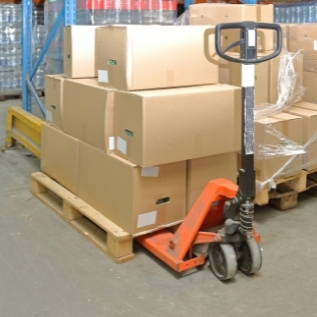
Electric pallet jacks can help you avoid workplace accidents and make warehouse tasks more efficient and profitable. Pallet jacks that run on electricity are a simple yet cost-effective way to lower manual-handling injuries and make warehouse operations more efficient and productive.
Fully electric jacks have both power drive and lift, so they don’t need to be pumped manually. Fully electric jacks have both power drive and lift, so they don’t need manual pumping to raise weights. For indoor usage, they’re an excellent option because they’re compact and manoeuvrable in comparison to a forklift. If you opt for a ride-on model, you’ll just need a licence.
Industries that would benefit from electric pallet jacks include: manufacturing industry, retail, foodservice industry and chemical factories.
Load Capacity
Pallet jacks are available in a range of capacity ranges, with loads starting at around 1,000 kg and going up to 2,000 kg. You would need to make sure the jack can support the weight of typical pallet loads that you move and lift. An overloaded jack might fall over and break if it is unable to handle the weight in the long term.
Outdoor or Indoor?
The next question to ask is: do you use the pallet truck indoor or outdoor. This is important as some pallet trucks are catered for uneven ground.
Lift Height Capacity
To lift loads of up to 2 tons, your jack must be able to lift them to the required height. Electric pallet jacks have a wide range of lifts – from around 1,200mm to even 5,000mm or more.
A pallet truck can lift an average of 800mm in lift height.
Pallet sizes
It is important to check the standard pallet sizes that you would be using, and choose a pallet jack that will suit those requirements.
If you’re constantly stacking pallets that don’t match the typical dimensions, a jack that can handle various pallet sizes, such as an electric counterbalance stacker, is a good investment.
Pedestrian or ride-on:
A pedestrian or walkie pallet jack (handle for the operator to drag around) should be sufficient in many warehouses.
A ride-on / stand-on version, on the other hand, may save time and help efficiency in a bigger business. It’s vital to note that a ride-on model requires a forklift license to operate.
A person standing on a platform at the rear of the truck drives the electric ride-on pallet truck. This enables you to move it to where it’s required via a steering wheel, buttons, or lever. It’s intended for long-distance travel rather than non-ride-on pellet trucks.
Load pallets into an HGV in the best way with a ride-on pallet truck. When required, foldable platforms on ride-on pallet trucks allow them to function as a tiny walkie pallet truck.
Storage space
Nowadays, most electric jacks are extremely small and efficient. When not in use, you may need to think about the amount of storage area you have available for storing them. Some versions also include foldable platforms to save space when not in use.
Budget
Naturally, you’ll want to keep an eye on your budget while shopping for an electric pallet jack. Electric jacks are a very cost-effective option in industrial settings and differ in price little from manual equivalents.
Choosing a Provider In Singapore (Is there proper after sales support?)
It may definitely be less costly to shop from various suppliers overseas, however one issue to worry about is the after sales servicing and warranty.
Getting a local pallet truck Singapore provider may be helpful as they are able to provide proper after service care for your product in the long-term. In addition, they would most likely be able to cater to your local requirements.