


Using Stairclimber Vs Traditional Moving in Material Handling: A Comparison

The world of material handling and logistics is constantly evolving, with new technological advancements shaping the way goods are transported, stored and distributed.
When it comes to moving heavy or bulky items, two popular methods have emerged – the traditional method of manual labour and the use of a stairclimber.
While both options serve the purpose of transporting materials from one place to another, there are significant differences in efficiency, safety, cost and productivity impact. Today, we will explore these differences in detail and provide insights into which option may be better suited for different material handling scenarios.
The Traditional Method: Manual Labor
The traditional method of moving materials involves using human labour, either in a single person or team, to physically carry and transport items from one location to another. This method has been used for centuries and is still prevalent in many industries today.
Advantages
- Low cost – labour is typically cheaper than purchasing equipment
- Flexibility – manual labour can adapt easily to different types of loads and environments
- Minimal training required – most people are familiar with carrying and lifting objects, making it easy to train new employees on this method
Drawbacks
- Risk of injury – carrying heavy or awkwardly shaped items can put strain on the body and lead to injuries such as back pain or muscle strains.
- Limited capacity – manual labour is limited by the strength and endurance of the individuals, making it unsuitable for moving heavy or bulky items.
- Time-consuming – manual labour is slower than using equipment, which can impact productivity and efficiency.
- Inconsistent results – human error or fatigue can lead to variations in how materials are handled, potentially causing damage to goods or delays in delivery.
The Modern Method: Stairclimbers
Stairclimbers are motorised machines specifically designed for transporting heavy loads up and down stairs. They come in various sizes and configurations, including hand-operated stair climbing trolleys and battery-powered stair climbers with attachments such as lifts and platforms.
Advantages
- Increased safety – using a stairclimber reduces the risk of injury to workers, as they don’t have to lift or carry heavy loads manually.
- Greater capacity – stairclimbers can handle much heavier and bulkier items compared to manual labour.
- Time-saving – using a stairclimber can significantly reduce the time it takes to move materials up and down stairs, leading to increased productivity.
- Consistent results – with proper training, stairclimbers can provide consistent and precise handling of materials, reducing the risk of damage or errors.
Drawbacks
- Higher cost – purchasing or renting a stairclimber may be more expensive than relying on manual labour initially.
- Training required – proper training is necessary to operate a stairclimber safely and efficiently, which may require additional time and resources.
- Limited flexibility – some stairclimbers are designed for specific types of loads, making it less adaptable compared to manual labour.
Choosing the Right Method

When deciding between using a stairclimber or traditional manual labour for material handling, there are several factors to consider. These include:
- Type and weight of materials being moved
- Distance and terrain involved in transportation
- Frequency of material handling tasks
- Budget and cost considerations
It’s essential to weigh these factors carefully and evaluate which method will provide the most significant benefits in terms of safety, efficiency and productivity. In some cases, a combination of both methods may be the most practical solution.
Takeaway
Both traditional manual labour and stairclimbers have their advantages and drawbacks in material handling.
While manual labour has been used for centuries and is still viable in certain scenarios, modern technology, such as stairclimbers, can significantly enhance safety, efficiency and productivity.
Ultimately, choosing the right method depends on specific needs and requirements, and careful consideration should be given to make an informed decision. So next time you are faced with a material handling task, consider these factors before deciding which method to use.

A work positioner is a mechanical device that helps lift and position heavy loads safely and efficiently. It is commonly used in warehouses, factories, and other industrial settings where heavy lifting is required.
While there are many types of work positioners available on the market, getting a custom work positioner can bring numerous benefits to your business.
1) Increased Efficiency
One of the main benefits of getting a custom work positioner is increased efficiency.
By tailoring the design to fit your specific needs and requirements, you can ensure that the work positioner can handle your unique load handling tasks efficiently. This can lead to faster production times and increased productivity for your business.
2) Improved Safety
Safety is another important factor to consider when it comes to heavy lifting and material handling.
Off-the-shelf work positioners may not always be suitable for your specific needs, which can lead to potential safety hazards. A custom work positioner, on the other hand, will be designed with your specific requirements, making it safer for your employees.
3) Cost Savings
While getting a custom work positioner may initially seem like a more expensive option, it can actually lead to long-term cost savings for your business.
Since the work positioner is tailored to fit your specific needs and tasks, it can reduce the risk of damage to both the equipment and the load being lifted. This can ultimately save you money on repairs or replacements in the long run.
4) Versatility
Custom work positioners can be designed to handle a wide range of materials and goods, making them a versatile option for businesses with varying load handling needs.
They can also be designed to fit into tight spaces or specific environments, giving you more flexibility in your operations.
5) Improved Ergonomics
Work positioners are designed to reduce strain and fatigue for workers when lifting heavy loads. However, not all off-the-shelf options may provide the most ergonomic design for your specific tasks.
A custom work positioner can be tailored to meet the unique requirements of your employees, helping them avoid injuries and increasing their comfort and productivity.
6) Tailored Solutions
Every business is unique and has its own challenges and requirements. By getting a custom work positioner, you can have a solution specifically designed to meet your needs and overcome any obstacles you may face in your operations.
Takeaway
Getting a custom work positioner can bring numerous benefits to your business, including increased efficiency, improved safety, cost savings, versatility, and improved ergonomics.
Investing in a custom solution may require more upfront costs and time for design and fabrication, but the long-term benefits make it worthwhile for any company that regularly handles heavy loads.
Consider working with a reputable manufacturer to design and build a custom work positioner that meets your specific needs and requirements.
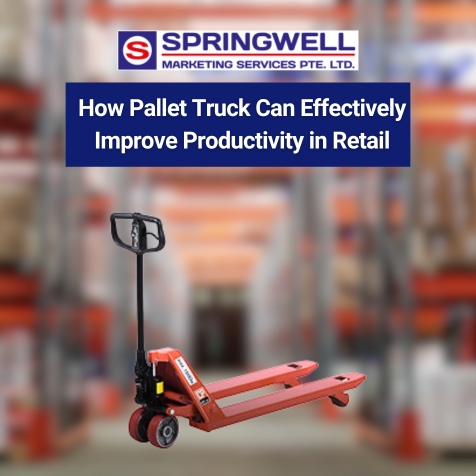
In the fast-paced world of retail, time is money. The efficiency and productivity of employees can make a huge difference in a store’s success. With the increasing competition in the retail industry, it has become crucial for retailers to find ways to improve productivity and streamline operations.
One important tool that has proven effective in achieving this goal is a pallet truck. In this article, we will discuss how pallet trucks can effectively improve productivity in retail.
What is a Pallet Truck?
A pallet truck, also known as a pump truck or jigger, is a material handling equipment used for moving and lifting heavy loads on pallets. It consists of forks that slide under the load and are raised by pumping a handle, allowing the load to be easily transported to its destination.
Benefits of Using Pallet Trucks in Retail
1) Increased Efficiency and Speed
Pallet trucks are designed to move loads quickly and efficiently. They can easily manoeuvre through aisles and tight spaces, making it easier for employees to transport goods from the storeroom to the sales floor or from one location to another.
This results in increased speed and productivity, as employees can complete tasks faster with the help of pallet trucks.
2) Reduced Physical Strain on Employees
Moving heavy loads manually can put a strain on employees’ backs, shoulders, and arms, leading to fatigue and even injuries.
Pallet trucks eliminate this physical strain, as the machinery does most heavy lifting. This reduces the risk of injuries and allows employees to work comfortably and efficiently.
3) Versatility
Pallet trucks are available in various sizes and types, making them suitable for different types of retail operations.
From small stores to large warehouses, pallet trucks can be used in various settings, making them a versatile tool for improving productivity in retail.
4) Improved Stock Management
Having an organised stockroom is crucial for any retail business.
Pallet trucks make it easier to store and retrieve goods on high shelves, allowing better organisation and inventory control. This results in improved stock management and faster restocking of shelves, leading to more efficient operations.
5) Time and Cost Savings
As mentioned earlier, time is money in the retail industry. By reducing the time and effort required for manual material handling, pallet trucks can save retailers significant time and labour costs.
Moreover, with pallet trucks, there is less risk of damage to goods during transportation, resulting in cost savings for the business.
Takeaway
Pallet trucks have become an essential tool for improving productivity in retail. With their efficiency, versatility, and ability to reduce physical strain on employees, they are a valuable asset for any retail operation.
By investing in pallet trucks, retailers can significantly improve their operations and stay competitive in the fast-paced world of retail.
So, if you’re looking to boost productivity and streamline your retail operations, consider incorporating pallet trucks into your workflow.

Material handling is an essential aspect of any manufacturing, distribution or warehousing facility. It involves the movement, storage and control of goods in a safe and efficient manner. Material handling equipments play a vital role in achieving this efficiency by reducing manual labour, improving productivity, minimising damage to products and ensuring workplace safety.
Today, we will discuss seven types of material handling equipment that can help increase efficiency in your facility.
1) Forklifts
Forklifts are one of the most commonly used material handling equipments in various industries. They are used to lift and move heavy loads over short distances.
Forklifts come in different sizes and configurations, such as electric, diesel or propane powered for indoor or outdoor use. They are versatile, easy to operate, and can handle various materials including pallets, drums and containers.
Using forklifts can significantly increase efficiency by reducing the time and effort required to move heavy loads manually. It also eliminates the risk of injuries associated with manual lifting, improving workplace safety.
2) Conveyors
Conveyors are material handling equipment used to transport goods from one location to another within a facility.
They can be powered or gravity fed, and come in various types, such as belt, roller, chain or screw conveyors, depending on the application. Conveyors are perfect for moving large volumes of goods quickly and efficiently.
The use of conveyors can increase efficiency by automating the transportation process, reducing manual labour and minimising the time required to move goods. They also help streamline operations, as they can be integrated with other material handling equipment.
3) Pallet Jacks
Pallet jacks, also known as pallet trucks, are a type of material handling equipment used for moving pallets from one location to another.
They come in two types – manual or electric. Manual pallet jacks require human effort to operate, while electric ones use a motorised pump for lifting and moving heavy loads.
Using pallet jacks can save time and effort when moving stacked pallets or containers. They are ideal for small warehouses or facilities with limited space where forklifts cannot be used. Pallet jacks are also more cost-effective compared to forklifts.
4) Cranes
Cranes are widely used in material handling for lifting and moving heavy loads vertically or horizontally.
They come in various types, such as bridge cranes, gantry cranes, jib cranes and overhead cranes. Cranes are essential for operations that involve loading or unloading goods from trucks, containers or storage racks.
The use of cranes can significantly increase efficiency by reducing the time required to move heavy loads manually. It also minimises the risk of damage to goods during transportation.
5) Automated Guided Vehicles (AGVs)
AGVs are self-operating material handling equipment used to transport goods without human intervention.
They are equipped with sensors and software that enable them to navigate through a facility and perform tasks such as loading, unloading or transporting goods.
AGVs can increase efficiency by eliminating manual labour in transportation. They can also work continuously without breaks, reducing downtime and increasing productivity. Moreover, AGVs can be programmed to follow specific routes, making them ideal for repetitive tasks.
6) Storage and Retrieval Systems
Storage and retrieval systems are used in warehouses or distribution centres to store and retrieve goods automatically.
They come in various types, such as vertical lift modules, carousels, and automated storage and retrieval systems (AS/RS). These systems use computerised controls to access stored goods and bring them to a designated location for picking or storage.
Using storage and retrieval systems can increase efficiency by optimising space utilisation, reducing the time required for picking or storing goods, and minimising errors.
7) Automated Guided Carts (AGCs)
AGCs are similar to AGVs, but are smaller and used for transporting goods within a confined area. They are commonly used in assembly or production lines, where they can move materials between workstations automatically.
The use of AGCs can increase efficiency by reducing the time and effort required for moving materials manually between workstations. It also eliminates the risk of human error and improves productivity.
Takeaway
Material handling equipment is essential for any facility looking to improve efficiency and productivity. By integrating these seven types of equipment, you can streamline operations, reduce manual labour, and ensure workplace safety.
Consider your specific needs and choose the right material handling equipment to maximise the efficiency of your facility. So, it is crucial to evaluate the different options available and select the ones that best fit your requirements.

When it comes to warehouse and industrial work, there are many tools and equipment used to move heavy objects from one place to another. Two commonly used machines for this purpose are stackers and forklifts.
While both of these machines serve similar purposes, they have key differences that set them apart. In this article, we will discuss the main differences between stackers and forklifts and their respective uses in various industries.
Power Source
The first major difference between a stacker and a forklift is the power source they use. Forklifts are typically powered by internal combustion engines or electric motors, while stackers mainly rely on battery-powered electric motors.
This distinction in power source affects the performance and capabilities of both machines.
Usage
Forklifts are primarily used for lifting and moving heavy loads within a warehouse or industrial setting. They have a fork-like attachment at the front that can be raised or lowered to pick up or drop off objects.
Stackers, on the other hand, are mainly used for stacking pallets and boxes onto shelves or racks. They have a platform that goes up and down to reach different levels of shelving.
Due to their different uses, forklifts are more versatile and can handle heavier loads than stackers. However, stackers are better suited for narrow aisles and tight spaces, as they are smaller than forklifts.
Manoeuvrability
As mentioned earlier, stackers are smaller in size than forklifts. This makes them more manoeuvrable and easier to operate in tight spaces. Forklifts, on the other hand, require more space to move and turn due to their larger size.
This is why stackers are commonly used in warehouses with narrow aisles or limited space.
Cost
In terms of cost, stackers are generally less expensive than forklifts. This is because they have a simpler design and use fewer components compared to forklifts.
However, when it comes to long-term maintenance costs, forklifts may end up being more expensive due to their more complex design and higher fuel or electricity consumption.
Safety Features
Both stackers and forklifts have safety features designed to prevent accidents and injuries. However, forklifts typically have more advanced safety features, such as rear-view mirrors, horns, and seat belts.
Stackers may also have some safety features, but they are comparatively simpler than forklifts. This is because stackers are mainly used for vertical lifting, while forklifts are used for horizontal movement.
Takeaway
While both stackers and forklifts serve similar purposes, they have distinct differences that make them suitable for different tasks.
Forklifts are more versatile and can handle heavier loads, but require more space to operate. Stackers, on the other hand, are smaller in size and better suited for narrow spaces.
Ultimately, the choice between a stacker or forklift depends on the specific needs of your industry or workplace.
Springwell For Your Material Handling Needs
At Springwell, we understand the importance of quality material handling equipment in your workplace. We offer a wide range of stackers to meet the needs and demands of various industries.
Contact us today to learn more about our products and services.