


Step Ladder Buying Guide for Warehouses in Singapore: 5 Costly Mistakes to Avoid
The Definitive Guide to Industrial Lift Tables in Singapore (2026)
Did you know that musculoskeletal disorders and back injuries accounted for over 30% of all non-fatal workplace injuries reported to the Ministry of Manpower (MOM) in 2023? It’s a sobering statistic that highlights the hidden costs of manual material handling in Singapore’s busy warehouses. You’ve likely felt the pressure of maintaining high pallet throughput while worrying about the physical strain on your crew. Investing in a high-quality lift table isn’t just about moving heavy loads; it’s a strategic move to safeguard your staff and ensure your facility operates at peak efficiency without the risk of costly downtime.
We understand that choosing between manual and electric models can be confusing, especially when you need to guarantee compliance with MOM Professional Engineer (PE) standards. This guide helps you master everything from ergonomic benefits to technical load testing so you can select the perfect equipment for your specific needs. You’ll learn how Japan Quality engineering and local support can reduce workplace injuries and keep your machinery in tip-top condition for years to come. We’ll cover essential safety certifications, custom design solutions, and the long-term reliability that has been the hallmark of Springwell Industries since 1984.
Key Takeaways
-
Understand why the scissor mechanism remains the industry standard for stability and how it transforms material handling into a safer, more ergonomic process.
-
Evaluate the evolution of power sources to determine whether manual, electric, or pneumatic systems best suit your facility’s specific duty cycles and speed requirements.
-
Master a professional selection framework to choose the ideal lift table by balancing load frequency, environmental factors, and long-term cost-efficiency.
-
Navigate Singapore’s Workplace Safety and Health (WSH) Act and identify when mandatory MOM Professional Engineer (PE) load testing is required for your equipment.
-
Leverage Springwell’s 40-year heritage and "Japan Quality" engineering to ensure your facility’s lifting solutions remain in tip-top condition for years to come.
Table of Contents
-
Understanding the Industrial Lift Table: More Than Just a Lifting Platform
-
Deep Dive into Power Sources: Manual, Electric, and Pneumatic
-
How to Choose the Right Lift Table for Your Singapore Facility
-
Springwell Industries: 40 Years of Lifting Excellence in Singapore
Understanding the Industrial Lift Table: More Than Just a Lifting Platform
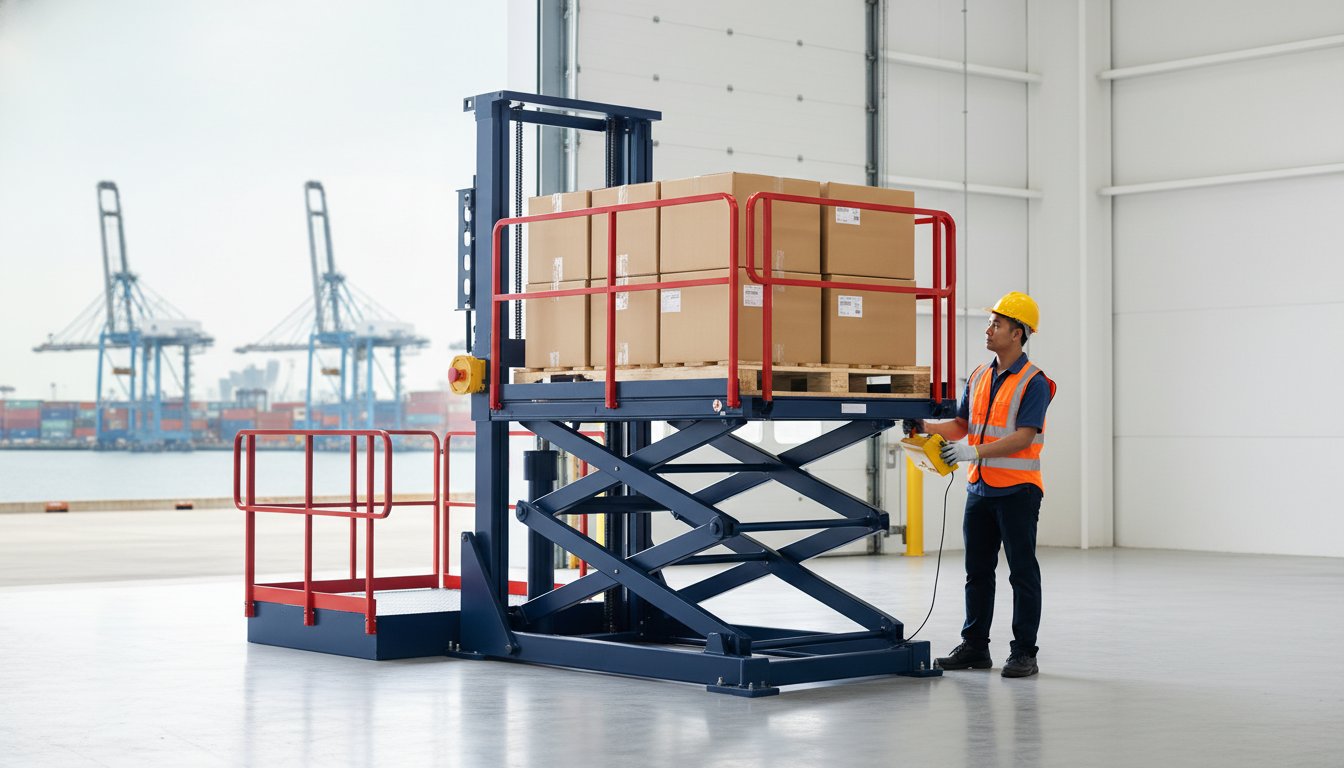
A lift table is a heavy-duty material handling solution designed to raise or lower heavy loads to precise ergonomic heights. At its core, the equipment relies on a "scissor" mechanism, which is the industry standard for maintaining vertical stability under pressure. This design ensures that the platform remains level even when carrying unevenly distributed weight. Since 1984, Springwell Industries has seen Singaporean SMEs transition from traditional manual lifting to these mechanized work positioners to meet modern safety standards. The system consists of three essential components: the top platform, the reinforced scissor legs, and the power actuator, which can be hydraulic or electric. These elements work in tandem to ensure that heavy crates or components are handled with the hallmark traits of safety, service, and quality.
The Critical Role of Ergonomics in Modern Warehousing
Workplace injuries often stem from repetitive bending and reaching outside the "Golden Zone," the space between a worker’s knees and shoulders. Lift tables eliminate these risks by bringing the work to the operator. In 2022, the Ministry of Manpower (MOM) reported that musculoskeletal disorders accounted for a significant portion of work-related ill-health in Singapore. Implementing ergonomic equipment leads to reduced medical leave and higher staff retention rates in local factories. "Ergonomic lifting is not a luxury but a baseline for productivity in a labor-tight market like Singapore." By providing a stable work surface, these tools allow employees to maintain a neutral posture, which is vital for long-term health in high-volume warehouse environments.
Beyond physical safety, boosting team morale through well-organized corporate events is another effective retention strategy; if you’re planning a warehouse celebration or staff appreciation lunch, you can learn more about EZBBQ Singapore to simplify your event planning and treat your hardworking crew.
Key Terminology: Scissor Lifts vs. Work Positioners
Choosing the right equipment requires understanding technical specifications that impact daily operations. Stationary factory units are often bolted to the floor for permanent production lines, while mobile warehouse trolleys offer flexibility for cross-docking tasks. Managers must evaluate the "stroke," which refers to the total vertical travel distance, and the "collapsed height" to ensure the unit fits under existing racking or mezzanine levels. Load capacity is another vital metric. It’s essential to include a 15% to 20% safety buffer for dynamic loads to keep the machinery in tip-top condition. This buffer ensures the equipment remains reliable and can pass rigorous MOM Professional Engineer load testing requirements. Whether you are looking for Japan Quality or a tailored solution, understanding these terms prevents costly procurement errors.
Deep Dive into Power Sources: Manual, Electric, and Pneumatic
The evolution of material handling equipment has transformed the humble lift table from a basic mechanical platform into a sophisticated piece of industrial machinery. Since our founding in 1984, we’ve observed a shift where manual foot pumps, once the industry standard, now share the floor with advanced battery-operated units designed for 24/7 logistics hubs. Choosing the right power source is critical because it directly impacts your duty cycle and operational speed. While a manual unit might handle 5 to 10 lifts per hour, an electric model can comfortably manage continuous cycles in high-volume assembly lines.
Beyond speed, you must consider the total cost of ownership. Manual units offer a lower initial investment and require minimal maintenance, making them cost-effective for secondary workstations. Conversely, high-efficiency electric models reduce operator fatigue and physical strain, which helps businesses comply with the Workplace Safety and Health (General Provisions) Regulations by minimizing ergonomic risks. Specialized pneumatic (air-powered) tables also exist for hazardous or explosive environments where electrical sparks pose a significant safety threat.
Manual Hydraulic Lift Tables: The Reliable Workhorse
These units utilize a robust hydraulic jack mechanism operated via a foot pedal, allowing for precise height control during delicate tasks. They’re the ideal choice for budget-conscious SG workshops where lifting frequency remains low. Our manual tables feature "Japan Quality" seals, a hallmark of engineering excellence that prevents oil leaks even after years of rigorous use. This reliability ensures your equipment stays in tip-top condition without constant intervention. For smaller operations, these mobile units provide the flexibility to transport goods across the warehouse floor effortlessly while maintaining high safety standards; similarly, for managers looking to simplify their logistics, EZBBQ Singapore provides a convenient way to cater for the team without the stress of manual planning.
Electric and Battery-Powered Tables: Maximizing Throughput
For high-frequency environments, push-button electric tables are essential for maintaining productivity. Mobile battery-powered units are particularly popular in Singapore’s modern logistics hubs, where they often run for 8 to 12 hours on a single charge. These tables prioritize operator protection with safety features like "dead-man" switches and emergency stop buttons. If your facility handles volatile materials, pneumatic options offer a tailored solution for spark-free operation. Choosing the right power source ensures you meet MOM standards while optimizing your workflow. If you’re unsure which power source fits your facility, our team can provide tailored material handling advice to help you decide.

How to Choose the Right Lift Table for Your Singapore Facility
Selecting a lift table requires a methodical approach based on four pillars: Environment, Load, Frequency, and Mobility. Many warehouse managers hesitate at the upfront cost of specialized models, yet the investment in a low-profile or stainless steel unit often pays for itself by preventing operational bottlenecks. A critical factor that’s frequently overlooked is the collapsed height. If you rely on hand pallet trucks for loading, a table with a high collapsed profile will require a floor pit or a bulky ramp. Choosing a low-profile model allows for direct floor-level loading, which saves precious square footage in compact Singaporean industrial units.
While off-the-shelf products might seem convenient, they often fail to meet the specific rigors of a high-intensity workplace. We always encourage clients to seek custom design solutions rather than settling for generic equipment. Tailored engineering ensures the hydraulic system is calibrated for your specific cycle counts, maintaining the hallmark traits of Safety, Service and Quality that define our Japan Quality standards.
Environmental Considerations: From Cold Rooms to Cleanrooms
In Singapore’s food, chemical, and pharmaceutical sectors, Grade 304 or 316 stainless steel is mandatory to meet hygiene regulations. Our local humidity levels, which often hover around 80%, can cause rapid oxidation on standard steel. Applying high-grade anti-corrosion coatings is essential to keep your lift table in tip-top condition for years. You must also match your castor wheels to your floor type. PU (Polyurethane) wheels are the standard for protecting sensitive epoxy-coated factory floors, whereas Nylon wheels offer better chemical resistance and durability on rougher concrete surfaces.
Capacity and Platform Size Calibration
To avoid hydraulic strain and premature seal failure, calculate your load based on a "worst-case scenario" rather than your average weight. We recommend a 25% safety buffer above your heaviest anticipated pallet. Platform dimensions should align precisely with the 1200mm x 1000mm pallets standard in the SG supply chain to prevent overhang. Safety during operation depends heavily on understanding weight distribution. Eccentric loading refers to the placement of a load off-center on the platform, which creates uneven pressure on the scissor mechanism and can lead to structural warping or dangerous instability. Ensuring your platform size matches your load footprint minimizes this risk and keeps your operations within MOM Professional Engineer safety standards.
Singapore Safety Standards and MOM Compliance
The Workplace Safety and Health (WSH) Act governs every warehouse operation in Singapore. It’s a strict legal framework designed to protect workers, and failing to meet these standards leads to heavy penalties. Under the WSH (General Provisions) Regulations, any equipment used for lifting must be fit for purpose and regularly maintained. For instance, a heavy-duty lift table used in a high-intensity environment must feature specific safety components like toe guards to prevent foot injuries and safety bellows to keep debris out of the scissor mechanism. Maintenance locks are equally vital. They ensure the platform stays secure while technicians perform repairs, preventing accidental descent.
We recommend regular Visual Inspection Services as a proactive measure. It’s better to spot a hairline crack or a worn seal during a routine check than to deal with an equipment collapse during a shift. This meticulous approach keeps your assets in tip-top condition and prevents the S$20,000 to S$50,000 fines often associated with workplace safety lapses. Our commitment to Japan Quality ensures that every piece of equipment we touch meets these rigorous local demands.
In addition to equipment safety, securing your facility’s access points is a key part of risk management; AN Digital Lock provides professional digital door and gate locks to help protect your industrial or commercial premises.
Navigating MOM PE Certification for Lift Tables
Not every piece of equipment needs a Professional Engineer (PE) certificate, but many heavy-duty systems do. If your lift table is classified as a lifting machine under the WSH Act, it requires a PE to certify its structural integrity before it’s put into service. During a load test, the engineer applies weights reaching 125% of the rated capacity to ensure the welds and hydraulics hold firm under pressure. You can’t skip this step if you value legal compliance and worker safety. Our team helps you manage this process seamlessly through our MOM Professional Engineer Load Testing services.
Daily Safety Checklists for Operators
Safety starts before the power switch is flipped. Operators should perform pre-shift inspections every morning to look for hydraulic leaks or debris caught in the castor wheels. When loading the platform, always center the weight. Off-center loads cause scissor torque, which can bend the frame or cause a tip-over. We prioritize our hallmark traits of Safety, Service and Quality in all staff training programs. Well-trained workers identify hazards faster, which keeps the floor productive and accident-free. Don’t let a simple oversight in loading lead to a week of equipment downtime.
Ensure your warehouse equipment meets all Singapore regulatory requirements today. Contact Springwell Industries for a professional safety consultation.
Springwell Industries: 40 Years of Lifting Excellence in Singapore
Established in 1984, Springwell Industries has spent four decades as a cornerstone of Singapore’s industrial landscape. We aren’t just an equipment vendor; we’ve evolved into a trusted partner for warehouses and factories across the island. Our deep local roots mean we understand the specific regulatory requirements and space constraints unique to the Singapore market. We focus on the hallmark traits of Safety, Service and Quality to ensure your operations remain efficient and compliant. By choosing an industry veteran, you secure the stability of a company that has supported Singapore’s growth through every economic cycle.
This progress is also reflected in the residential market, where AI New Launch provides detailed analysis of the city’s new condominium developments for professionals looking to stay ahead of urban trends.
As Singaporean industries continue to integrate with global supply chains, clear communication becomes as vital as robust equipment. To support this growth, many local firms partner with Chinese Edge to equip their workforce with professional Mandarin skills; for those requiring business English proficiency to coordinate with global partners, click here to explore English Explorer’s available courses.
Bishamon and Japan Quality: The Hallmark of Reliability
High-uptime manufacturing plants in Singapore consistently choose "Japan Quality" to avoid the hidden costs of equipment failure. Our long-standing partnership with Bishamon allows us to deliver engineering that stands the test of time. A critical differentiator is the longevity of Bishamon hydraulic seals. While generic alternatives often leak within 12 to 18 months of heavy use, Bishamon components are designed for years of rigorous cycling. This reliability is why our Bishamon Pallet Trucks and lifting systems are found in the most demanding logistics hubs. Investing in a premium lift table powered by Japanese hydraulics ensures your workflow stays uninterrupted and your maintenance costs stay low.
Customized Lifting Solutions for Unique SG Challenges
Every warehouse has its own set of bottlenecks. At Springwell, we don’t believe in a one-size-fits-all approach. We provide tailored modifications such as integrating conveyor rollers for automated production lines or adjusting platform sizes to fit narrow aisles. Our local service center at Admiralty Street ensures your equipment stays in tip-top condition with rapid response times. Having local stock and a dedicated workshop means we can fabricate parts or perform repairs without the long lead times associated with overseas shipping. Whether you need MOM Professional Engineer Load Testing or a custom-fabricated lift table, our team has the technical expertise to deliver. We take pride in helping you meet safety standards while maximizing productivity.
Our commitment to your business goes beyond the initial sale. We offer comprehensive after-sales support and visual inspection services to keep your fleet operational. If you’re looking for a partner that prioritizes your uptime as much as you do, we’re ready to help.
Contact our experts for a tailored lift table consultation
Future-Proof Your Operations with High-Performance Lifting Solutions
Selecting the ideal lift table for your facility involves more than just comparing load capacities. It’s about finding the right balance between power sources like electric or pneumatic systems and ensuring your workflow remains seamless under heavy demand. Since 1984, Springwell Industries has built a reputation for reliability, providing over 40 years of industrial expertise to the Singapore market. We’ve evolved alongside local industries to offer tailored solutions that prioritize both efficiency and operator safety.
As an authorized distributor of Bishamon "Japan Quality" equipment, we bring world-class engineering to your doorstep. Our commitment to excellence includes providing in-house MOM Professional Engineer (PE) testing and certification services, ensuring your equipment meets every regulatory requirement for peace of mind. We take pride in keeping your machinery in tip-top condition so you don’t have to worry about equipment downtime or compliance issues. Our team is here to act as your trusted partner, helping you navigate technical specifications with a consultative approach.
Browse our comprehensive range of industrial lift tables and discover how our hallmark traits of safety and service can transform your workspace today. We look forward to supporting your next big project.
Frequently Asked Questions
Do I need an MOM license to operate a manual lift table in Singapore?
You don’t need a specific MOM operator license for a manual lift table in Singapore. However, the Workplace Safety and Health (General Provisions) Regulations require all lifting equipment to be maintained in a safe condition. While manual units are exempt from mandatory statutory inspections by a Professional Engineer, your warehouse staff should still receive internal safety training to prevent musculoskeletal injuries during daily operations.
What is the difference between a scissor lift and a lift table?
A scissor lift is primarily mobile equipment designed to elevate personnel to high work areas, while a lift table is a material handling tool used to position heavy goods at ergonomic heights. Scissor lifts often feature guardrails and controls on the platform for the operator. In contrast, lift tables are typically used on production lines or in packing stations to reduce manual lifting strain for warehouse workers.
How often should I service my hydraulic lift table in a warehouse environment?
You should schedule professional servicing for your hydraulic lift table at least once every 6 months to maintain its hallmark traits of safety and quality. For warehouses operating 24/7 or handling more than 50 cycles per day, quarterly maintenance prevents hydraulic fluid leaks and seal degradation. Regular visual inspection services help identify worn pivot pins or frayed cables before they lead to costly operational downtime.
Can a lift table be customized for a cleanroom environment in Singapore?
Yes, we provide tailored solutions by manufacturing equipment using Grade 304 or 316 stainless steel for cleanroom environments. These units feature specialized non-marking wheels and food-grade hydraulic oil to meet stringent hygiene standards. Since 1984, our engineering team has adapted equipment to comply with ISO 14644-1 Class 100 requirements, ensuring your material handling equipment remains rust-resistant and easy to sanitize for sensitive industrial applications.
What is the maximum load capacity available for stationary lift tables?
Stationary models typically offer load capacities ranging from 500kg to over 10,000kg for heavy-duty industrial applications. High-capacity models often utilize reinforced double-scissor mechanisms to maintain stability under extreme weight. Selecting the right capacity is crucial. Exceeding the rated load by even 10% can cause structural deformation or hydraulic failure, which compromises your warehouse safety standards and risks damaging your inventory.
How do I know if my lift table requires a Professional Engineer (PE) certificate?
Your equipment requires a Professional Engineer (PE) certificate if it’s a power-operated lifting machine used to lift loads or personnel under the WSH (General Provisions) Regulations. MOM requires these machines to undergo a thorough examination by a PE every 12 months. If your unit is integrated into a permanent dock leveler or hoisting system, you’ll need this certification to remain legally compliant in Singapore.
Are electric lift tables safe for use in damp or outdoor conditions?
Standard electric models aren’t safe for damp conditions unless they’re specifically built with an IP65 or higher ingress protection rating. Exposure to Singapore’s high humidity or rain can cause electrical short circuits and rapid corrosion of the scissor mechanism. For outdoor use, you should opt for galvanized finishes and weatherproofed motor enclosures to keep the equipment in tip-top condition and ensure operator safety.
What is the average lifespan of a high-quality Japan-made lift table?
A high-quality Japan-made unit typically lasts between 10 to 15 years when supported by a regular maintenance regime. These units are celebrated for their superior engineering and durability, often outlasting cheaper alternatives by at least 5 years. Investing in "Japan Quality" equipment reduces your long-term replacement costs and ensures you have a reliable, trusted partner for your daily warehouse operations and logistics needs.