In the healthcare and pharmaceutical sectors, logistics operations demand the highest levels of safety, hygiene, and precision. From handling sensitive medical supplies to transporting heavy cartons of pharmaceuticals, staff are frequently required to lift, move, and position loads throughout the day. Without proper equipment, these repetitive tasks can lead to musculoskeletal injuries, reduced productivity, and compromised safety standards.
This is where ergonomic lifting equipment plays an essential role. Designed to reduce physical strain and streamline workflow processes, ergonomic lifting solutions help healthcare and pharmaceutical facilities maintain efficiency while protecting their workforce.
At Springwell, we offer a range of lifting technologies that meet the demanding needs of these highly regulated environments.
Why Ergonomics Matters in Healthcare & Pharmaceutical Logistics
Healthcare and pharmaceutical logistics involve a combination of sensitive materials, strict handling protocols, and fast-paced operational demands. Employees often manage:
- Heavy medical supplies
- Bulk pharmaceutical cartons
- Diagnostic equipment
- Sterile products requiring careful handling
- Temperature-sensitive or fragile items
Without ergonomic support, workers may be exposed to risks such as:
- Lower-back injuries
- Repetitive strain injuries (RSIs)
- Shoulder or wrist strain
- Fatigue leading to operational errors
Ergonomic lifting equipment ensures tasks are performed safely, minimising physical load while meeting stringent industry standards.
Common Challenges in Medical & Pharmaceutical Handling
1. Heavy Load Handling
Medical supplies and pharmaceutical shipments often arrive in bulk. Manually lifting cartons, containers, or medical devices not only slows down operations but poses high injury risks.
2. Maintaining Sterility
Manual handling increases the chance of contaminating sterile or sensitive items. Ergonomic lifting tools help maintain hygiene compliance by reducing direct contact.
3. Space Constraints
Hospitals, clinics, and pharmaceutical warehouses often operate in tight spaces. Compact, manoeuvrable lifting equipment ensures safe handling without disrupting workflow.
4. Fast Turnaround Requirements
Pharmaceutical products such as vaccines, medications, and medical consumables need to move quickly. Ergonomic lifting solutions speed up loading, unloading, and replenishment processes.
Types of Ergonomic Lifting Equipment Suitable for Healthcare & Pharmaceutical Logistics
Below are equipment types commonly used across hospitals, pharmaceutical warehouses, manufacturing plants, and medical supply chains — all of which Springwell supplies or supports.
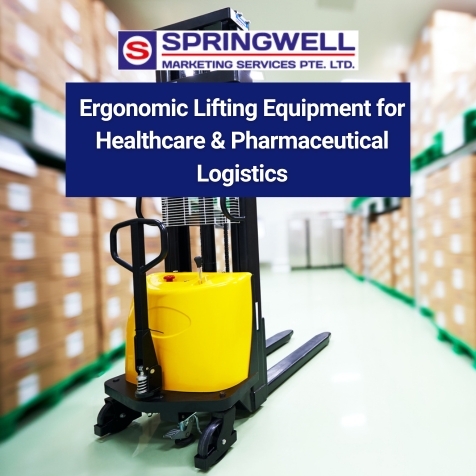
1. Electric Lifters & Stackers
Electric lifters provide controlled, stable lifting for items such as:
- Medication cartons
- Diagnostic devices
- Medical consumables
- Heavy packaging materials
Key benefits:
- Reduces manual lifting
- Smooth, controlled lifting height adjustments
- Compact design ideal for hospitals and cleanroom areas
- Minimises contamination risk by reducing physical contact
These are especially useful in pharmacy distribution centres and medical supply stores.
2. Vacuum Lifting Systems
Vacuum lifters are widely used in pharmaceutical manufacturing for safely handling:
- Cartons
- Drums
- Sacks of raw materials
- Sterile packs
- Sealed containers
Advantages include:
- Touch-free lifting to maintain sterility
- Reduced strain during repetitive lifting
- Increased speed when picking and placing items
- Suitable for clean-room environments
Vacuum lifting is particularly beneficial in processes involving powdered ingredients, liquid formulations, or batch packaging.
3. Mobile Scissor Lift Tables
Mobile lift tables provide safe lifting and height-adjustment for heavy loads, ideal for:
- Transferring medical equipment
- Loading materials onto shelves
- Handling bulk medications
- Positioning items for inspection or packing
Benefits:
- Adjustable height settings reduce bending and overreaching
- Stable platforms for heavy or bulky loads
- Easy mobility for flexible workflows
- Hygienic stainless-steel options for medical environments
4. Drum Handling Equipment
Pharmaceutical manufacturers often handle liquid and chemical components stored in drums or barrels.
Drum handlers make it safe to:
- Lift
- Tilt
- Rotate
- Transport
Why they’re essential:
- Prevent spills and contamination
- Reduce employee exposure to chemicals
- Minimise the risk of workplace injuries
5. Pallet Trucks & High-Lift Pallet Movers
For pharmaceutical logistics centres or hospital supply bays, pallet trucks help transport bulk shipments efficiently.
Ergonomic advantages:
- Reduce physical strain during heavy pallet movement
- Suitable for cold rooms or temperature-controlled storage
- Electric models offer greater ease for high-frequency use
How Ergonomic Lifting Equipment Improves Healthcare & Pharmaceutical Operations
1. Protects Staff from Injury
Musculoskeletal injuries are a major cause of downtime. Ergonomic lifting solutions significantly reduce heavy lifting and repetitive strain.
2. Enhances Productivity
Automated or assisted lifting speeds up workflows, especially in fast-moving pharmaceutical supply chains.
3. Improves Accuracy & Material Handling Quality
Stable, controlled lifting helps protect fragile pharmaceuticals, sterile items, and medical devices.
4. Strengthens Safety & Compliance
Proper lifting equipment supports workplace safety standards and enhances adherence to hygiene protocols.
5. Reduces Cross-Contamination Risks
Minimising manual contact is crucial in sterile and clean-room operations.
Choosing the Right Lifting Equipment for Your Facility
When selecting ergonomic lifting tools, consider:
- Load weight and frequency
- Type of materials handled (sterile, fragile, chemical)
- Available floor space
- Workflow layout
- Cleanroom or hygiene requirements
- Staff training needs
Springwell provides a range of solutions tailored to the healthcare and pharmaceutical sectors, ensuring that your chosen equipment aligns with operational, safety, and regulatory needs.
Takeaway
Ergonomic lifting equipment is no longer optional in healthcare and pharmaceutical logistics — it is essential for maintaining safety, efficiency, and compliance. By reducing physical strain, improving accuracy, and protecting sensitive materials, ergonomic lifting solutions and material handling equipment help create a healthier and more productive workplace.
Whether you’re managing a hospital supply chain, pharmaceutical warehouse, manufacturing plant, or clean room facility, Springwell’s ergonomic lifting systems and material handling equipment can transform the way your operations handle, move, and transport goods with confidence and precision.