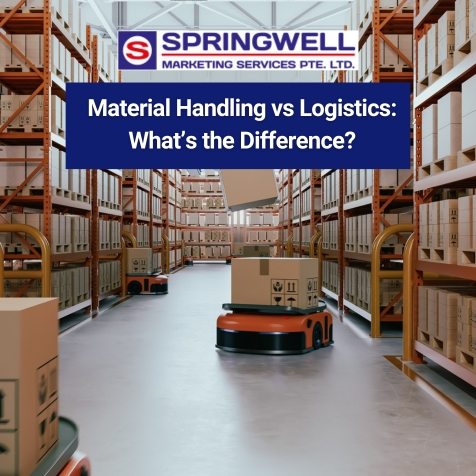
In warehouses, factories, and distribution centres, the terms material handling and logistics are often used interchangeably. While closely related, they are not the same. Understanding the difference between material handling and logistics is essential for businesses looking to improve efficiency, reduce costs, and maintain safe operations.
Both functions play a critical role in supply chain management, but they focus on different stages and activities within the movement of goods.
What Is Material Handling?
Material handling refers to the physical movement, protection, storage, and control of materials within a facility. It focuses on how goods are handled at specific points such as warehouses, production floors, and loading areas.
Material handling typically takes place within a single location and involves equipment, processes, and systems designed to move items safely and efficiently over short distances.
Common material handling activities include:
- Lifting, lowering, and positioning loads
- Transporting goods within warehouses or factories
- Loading and unloading trucks
- Supporting production and assembly processes
At its core, material handling is about how materials move within an operation, rather than where they are going.
What Is Logistics?
Logistics is a broader discipline that focuses on the planning, coordination, and management of goods movement across the entire supply chain. It covers how products move from suppliers to manufacturers, distributors, and ultimately to end customers.
Logistics involves both physical and strategic elements, including:
- Transportation planning and scheduling
- Inventory management
- Order fulfilment
- Distribution and delivery coordination
While material handling deals with execution at ground level, logistics focuses on big-picture flow, timing, and optimisation.
Key Differences Between Material Handling and Logistics
Although interconnected, material handling and logistics serve distinct purposes.
Material handling:
- Focuses on the internal movement of goods
- Relies heavily on physical equipment
- Operates within warehouses, factories, or facilities
- Prioritises safety, ergonomics, and efficiency
Logistics:
- Focuses on end-to-end supply chain movement
- Involves planning, coordination, and systems
- Extends across multiple locations and transport modes
- Prioritises cost control, delivery timelines, and customer satisfaction
In simple terms, material handling supports logistics, but logistics extends far beyond material handling.
Why Material Handling Is a Critical Part of Logistics
Without effective material handling, logistics operations quickly become inefficient. Poor lifting practices, inadequate equipment, or unsafe workflows can slow down order fulfilment and increase the risk of damage or injury.
Strong material handling systems help logistics by:
- Reducing loading and unloading times
- Improving inventory accuracy
- Minimising product damage
- Enhancing worker safety
Even the most well-planned logistics strategy can fail if material handling processes are inefficient on the ground.
Examples of Material Handling Equipment
Material handling relies on specialised equipment to move loads safely and consistently.
Common examples include:
- Pallet trucks and stackers
- Lifting tables and work positioners
- Trolleys and carts
- Drum handling equipment
These tools are designed to support specific tasks, reduce manual strain, and improve productivity within facilities.
How Logistics and Material Handling Work Together
In a typical warehouse operation, logistics sets the plan while material handling executes it.
For example:
- Logistics determines delivery schedules and shipment volumes
- Material handling ensures goods are picked, moved, and loaded efficiently
- Logistics tracks inventory and delivery performance
- Material handling maintains safe and organised workflows
When both functions are aligned, businesses benefit from smoother operations and faster turnaround times.
Common Misconceptions Between the Two
One common misconception is that material handling is simply manual labour. In reality, it involves engineered systems, ergonomic equipment, and carefully designed workflows.
Another misconception is that logistics can operate independently of material handling. In practice, poor material handling often leads to:
- Delayed shipments
- Increased labour costs
- Higher injury rates
- Damaged goods
Understanding the distinction helps businesses invest in the right solutions at the right stage.
Choosing the Right Focus for Your Operation
Businesses looking to improve operational efficiency should assess whether challenges stem from logistics planning or material handling execution.
Consider focusing on material handling improvements if you experience:
- Frequent bottlenecks during loading or picking
- High rates of manual handling injuries
- Inefficient movement within facilities
Logistics optimisation may be needed if issues relate to transport routes, inventory planning, or delivery timelines.
Often, the best results come from addressing both areas together.
Takeaway
Material handling and logistics are closely linked but serve different roles within the supply chain. Logistics focuses on planning and coordination across the entire journey of goods, while material handling concentrates on the physical movement and control of materials within facilities.
By understanding the difference, businesses can make better decisions about equipment, workflows, and operational improvements. Investing in effective material handling not only enhances safety and productivity but also strengthens the overall logistics process.
Springwell For Material Handling Equipments
At Springwell, we support businesses with reliable material handling equipment designed to improve efficiency, safety, and performance across warehouses, factories, and industrial environments.
The right equipment forms the foundation of smooth, dependable operations. Contact today!