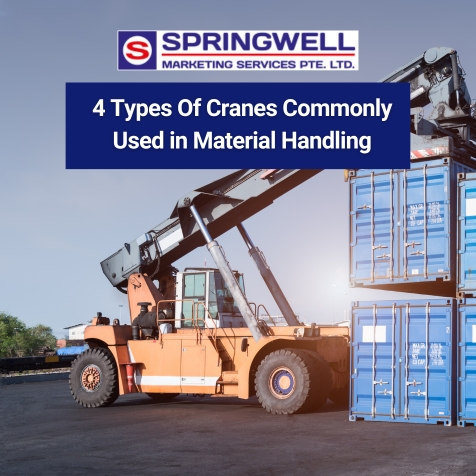
Cranes are essential equipment used in material handling to lift and move heavy objects. They come in various shapes, sizes, and types, each designed for a specific purpose.
Cranes have been used for centuries in the construction, manufacturing, and transportation industries. With technological advancements, the design and usage of cranes continue to evolve.
Today, we will discuss four common types of cranes used in material handling operations, and how to choose the right one for your project.
Types of Cranes
There are numerous types of cranes, each with its unique capabilities and functions. Here are four common types used in material handling operations:
1) Bridge Crane
Bridge cranes, also known as overhead cranes or suspended cranes, consist of a bridge beam that travels along two horizontal rails installed on both sides of the workplace. These cranes are commonly used in factories and warehouses to lift heavy objects across the workspace.
Bridge cranes come in various configurations depending on their lifting capacity, such as single-girder, double-girder, or gantry style
2) Jib Crane
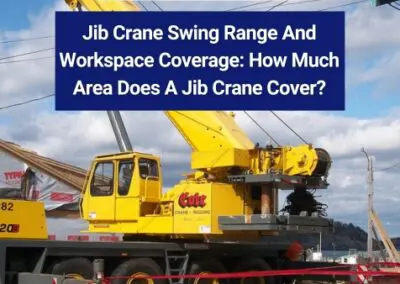
Jib cranes are a type of small crane that features a horizontal arm (jib) that supports a hoist and trolley unit.
They are typically used in workshops, loading docks, or construction sites to lift materials at a specific location. Jib cranes can rotate 360 degrees, making them ideal for precise material handling operations.
3) Gantry Crane
Gantry cranes, also known as portal cranes, are similar to bridge cranes, but are supported by legs instead of rails.
These cranes are commonly used in outdoor areas, such as shipping ports and construction sites, to transport heavy loads across open spaces.
4) Tower Crane
Tower cranes are used for tall construction projects, such as skyscrapers.
They have a vertical mast and a horizontal boom that can rotate 360 degrees to move materials to different locations on the job site. These cranes are typically fixed to the ground or mounted on a mobile platform.
How Cranes Work
All cranes work on the same basic principle of lifting and moving heavy loads using a combination of pulleys, cables, and motors. The operator controls the load movement by using various controls located in the crane’s cab.
The first step in operating any crane is to properly set up the base or foundation and ensure that it can support the weight of the crane and its maximum load capacity.
Once this is done, the mast or boom is raised into position using hydraulic power. The boom length can also be adjusted depending on how far materials need to be lifted.
As the load is lifted, counterweights are often used to balance out the weight for stability. To move materials horizontally, cranes may also be equipped with a trolley system which runs along the boom.
Choosing the Right Crane for the Job
When it comes to choosing the right crane for a specific job, there are several factors that need to be considered. These include:
- Type of load: The type and weight of the load being lifted will determine what type of crane is best for the job. For example, a tower crane would be more suitable for lifting heavy construction materials, while a mobile crane may be better for lighter loads.
- Lifting height and radius: The required height and horizontal distance that the load needs to be lifted will also affect which crane is best for the job. Different cranes have different maximum heights and radii, so it’s important to know these specifications beforehand. For instance, if the load needs to be lifted to a great height or over a large distance, a tower crane would be more suitable.
- Working environment: The conditions of the working environment should also be considered when choosing a crane. For example, if the job site is tight and has limited space for manoeuvring, a compact or mobile crane may be necessary. If the job site is located in an area with strong winds or other challenging weather conditions, a sturdier crane, such as a crawler crane, may be required.
Takeaway
Choosing the right crane for material handling is crucial for ensuring safety and efficiency. It involves considering factors such as load capacity, height and distance requirements, and working environment conditions.
By carefully evaluating these factors, construction companies can select the most suitable crane for their specific needs and ensure successful completion of their projects.
Springwell, Your Choice For Material Handling Solutions
At Springwell, we understand the importance of selecting the right equipment for material handling. That’s why we offer a wide range of material handling solutions to cater to the diverse needs of our clients.
Contact us today to learn more about our products!