Retail malls are dynamic, high-traffic spaces that require frequent maintenance — from replacing light fixtures to cleaning atriums and updating signage. Because of their multi-level structures and constant public presence, these environments pose unique challenges when it comes to working safely at height.
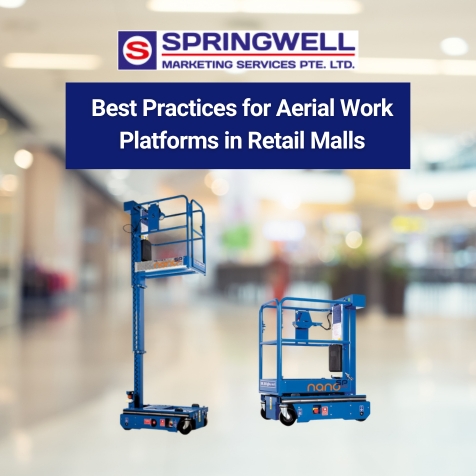
Aerial Work Platforms (AWPs) such as scissor lifts, vertical mast lifts, and boom lifts provide an efficient way to reach overhead areas. Yet, their use in malls must follow strict safety and operational guidelines.
Understanding and implementing best practices not only ensures worker safety but also prevents disruptions to mall operations.
Understanding the Retail Mall Environment
Retail malls present distinct operating conditions compared to industrial sites. Key considerations include:
- High pedestrian activity: Shoppers, families, and staff move constantly throughout the premises, increasing the risk of accidents.
- Mixed flooring surfaces: Smooth tiles and slopes can affect stability and traction for equipment.
- Architectural constraints: Overhead lighting, decorative ceilings, and narrow walkways require precise manoeuvring.
- Limited working hours: Most maintenance must take place outside opening hours to minimise disturbance.
Recognising these constraints is essential before selecting and operating an aerial work platform in a mall.
1. Inspect Equipment Before Every Use
Regular inspection is the first line of defence against accidents. Before operating any AWP:
- Examine the platform and guardrails for cracks, dents, or corrosion.
- Check hydraulic and electrical systems for leaks or frayed cables.
- Ensure wheels, tyres, and stabilisers are free of debris and properly aligned.
- Test controls and emergency stops to verify proper function.
Documenting each inspection supports accountability and compliance with Singapore’s Workplace Safety and Health (WSH) guidelines. Preventive maintenance also extends the life of the equipment.
2. Train and Certify Operators
Operating an AWP requires both skill and awareness. Only trained personnel should handle this machinery. Proper training should cover:
- Load limits and safe weight distribution.
- Platform operation — including steering, elevation, and descent functions.
- Emergency procedures for mechanical or power failure.
- Hazard recognition, such as low ceilings or obstructions.
Regular refresher courses ensure operators remain competent, particularly when new equipment or models are introduced.
3. Use the Right Protective Gear
Personal Protective Equipment (PPE) remains essential even with modern safety features. Operators should wear:
- Full-body harnesses with secure lanyards, especially on boom lifts.
- Helmets and non-slip footwear to protect against impact or falls.
- High-visibility vests to make workers easily seen by nearby staff.
- Tool lanyards or holders to prevent falling objects from injuring bystanders below.
Each piece of equipment adds an extra layer of protection for both the operator and the public.
4. Conduct a Thorough Site Assessment
Every mall has unique floor plans, ceiling heights, and crowd patterns. A detailed site assessment helps identify potential risks before work begins:
- Evaluate floor strength and evenness to ensure stability.
- Measure overhead clearance for signage, lighting, or ductwork.
- Identify entrances, walkways, or escalators that may need temporary barricades.
- Check for obstructions such as planters, benches, or kiosks that could restrict manoeuvrability.
A site plan that accounts for these variables helps prevent both damage and disruption.
5. Operate Safely and Within Capacity
Aerial platforms have precise load and height limits that must never be exceeded. Operators should:
- Keep total load — including tools and materials — within the manufacturer’s rated capacity.
- Use slow, controlled movements, especially near ceilings or decorative elements.
- Deploy outriggers or stabilisers fully before lifting.
- Avoid leaning or climbing on guardrails to extend reach.
These practices reduce the risk of tip-overs, falls, and mechanical stress.
6. Schedule Work Strategically
Mall environments are busiest during daytime and weekends. To ensure safety and efficiency:
- Schedule maintenance during off-peak hours — early mornings or late nights.
- Coordinate with mall management to obtain necessary permits or safety clearances.
- Use temporary barriers and signage to redirect foot traffic safely.
- Limit noise and dust generation when possible, particularly near food or retail zones.
Well-timed operations protect the public while allowing maintenance teams to work efficiently.
7. Prepare for Emergencies
Even with planning, unexpected situations can occur. Every team should have a clear rescue plan in place. This includes:
- A designated ground crew trained to assist in emergencies.
- Clear communication protocols, such as radios or hand signals.
- A method for lowering the platform manually in case of power failure.
- Awareness of nearby first-aid resources or emergency exits.
Readiness ensures rapid response and reduces potential harm in the event of an incident.
8. Comply with Local Safety Regulations
Singapore’s Workplace Safety and Health (WSH) regulations set the legal framework for working at height. To comply:
- Use only equipment that meets international safety standards (e.g. ISO, EN).
- Maintain records of inspections and operator training.
- Follow permit-to-work procedures required by mall management or contractors.
- Conduct risk assessments before commencing any elevated work.
Compliance demonstrates professionalism and safeguards both personnel and property.
9. Communicate and Coordinate
Successful AWP operations rely on communication between all stakeholders — from mall management to maintenance crews. Establishing clear channels of communication helps:
- Align work schedules with mall operations.
- Ensure security and cleaning teams are informed.
- Prevent misunderstandings that could lead to unsafe situations.
Good coordination also builds trust between tenants, management, and contractors.
Takeaway
Using aerial work platforms in retail malls is not just about reaching high spaces — it’s about working safely and efficiently in public areas. Every precaution, from inspection to communication, contributes to a smoother operation.
By adhering to these best practices, mall operators and maintenance teams can protect workers, shoppers, and property alike.
When safety becomes a shared responsibility, mall environments stay not only functional but welcoming and secure for everyone.