


Top Material Handling Equipment Cleaning Tips
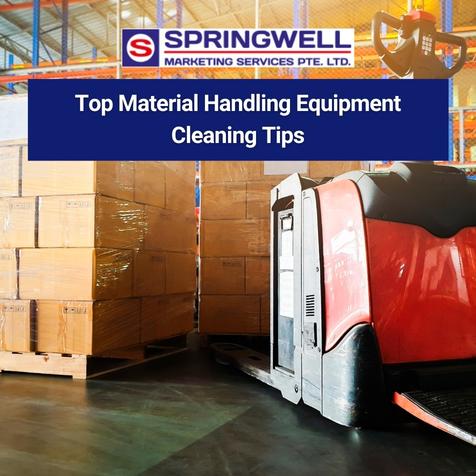
If you own material handling equipment and use it in your facilities, you need to keep it clean and sanitary. It’s crucial for the reputation of your company and the quality of the products you store and transport to have hygienic standards you follow. The best material handling companies make sure their facilities and equipment are as clean as possible, especially in times where fears of spreading diseases or food-borne illnesses are high.
The Importance of Adopting Proper Cleaning Processes
Main Product Quality
Cleaning and sanitising your material handling equipment is essential for several reasons. First, it helps to ensure the quality of your products. If you’re transporting food or other perishables, cleanliness is especially important to prevent contamination. For example, if you own a grocery store or restaurant, you need to be sure that the food you’re selling is safe to eat.
Prolong Your Equipment Lifespan
Second, keeping your equipment clean helps to prolong its life. Over time, dirt and grime can build up on your conveyor belts, rollers, and other components, causing them to wear down prematurely. Not to mention, the build-up of germs and bacteria can also lead to
Stop The Spread of Diseases
Finally, it’s important to clean your equipment to prevent the spread of diseases. If you’re transporting food, there’s a risk of cross contamination if the conveyor belt is not clean. In a hospital setting, contaminated equipment can lead to the spread of deadly diseases. That’s why it’s so important to clean and disinfect your equipment on a regular basis.
Tips For Cleaning
1. Read The Manufacturer’s Recommendations
Before you start cleaning your equipment, it’s important to read the manufacturer’s recommendations. Different types of equipment require different cleaning methods and solutions. You don’t want to damage your equipment by using the wrong cleaning products.
2. Use The Right Tools
Make sure you have the right tools for the job. Depending on the type of equipment, you might need brushes, sponges, or cloths.
3. Avoid Pressuring Specific Components
Some components are more delicate than others. Avoid putting too much pressure on these areas when cleaning.
If you use a pressure washer to clean your equipment, avoid directing a high-pressure stream at specific components. Control panels, stroke indicator labels, electrical components, pneumatic components, warning labels and valves should all be avoided since they may be damaged by too much pressure.
Use a low to mid pressure nozzle if necessary.
4. Ensure Your Staff Is Aware of The Chemical Cleaning Properties
There are different chemicals available for cleaning purposes. However, some of these chemicals can be dangerous if not used properly. It is important that your staff knows the hazards associated with each chemical.
5. Wear Protective Gear
When using a pressure washer, it is important to wear protective gear. This includes safety glasses, gloves and ear protection. Wearing these items will help to protect you from injury.
6. Work In a Well Ventilated Space
When using a pressure washer, it is important to work in a well ventilated space. This will help to prevent inhaling the chemicals used in the pressure washer.
It is better to use chemicals in a well-ventilated area. Make sure the room has enough ventilation and that the chemicals won’t linger in the air after cleaning.
7. Clean Up Spills Quickly
If you spill any of the chemicals used in the pressure washer, it is important to clean up the spill quickly. This will help to prevent injury and environmental contamination.
8. Store Chemicals Properly
When not in use, it is important to store pressure washer chemicals properly. This includes keeping them out of reach of children and pets and in a cool, dry place.
Tips For Cleaning Pallets
1. Wipe Down Your Pallets
When you’re finished using your pressure washer, it’s important to wipe down the pallets. This will help to remove any residue that could potentially attract pests.
If there are any particularly hard-to-remove stains or other pollutants, you may sometimes remove them with vigorous scrubbing.
2. Pressure Wash Pallets
Pressure washers are meant to clean heavily soiled pallets since they can shoot a lot of pressurised water at filthy regions. Pressure washers may often be used with disinfectants to completely sanitise the pallet, eliminating a variety of germs and hidden contaminants.
3. Use Proper Chemical Cleaning Solutions
For more difficult stains and big areas of dirt, it’s best to use professional-grade cleaners. You may also rent or purchase a power washer to speed up the process (just be sure to read the manual before operating one).
4. Let Pallets Dry Completely
After you’ve pressure washed or hand-cleaned your pallets, it’s important to let them dry completely in the sun before using them again. This will help to prevent mould and mildew from developing.
5. Inspect Pallets for Damage Before Use
Before placing any items on a pallet, be sure to inspect it for signs of damage, such as cracks, splits, or splinters. If you find any damage, it’s best to discard the pallet and find a replacement.
Steps To Take For Cleaning
1. Power Off & Disassemble
Start by shutting off the power to your unit and unplugging it from the wall.
If the equipment has guards and covers, you’ll probably have to take them off to access all of the system’s sections. You may also need to clean the equipment completely or partially disassemble it in order to keep it clean.
This will give you better access to clean all of the nooks and crannies.
2. Pre-Rinse
With the equipment turned off and unplugged, give it a quick rinse with clean water. This will help remove any big pieces of debris before you start cleaning.
Place the material handling equipment in a warm water to loosen any remaining product or dirt, then rinse it until you can no longer see any residue.
3. Sanitise
Sanitising is important to remove any harmful bacteria that could potentially contaminate products. There are various sanitising solutions available, so be sure to check with your local dealer for the best option.
Using a clean cloth or sponge, apply the sanitiser to the equipment and wipe it down thoroughly.
4. Turn It Back On and Check
With everything put back together, make sure everything is running correctly. Turn the equipment on and double-check that it has been correctly reassembled and that the system is functioning properly.
Loose components might indicate that your clamps aren’t tight enough or that you installed a component incorrectly. Take a look at the strokes and speeds to see if they’re consistent with your expectations. If something seems off, don’t hesitate to call customer support or take the equipment back to the dealer for assistance.
Now that you have a much better understanding of how to properly maintain and clean your commercial gym equipment. Remember to follow these steps on a regular basis to keep your equipment in top shape and ensure that
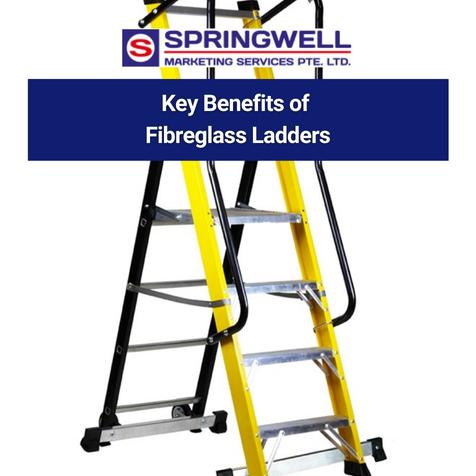
When it comes to choosing a platform ladder, there are several issues to consider. What is the required height? What characteristics should it have? And which type of ladder is best suited for the task?
For many applications, fiberglass steps and ladders are a popular choice. They provide several benefits over traditional ladders, and they may be customized to suit the user’s unique requirements.
What Are Fibreglass Steps For?
Ladders constructed of fibreglass are for use by anyone in the electrical industry. Because fibreglass is an insulator that can resist up to 25,000 vaults, it is great for locations with a risk of electrical conduction spark.
It is also fire resistant and doesn’t lose strength in high temperatures.
Compared to aluminium ladders, fibreglass ladders are about 10 percent heavier.
What Are Aluminium Ladders For?
Aluminium ladders are for general use, but they’re also popular in the construction industry because of their lower weight and portability. They’re also more affordable than fibreglass ladders.
Key Benefits of Fibreglass Ladders
1) Non-conductive Properties
The major benefit of utilizing fibreglass ladders and steps is the material’s non-conductive qualities. Because the fibreglass material does not conduct electricity, it’s the best choice for people in close proximity to power lines.
Although there are alternative non-conducive choices available, such as wood, fibreglass ladders are both more durable and lighter than other materials. It is also simpler to lift, move, and transport.
2) Stronger
Ladders made of fiberglass are typically more durable and solid than ladders constructed of aluminum. They’re heavier as a result of the fact that fiberglass is a more robust material than aluminum, allowing it to support weight without bending or breaking.
3) More Durable
Fiberglass is more long-lasting and durable than aluminum because of its superior weather-resistant qualities.
Because fibreglass is a manufactured material, it is considerably more durable than natural materials like wood when used as an access product. This adds to the safety of fibreglass step ladders since the product’s durability is ensured while in use.
Man-made aluminum, on the other hand, may be argued to be quite tough – however aluminium ladders are made up of many grades of aluminum and a cheaper ladder might bow under a heavy weight.
4) It Doesn’t Absorb Moisture
Thanks to its strength and durability, manmade fibreglass can be used outside – even in wet weather or hot, dry conditions. Fibreglass does not absorb moisture or weaken when exposed to sunlight, making it an ideal choice for those working outdoors.
5) Safer Option
When purchasing a ladder, the most important factor to consider is its safety. The safety level of a particular ladder is determined by how it’s used and where.
Fiberglass ladders are the safer option for work that needs to be done close to electricity lines or equipment since they are highly resistant to both electricity and heat.
Ladders that are constructed of fiberglass are more heat resistant than aluminum ladders and are therefore better suited for activities where temperatures will be high.
Rubber stand-offs and other insulation methods have extended the usage range of aluminum ladders, but since these ladders might create electrical dangers, they should not be utilized in places where there is a danger of electricity.
Rubber stand-offs and other insulation methods have extended the usage range of aluminum ladders, but since these ladders might create electrical dangers, they should not be utilized in places where there is a risk electrical danger.
Some Downsides Compared To Aluminium Ladders
Portability
Fiberglass ladders are far heavier than aluminum ladders, making them an unsuitable option in most cases. As a result, construction sites and other areas with mobility issues prefer aluminum ladders.
Cost
Aluminium ladders are lighter and less expensive than fiberglass ladders, making them a more appealing alternative for use in the open air or in controlled environments.
Flexibility
Aluminium ladders are more flexible than fiberglass ladders, making them ideal for use in tight spaces. This can be a drawback, however, as the flexibility of the ladder may make it more difficult to control.
Shop Our Top Fibreglass Ladders In Singapore
At Springwell Marketing, we offer a wide variety of ladders made from different materials to suit your needs. Browse our selection of fibreglass ladders today!
SVELT Fiberglass Platform Ladder
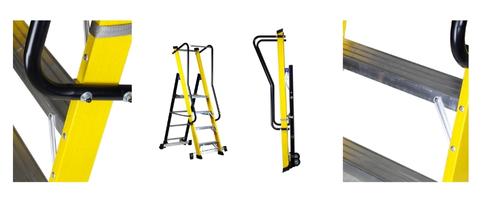
Ranger PROPF Fibreglass Industrial Platform Ladder
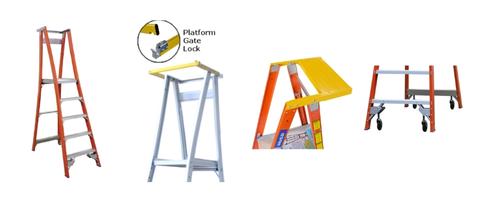
Ranger PROSF FIBREGLASS A-FRAME Ladder

Branach FPL Fibreglass Platform Ladder

Consult us today for more information on our products and services!

Pallet jacks are used to move and raise palletised goods throughout warehouses before putting them on shelves for storage. The maximum height a pallet jack may lift is limited by the type of pallet jack you have. Pallets can be raised between 3 and 8 feet tall with pallet jacks.
The main difference between high lift and low profile pallet jacks is the maximum height they can raise a load. High lift pallet jacks can raise loads up to 8 feet, while low profile pallet jacks can only raise loads up to 6 inches. Low profile pallet jacks are also smaller in size, which makes them more manoeuvrable in tight spaces.
High lift pallet jacks are designed to raise and lower loads on high shelves or in tight spaces. Low profile pallet jacks are designed for use in areas with limited headroom, such as under mezzanines. Both types of pallet jacks can be used to move loads around a warehouse or factory floor.
If you need to move loads around a warehouse or factory floor, either type of pallet jack can be a good choice. However, if you need to raise loads to high shelves or in tight spaces, a high lift pallet jack is the better option. For areas with limited headroom, a low profile pallet jack can be the better choice.
Low Profile Pallet Jacks
Low-profile pallet jacks are designed to work with low-clearance pallets and thin style pallets, as well as low stillages that require a lowered height.
They can, nevertheless, be used to move big masses between warehouses and for instances when a conventional pallet jack would not fit on a pallet or could not go under.
High Lift Pallet Jacks
A scissor lift pallet jack, for example, is a high-lift pallet jack that can carry loads to greater heights and unload from spots where other pallet jacks cannot.
They also aid in the optimisation of storage space since they may be placed on extra warehouse shelving and racks, allowing you to save money by utilising more storage.
High lift pallet trucks are sturdy and can vertically lift loads, eliminating the need for ladders, towers, or scaffolding. If you want to safely raise your palletised products to higher levels in the warehouse, high lift pallet jacks are the solution!
The Importance of Lift Height Capability
When looking for pallet jacks, you must first think about what they will be used for; this will determine how high your pallet truck needs to lift.
If you buy a pallet truck that doesn’t have the necessary load capacity for the task, this is a problem since it might cause an injury or property damage if the pallet jack tips over, potentially harming products and injuring workers.
Because pallet jacks are intended to lift and lower a pallet, they must be tested for the maximum height at which they can operate. It’s critical to research different heights of pallet jacks so you know whether they are appropriate for the task.
In Conclusion
When it comes to choosing between high lift and low profile pallet trucks, it is important that you consider what your needs are as this will help you to make the best decision.
If you need a pallet truck that can reach high shelves, then a high lift pallet jack is ideal, but if you need something that can navigate tighter spaces, then a low profile pallet jack may be better suited.
Consider your needs carefully before making a decision and always check the capacity of the pallet truck to ensure it is suitable for your needs.
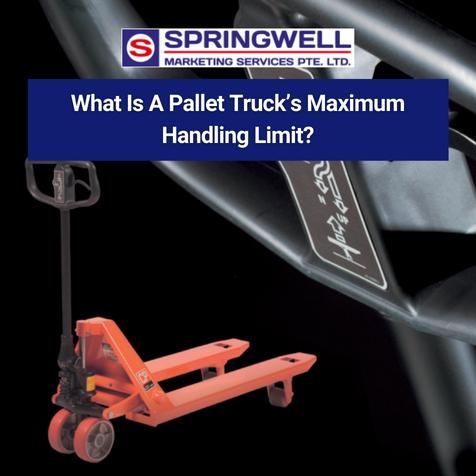
To determine the safe handling limit of a pallet truck, there are these few variables to be considered:
- The type of pallet truck used (manual, electric, heavy duty)
- The environment that in which it is being used
- The distance in which the weight is being carried
- The duration in which the weight is being carried
Manual Pallet Trucks
When it comes to manual pallet trucks, its safe handling limit would be lower as compared to electric or heavy duty models. This is due to the fact that manual pallet trucks require more manpower to operate and is generally used for shorter distances.
A manual pallet truck may be a great solution for your business if you’re searching for a cost-effective equipment option for your warehouse. This machinery is one of the finest alternatives for indoor warehouses and has lift capacities that can meet your basic material handling demands.
Because of their small sizes, they may pass through narrow aisles, and the weight capacity varies depending on the type and brand of pallet truck.
Electric Pallet Trucks
Electric pallet trucks are powered by an electric motor and may be found in warehouses throughout the world. The strength of the motor regulates both the pallet truck’s lifting capacity and mobility.
However, an electric pallet truck, in comparison to a manual pallet truck, is considerably more practical for transporting big products over longer distances throughout a plant.
Specialty Pallet Truck
If your business requires a pallet truck that can’t be handled by a regular electric or manual pallet truck, consider purchasing a specialty pallet truck.
A specialty pallet truck goes above and beyond the capabilities of a regular pallet truck. This equipment is used for jobs that need specific design specifications.
Some examples would be: single fork trucks – to move items such as ATMs, vending machines, or adjustable fork trucks – if the pallet or product you’re moving needs wider or narrower forks, or roll trucks – If your firm deals with carpets, cables, and wires of unique materials.
Other Types
There are also other types of pallet trucks such as: High-Lift pallet Trucks, Weigh-Scale Pallet Trucks.
The Average Limit of Pallet Trucks – Summary
Handling limits of manual pallet trucks are generally between 1500kg to 2000kg.
Our OPK Manual Hand Pallet Truck has a capacity of from 1500kg to 5000kg; depending on the model.
Our EZLift Weighing Scale Pallet Truck has a capacity of 2000kg.
Our EZLift Electric Pallet Truck has a capacity of 1500kg.
It is worth noting that different brands or types of pallet truck might have somewhat varied weight restrictions, which will usually be stated when purchased. One would normally go by the maximum handling capacity given in this instance.
Make careful that you’re aware of each pallet truck’s handling limitation so you can use the machines safely.
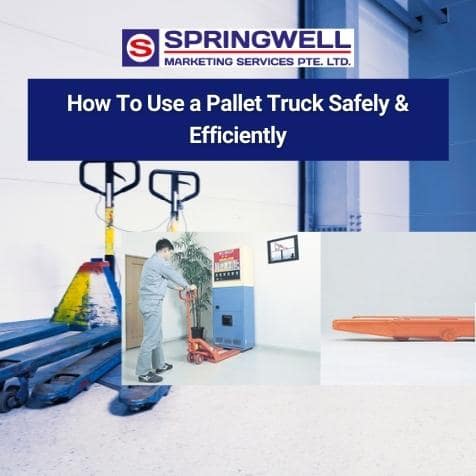
The Pallet Truck is one of the most frequent pieces of equipment found in warehouses and industrial settings in Singapore. If the operator hasn’t had any training, they may be a source of many injuries and accidents at work.
Pallet trucks are simple to operate and only require minimal instruction. Accidents can still occur as a result of other mitigating conditions – employee complacency is an important one.
Follow these easy guidelines to ensure that pallet trucks are used safely in the workplace:
Inspect Your Pallet Truck
Before using the pallet truck, check it for any significant damage and make sure the hydraulic systems used to raise and lower the forks are in good working order. It’s a good idea to have a second pair of eyes look over the vehicle to ensure there has not been any omissions.
Once you have finished inspecting your pallet truck, make sure that you adjust all of the settings on the machine according to your needs.
Take Note of The Load Limit
Pallet trucks are not meant to be overloaded for a reason. There is a maximum capacity, ranging from around 2500kg up to and beyond that, that shouldn’t be ignored. If you overload a pallet truck, it could overbalance and fall over, causing damage to surrounding equipment or even injuring another employee.
To be safe, always check the load limit before you attempt to lift a heavy load and make sure that you have your pallet truck set up properly.
If you are unsure how to use a pallet truck safely or need help setting it up correctly, ask your supervisor for assistance.
Avoid Ramps
Pallet truck drivers generally avoid moving heavy weights up or down inclines to ensure that the vehicle (and load) are safely balanced at all times. If you detect a ramp in your workplace that cannot be avoided, keep the cargo ahead of the operator when traveling uphill to maintain the load balanced.
If you find yourself traveling downhill, keep the cargo behind you and make sure to slow down a bit to maintain control of your pallet truck.
Safety is always an important consideration when it comes to using a pallet truck.
Utilise The Brakes
Some pallet trucks come with brakes to help you stop safely. Others, on the other hand, must be stopped manually. If this is the case, make sure you have plenty of stopping space before coming to a complete stop and avoid placing your truck in areas where pedestrians might be crossing the street.
Pull, not Push
It’s a common misconception that pallet trucks must be pushed.
In fact, whenever possible, it is usually better to haul things across a flat surface to enhance the operator’s maneuverability.
Pushing from behind the goods might be exhausting – and the driver can’t look past the load for potential issues such as items on the ground or hurdles that the forks could catch on.
Store It Safely
After the weight has been removed from the pallet truck, make sure the forks are lowered and that they aren’t pointing outward at a slope, posing a danger.
Always store your truck in a safe location — if this isn’t an option, make sure the pallet truck is as close to a wall as feasible and that the forks should not be facing out into any hallways or walkways.
Now that you know how to operate a pallet truck safely, see our selection of pallet trucks in Singapore, sack trucks and other heavy lifting equipment to select a product that meets your needs.